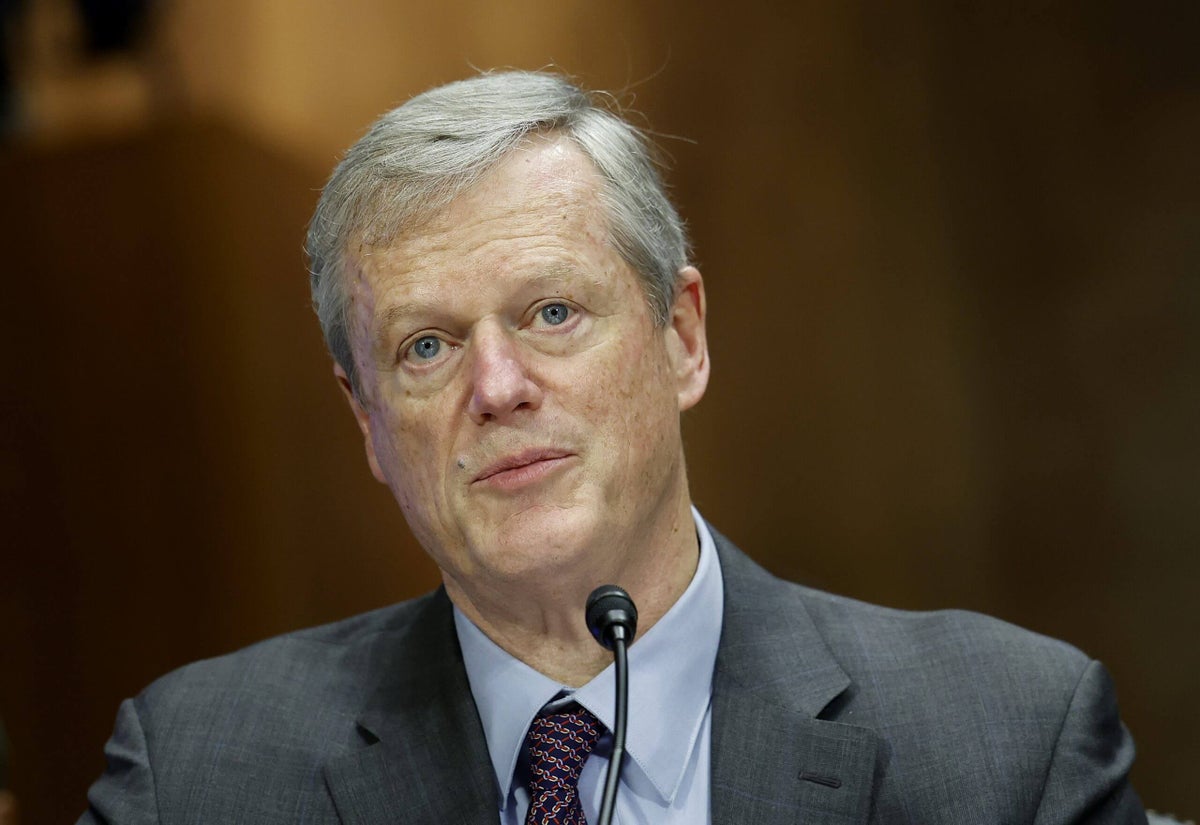
OXON HILL, Md. — The NCAA on Wednesday petitioned the federal agency that regulates prediction markets, asking it to pause college athletics-related offerings until “a more robust system with appropriate safeguards is in place.”
President Charlie Baker aimed at companies such as Kalshi, which allow users to invest and trade based on many outcomes inside and outside of sports — from hiring coaches to election results — in his state of college sports address at the NCAA convention.
“So-called prediction markets are offering what anyone can see is unregulated betting on college games,” Baker said during his speech. “One operator, Kalshi, made plans to start taking bets — and I kid you not, this is true — on transfer portal decisions until we called them out and they backed down.”
In a letter to the Commodity Futures Trading Commission, Baker said the NCAA is willing to work with the agency to develop a “system that protects student-athletes and consumers from harm.”
Prediction markets are regulated by the CFTC but do not have to meet the same oversight standards as online sportsbooks, which are set by state gaming commissions and legislatures.
Kalshi and other prediction markets are legal nationwide because they are classified as a financial trading platform, not a gambling service.
More than 30 state attorneys general have issued cease-and-desist letters, arguing that Kalshi’s sports markets functionally mirror sports betting and should be regulated as such.
In its letter, the NCAA called for age restrictions, advertising restrictions, robust integrity monitoring, national governing body involvement, prop market restrictions, anti-harassment measures and harm reduction resources such as problem gambling education on college campuses.
The NCAA first called out Kalshi in November with a letter requesting changes to how the company describes its sports markets and seeking clarification on its integrity safeguards against gambling risks.
NCAA chief legal officer Scott Bearby asked Kalshi to adjust the phrasing “Outcome verified from NCAA” to “Outcome sourced from NCAA.com,” citing concerns that the original wording implied a partnership.
Baker again targeted Kalshi in December after it was reported that the company had filed the necessary paperwork with federal regulators to begin taking bets on which college athletes will transfer.
Kalshi never made that market available to users.
A spokesperson for Kalshi at the time emphasized that the company uses in-house policies and third-party surveillance systems to monitor trading activity. Baker touted the NCAA’s work in lobbying some states to restrict prop betting on college players and called for more wide-ranging restrictions.
Prop bets allow players to bet on their performances and have been tied to several cases of game manipulation in college basketball and the NBA.
In the last few months, the NCAA has ruled more than a dozen Division I men’s basketball players permanently ineligible for manipulating game results and their own performances, making impermissible bets, providing information to gamblers and not cooperating with investigations.
The NCAA also recently rescinded a proposed change to its longstanding rules banning athletes and those who work for athletic departments from betting on any professional sports — even legally.
“The NCAA has led a more aggressive response to sports betting than probably any other league in the country, and I really do hope more will join us in this effort,” Baker said during his address.