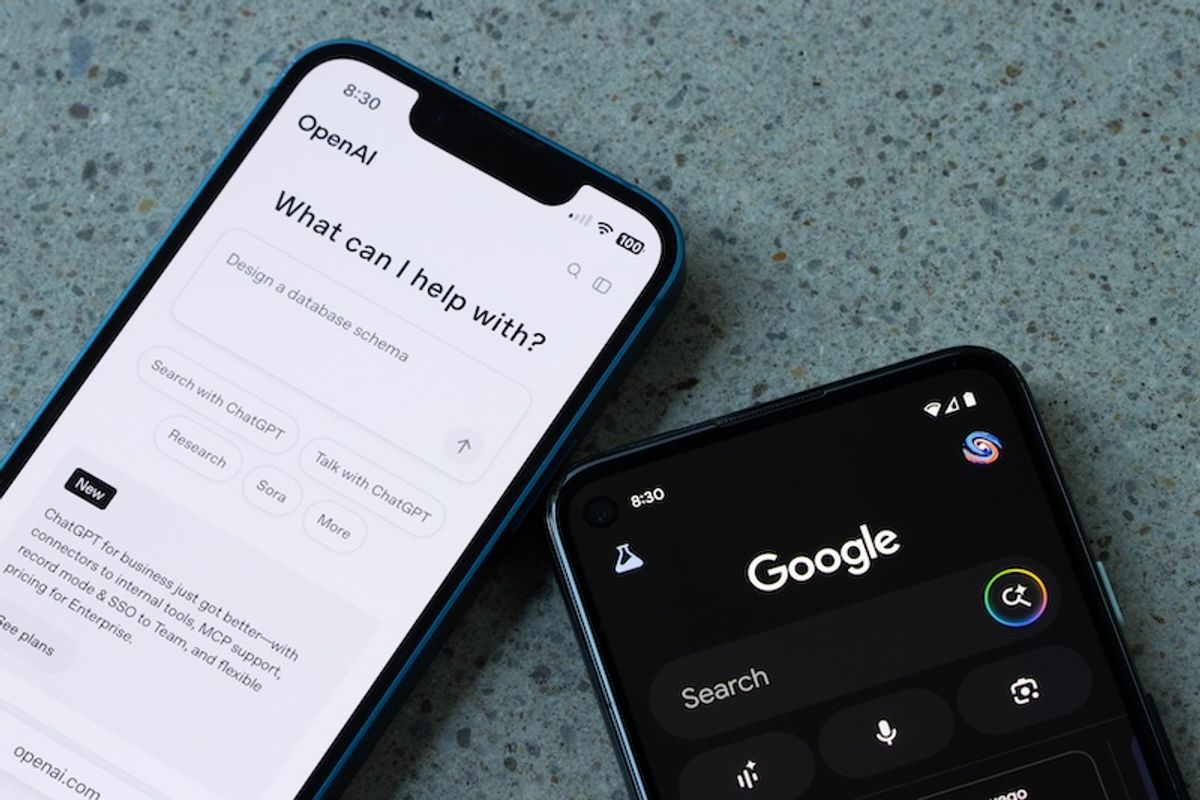
Google is gaining traction in the agentic protocols race with the introduction of a new standard.
Over the weekend, the search giant announced its Universal Commerce Protocol (UCP), which will carry consumers through discovery, buying and post-purchase support.
“UCP establishes a common language for agents and systems to operate together across consumer surfaces, businesses and payment providers,” Vidhya Srinivasan, Google’s VP and general manager of ads and commerce, wrote in a blog post.
Instead of requiring individual connections for each agent, UCP gives agents the ability to interact seamlessly, according to Google.
The launch comes after the announcement of other agentic commerce initiatives put forth by Google and its competitors.
In October, Google partnered with Paypal to launch an agentic commerce solution. In September, OpenAI and Stripe announced their Agentic Commerce Protocol, backing instant checkout in ChatGPT, for example.
Both moves followed Anthropic’s model context protocol (MCP), announced in November 2024. A handful of travel companies have jumped to use MCP, including Kiwi.com, which launched an MCP server in August, and Apaleo, which launched a server in September. Expedia and TourRadar are also on board.
Juanjo Rodriguez, founder and CEO of The Hotels Network, told PhocusWire that he sees Google and OpenAI as racing to define AI commerce standards.
“While both have accepted the MCP protocol, they are presenting alternative versions of everything else,” Rodriguez said. “I think it’s good to see these innovations and let the market select the winner technologies.”
How UCP will function
UCP will support an upcoming checkout feature on Google product listings in Search’s AI Mode and on the Gemini app. The feature will give consumers the ability to “check out” while they are searching on Google through eligible retailers in the U.S. It will work with Google Pay and eventually with PayPal.
The protocol will allow agents and systems to operate in tandem over businesses, payment providers and consumer surfaces, according to Google. Rather than requiring unique connections with individual agents, UCP is built to allow all agents to interact seamlessly.
Google said UCP is compatible with protocols including Agent2Agent, MCP and Agent Payments Protocol. UCP was co-developed with retail partners such as Shopify, Target and Walmart and endorsed by financial companies, including American Express, Mastercard, Stripe and Visa.
The search giant is working on expanding globally and plans to add additional capabilities including related product discovery, loyalty rewards and custom Google shopping experiences.
Google did not outline how exactly UCP will work with travel, but that hasn’t stopped industry stakeholders sharing their opinion.
According to Alex Mans, founder and CEO of FLYR, travel will soon seen the impact of the new standard.
“UCP exemplifies how customers will interact with travel companies in the near future, relying on agentic interactions instead of traditional search, shop, book and service interactions,” Mans told PhocusWire.
Pablo Delgado, managing partner and CEO for America at Mirai, compared Google’s ecosystem, including UCP, to artificial intelligence (AI) assistants and MCP.
With AI assistants and MCP, assistants such as Claude or ChatGPT function as conversational interfaces, but the merchant retains commerce logic. The assistant adapts to the merchant’s flow, while MCP shows structured data, booking actions, pricing, rules and agentic capabilities, Delgado told PhocusWire.
Meanwhile, UCP advances things.
“Here, Google defines a standardized, end-to-end commerce runtime inside its own ecosystem,” Delgado said.
With UCP in play, merchants can still share capabilities, perhaps through MCP or a similar abstraction layer, but merchants will no longer have control over user experience (UX), flow or checkout, according to Delgado.
The standard allows Google to pose as the operating system for agentic commerce, he said. It’s not meant to simply serve as a connector.
“This distinction matters enormously for travel companies,” Delgado said.
Travel industry reactions to UCP
Google’s news has “huge implications” for travel, according to Benjamin Rhatigan, co-founder and strategic director of Arrival Projects, who shared his thoughts on LinkedIn.
Rhatigan said that UCP will change the way all elements of travel are booked, from hotel rooms to flights to tours.
“The takeaway is shopping will no longer depend on clicking through a website,” Rhatigan wrote. “You will tell an AI assistant what you want, it will search for it, check availability and prices in real time and complete the booking for you. No forms or checkout pages. Everything done in the same place.”
Sarah Stahl, co-founder and head of marketing for Market Movers Travel, also weighed in, commenting on Rhatigan’s post.
“This is the part that makes my brain light up,” she said. “If the ‘buy’ happens inside the assistant, then the new homepage is your product feed, not your website.”
Rhatigan further outlined his anticipated impact across industry sectors. Among his predictions, Rhatigan said hotels’ focus will shift from website design and aesthetically pleasing photos to product clarity, rate parity and trust to remain competitive. He predicts that online travel agencies (OTAs) could be sidelined if travelers start to choose and make purchases before reaching these intermediaries. In his opinion, destinations should prepare for more impulsive planning.
The biggest shift, he said, will be psychological—research will be removed from the equation.
Areas of concern
For hotels and airlines, Delgado said UCP presents an opportunity and a structural risk.
The opportunity is frictionless conversion at scale, at the moment of intent, he said. The risk is loss of control over UX, booking flow and customer relationships with the booking journey taking place within Google’s world.
Other stakeholders voiced skepticism about readiness.
Mans said that participation from major travel players such as airlines will be imperative for UCP to be effective.
“The kind of complex queries that customers are going to turn to AI for—full trip planning, changes, ambiguous requests—will require the underlying technology at major airlines to evolve in order to provide an answer. This is where modern airline retailing fits in,” he said.
Airlines are shifting towards standards, including the International Air Transport Association’s ONE Order, which gives bookings a status as living and flexible orders that are updated with information and additional context as opposed to a traditional, static ticket, according to Mans.
“The debut of UCP should encourage more airlines to chart a path toward retailing API connectivity that meets the potential demands of what an agentic channel can deliver,” he said. “Those who act quickly will capture demand through these new channels, while those who wait will find themselves increasingly invisible to an AI-fluent customer base.”
Peter Marriott, co-founder of Dataiera, said in a LinkedIn post that UCP is a step forward for the industry, but the required technical effort needs to be discussed further.
“While standardized protocols are essential, the effort for merchants outside of marketplaces, (i.e. most SMEs through to large enterprises) to build and maintain these integrations is significant.”
Marriott said that having a protocol is one thing, but building a scalable agentic solution around it is completely different.
“Let’s not forget that you need customers to want to do this, and that Google is proud of its graveyard of long-forgotten revolutionary initiatives,” said Mitch Bach, CEO and co-founder of TripSchool, in the comments of Rhatigan’s post.
Bach said he could see users being interested in the kind of shopping process Google is betting on for “boring” corporate travelers and other purposes such as luggage or very specific requests. But for a 10-day safari or more personal purchases, he doesn’t see the model working. Travel planning in many situations—to some degree—requires dreaming.
However, Bach sees potential with UCP for smaller businesses.
“To me, this is a potential paradigm shift for the most commodified segments of travel, which means (small, non-Hilton) businesses should be doing what they should’ve been doing all along and moving up the economic ladder of value creation,” Bach said.
Regardless, with Google’s UCP already on the table, change is likely imminent.
Travel brands, Rhatigan said, can prepare by making inventory, prices and details accessible to agents, ensuring accuracy of the information on brand websites and beyond, simplifying offers and thinking about conversations as opposed to marketing campaigns.