Squeeze the global economy in one spot, and it just bulges out somewhere else.
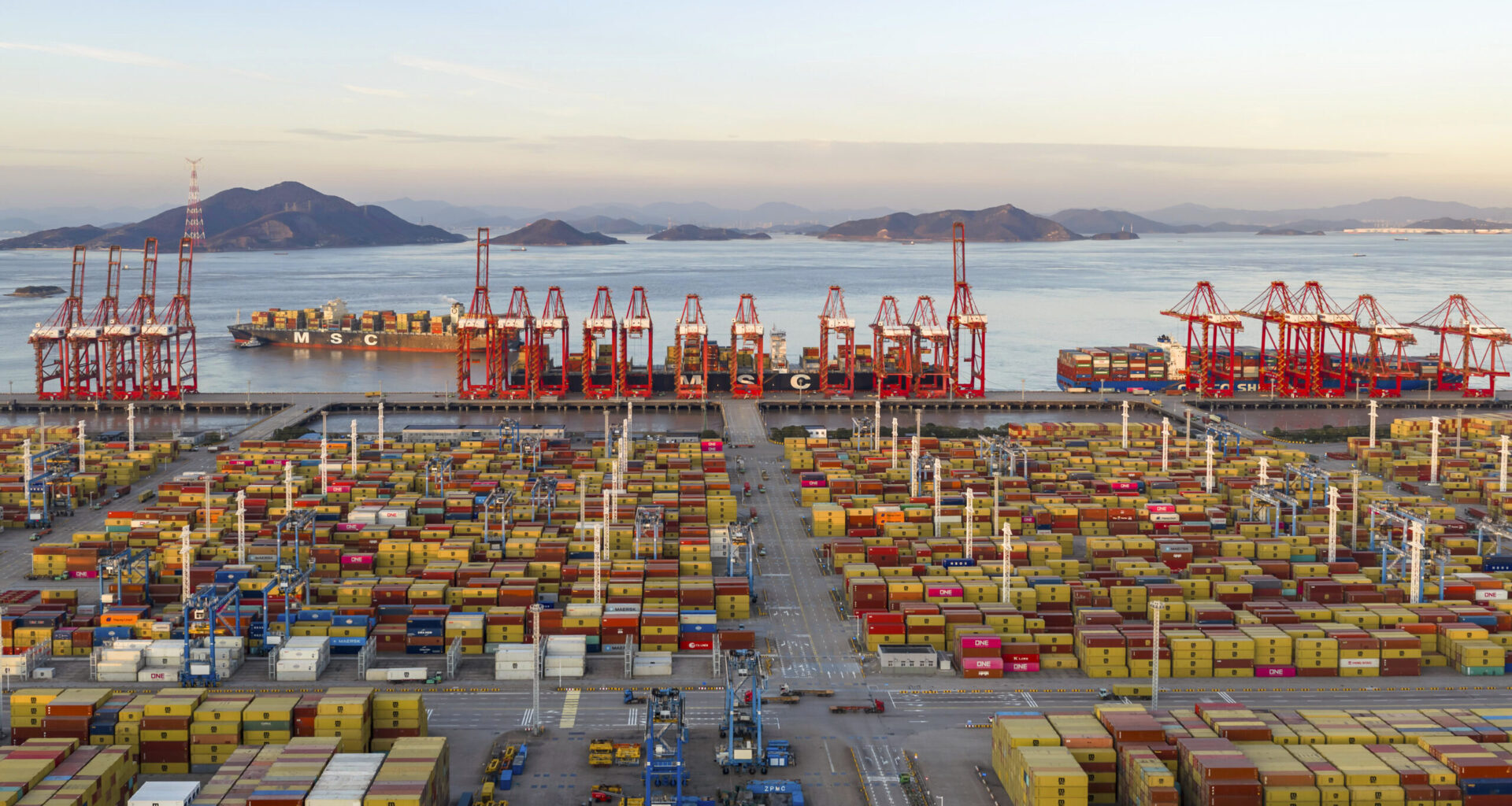
On Wednesday, the Chinese government announced that its trade surplus rose 20% to an all-time high of $1.2 trillion in 2025, even as the trade war led to a marked drop in exports to the US.
With Or Without You
Shipments to the US, China’s longtime largest trading partner (excluding blocs such as the European Union or the Association of Southeast Asian Nations), fell 22% last year because of new trade barriers. Chinese imports from the US, meanwhile, slumped more than 14%. In a press conference, Wang Jun, the deputy director of China’s General Administration of Customs, was also quick to note that its trade surplus would not have been so large if “some countries” had not “politicized economic and trade issues and restricted exports of high-tech products to China for various reasons.” While Wang wasn’t specific, it sure sounds like he was referring to us.
Without the US, China found plenty of customers elsewhere. Exports to Africa rose 26%, to ASEAN countries 13%, to the EU 8%, and to Latin America 7%. Crucially, the surplus came as exports of higher-end goods, such as cars and semiconductors, jumped 20%, while exports of lower-end goods, such as sneakers and toys, decreased. Exports of rare-earth minerals, which became a trade war trump card, surged to their highest levels in over a decade.
Of course, the trade gap has nearly as much to do with what’s happening inside of China as it does outside of China:
Imports remained essentially flat year-over-year, reflecting both continued weaker consumer demand and a renewed focus on economic self-reliance, as outlined in Beijing’s recent five-year economic plan.
The bulging trade imbalance doesn’t appear sustainable: “As the second-largest economy in the world, China is simply too big to generate much growth from exports, and continuing to depend on export-led growth risks furthering global trade tensions,” International Monetary Fund managing director Kristalina Georgieva said in a recent news conference.
Port Court: Whether the new trade world order continues may come down to the US Supreme Court, which is set to rule on the legality of the White House’s tariff-via-emergency-order regime … at some point. The court could have, but did not, issue a ruling in the case on Wednesday, and has yet to say when it will announce its next batch of decisions. How’s that for a cliff-hanger?