Real journalists wrote and edited this (not AI)—independent, community-driven journalism survives because you back it. Donate to sustain Prism’s mission and the humans behind it.
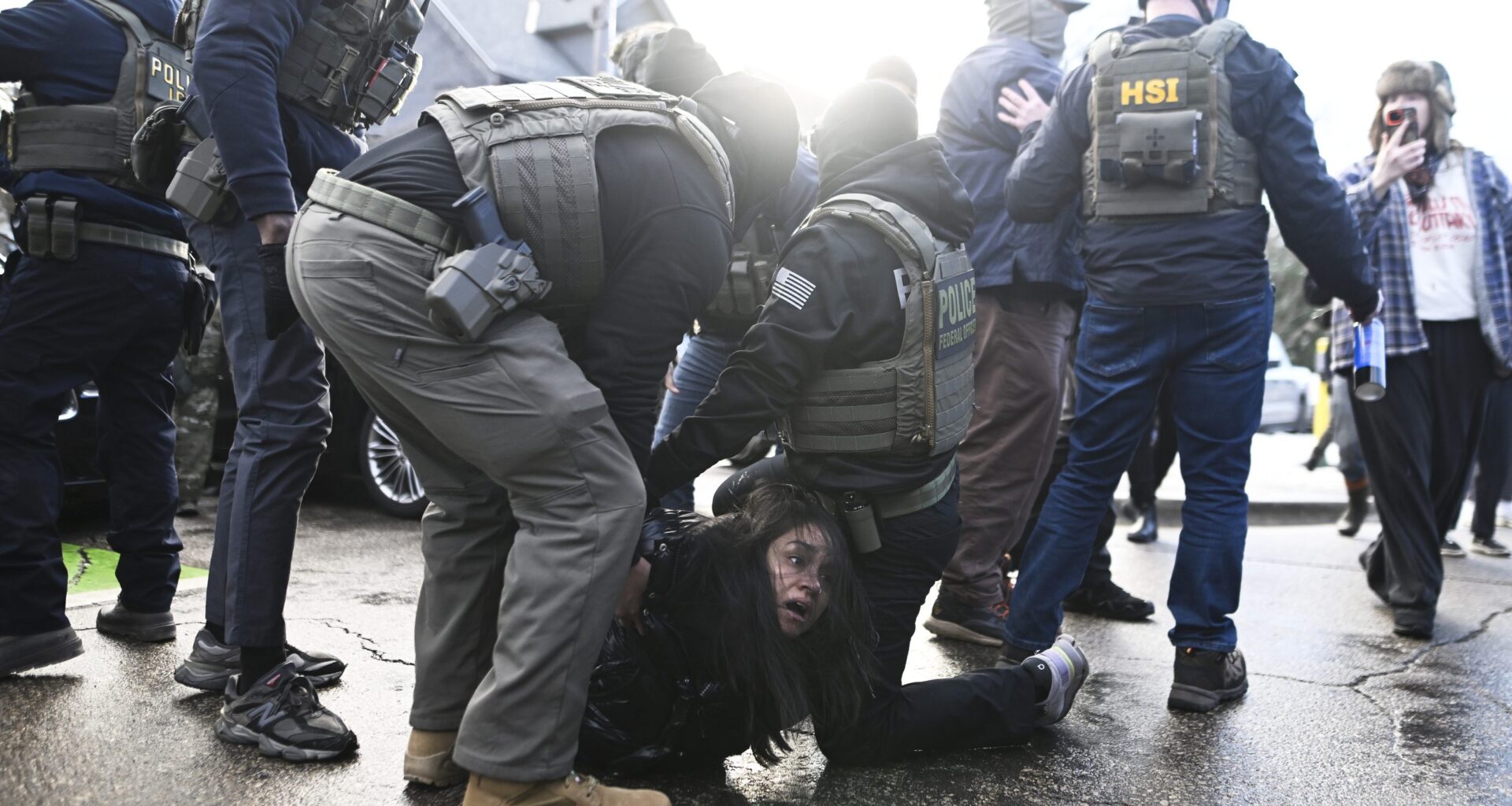
Just a week after a federal immigration agent shot and killed Renee Nicole Good in Minneapolis, another officer shot and injured a man in the city on Wednesday. Immigrant advocates say these are not isolated tragedies, but part of a widening pattern of violence and impunity tied to Immigration and Customs Enforcement (ICE) under the Trump administration.
Good, a 37-year-old Minneapolis resident, was shot and killed last week during an ICE operation in her neighborhood. ICE officials have sought to frame the killing as justified, and the Trump administration has characterized Good as a “domestic terrorist,” with immigrant rights groups and civil liberties advocates strongly disputing both claims.
“I have never seen the level of violence from ICE agents as we’re seeing right now,” said Lynn Tramonte, executive director of the Ohio Immigrant Alliance. “ICE agents believe they are unaccountable and can do whatever they want, to whoever they want, on the streets of the United States.”
Tramonte, who has worked in immigration advocacy for nearly 30 years, said the scale of ICE violence has escalated sharply over the past year.
“Walking up to a woman’s car and shooting her in the face,” Tramonte said. “I mean, I can’t even believe this is happening in this country.”
Not an isolated incident
Data supports what advocates report seeing on the ground. Under President Donald Trump’s expanded immigration crackdown, federal immigration agents have shot at people at least 16 times in recent months, according to an analysis by The Trace, a nonprofit newsroom that tracks gun violence in the U.S.
Using Gun Violence Archive data and media reports, The Trace identified 31 incidents from July 7, 2025, to Jan. 8, 2026, in which federal immigration agents either fired or brandished a gun during enforcement operations. Those incidents include 16 total shootings, with four people killed and seven others injured. The newsroom cautioned that the figures likely underestimate the true scale of violence since shootings involving immigration agents are not consistently disclosed.
Beyond firearm use, The Trace documented 13 incidents involving so-called less-lethal weapons, including rubber bullets and pepper balls. Ten of those occurred during protests. Those injured included two pastors who were shot with pepper balls while leading prayers at protests in California and Illinois, the report said.
Just one day after Good was killed in Minneapolis, federal agents shot two people outside of a hospital in Portland, Oregon, sending both to the hospital, according to the Portland Police Bureau. One person was shot in the leg and another in the chest, police said.
In both Minneapolis and Portland, the Department of Homeland Security (DHS) claimed that the agents fired in response to what it described as “weaponized vehicles,” a framing advocates say has become routine following deadly encounters.
“This is not an isolated incident,” said Julia Decker, an attorney with the Immigrant Law Center of Minnesota (ILCM). “This is a pattern of behavior by this administration, by agents of this administration.”
Decker emphasized that while Good’s death has drawn national attention in part because she was a U.S. citizen and legal observer, people, particularly immigrants, have long been killed or seriously harmed through immigration enforcement and detention systems with little accountability.
One example, Decker noted, is the role of senior ICE officers previously involved in aggressive enforcement elsewhere. She pointed to Gregory Bovino, a Chicago-based ICE operations chief who was reassigned to Minnesota after leading “Operation Midway Blitz” in Chicago, a controversial enforcement surge that included a widely criticized nighttime raid involving helicopters. That officer’s deployment to Minnesota reflects what Decker described as an institutional pattern of escalation and repeated deployment of the same personnel without structural accountability. The official’s deployment to Chicago had already triggered litigation and intense local opposition before his transfer to Minnesota.
Advocates say the killing in Minneapolis follows similar incidents in multiple states, including Illinois, Ohio, Oregon, Texas, and California, and Washington, D.C., where ICE agents have been accused of using excessive or lethal force during enforcement operations.
Decker said the federal government has dramatically expanded immigration enforcement in recent weeks, deploying roughly 2,000 additional ICE, Customs and Border Protection, and Homeland Security Investigations agents across Minnesota. According to the organization and countless videos posted to social media, agents who are often masked and armed have carried out aggressive raids at homes, workplaces, schools, and on public streets.
“Communities across the state have been terrorized,” ILCM said in a statement condemning Good’s killing. “The federal government has shown a willingness to disregard the law, trample people’s legal rights, avoid accountability, and destroy anyone who stands in their way.”
A testing ground for federal enforcement
Decker said Minnesota has effectively become a testing ground for aggressive federal enforcement tactics, initially justified through what advocates describe as racist and debunked claims of fraud investigations targeting the Somali and Somali American community.
“It almost immediately became clear that was a pretext, because anybody and everybody is a target that is not white,” Decker said. “The people who are being tracked down and assaulted are up to and including native tribe members.”
She described fast-moving enforcement sweeps in which agents detain people and transfer them out of state before families, attorneys, or legal observers can identify where they have been taken.
“It’s extremely violent, extremely aggressive, and extremely opaque,” Decker said. “Once people are arrested, a lot of them are immediately being transferred out of state.”
ILCM described Good as a community member who was observing and bearing witness to ICE activity near her home when she was shot. Advocates say federal officials have since attempted to discredit her and criminalize community response by labeling witnesses and observers as threats.
She wasn’t doing anything wrong, and even if she was, ICE agents are not judge, jury, and executioner.
Lynn Tramonte, executive director of the Ohio Immigrant Alliance
“She wasn’t doing anything wrong, and even if she was, ICE agents are not judge, jury, and executioner,” Tramonte said. “People still have the ability to answer to charges if there’s charges placed on them, and this agent just walked up and shot her.”
Decker said the federal government’s decision to publicly frame witnesses and community members like Good as “domestic terrorists” marked a dangerous escalation.
“I believe this was the first time that they overtly used the phrase ‘domestic terrorist,’ ‘domestic terrorism,’ in conjunction with the victim,” Decker said.
A city in hiding
The escalation did not stop with Good’s killing, Decker said.
Within hours of the shooting, Border Patrol agents conducted a raid at a Minneapolis high school, deploying force during dismissal time and arresting staff, according to advocates. Decker said agents used tear gas during the operation, triggering widespread panic among students and faculty.
In response, Minneapolis Public Schools canceled in-person classes for the remainder of the week and later announced expanded remote-learning options, citing safety concerns related to the federal presence.
“What you see on the news is a fraction of how bad it is,” Decker said.
Tramonte pointed to additional cases involving ICE agents accused of severe misconduct, including domestic violence, sexual coercion, and abuse of detainees. In Ohio, she said, one ICE supervisor remained employed and was promoted despite a documented history of violently abusing his partner, while another agent coerced women under his supervision into sex.
“There’s a type of person who wants to become an ICE agent who gets pleasure over using power against people they think are vulnerable,” Tramonte said. “This man felt challenged, felt his manhood challenged, and decided to have the last word against Renee Good and call her a ‘fucking bitch’ after [he] murdered her.”
Advocates say the Trump administration has actively encouraged aggressive enforcement by portraying immigrants as criminals and dismissing constitutional limits on federal power.
“The tone is set from the top that anything goes,” Tramonte said, pointing to Trump adviser Stephen Miller and senior administration officials who have defended ICE actions and spread misinformation about victims. “He believes that every immigrant is a horrible person that should have no rights.”
Legal accountability has largely come from outside of the federal government. Tramonte said lawsuits, community organizing, and public pressure have previously forced ICE to end detention contracts and address abuses, but often only after irreversible harm.
“It’s just that there are going to be people who get harmed and even killed in the path to get there, and that’s what’s just so heartbreaking and unnecessary,” Tramonte said.
Decker expressed skepticism that litigation alone can halt the violence unfolding on the ground.
“I think lawyers are sort of inclined to say, well, there’s been a lawsuit filed, so of course, that will change things. But I think that’s a very little bit of an ivory-tower mindset,” Decker said. “What happens in courtrooms is not going to change what happens minute by minute on the ground.”
The Ohio Immigrant Alliance recently released its own analysis of “Operation Buckeye,” a large-scale ICE operation, days before DHS published official arrest numbers. The findings sharply undercut DHS claims that enforcement targets serious criminals.
According to the analysis, more than 80% of those arrested were Latinx, 93% were men, and the vast majority had no criminal record. Local officials, including the Columbus mayor and police chief, have said the operation made communities less safe, citing dangerous car chases and traffic accidents involving unmarked federal vehicles.
“The overall point that I wanted us to think about is who really makes us unsafe, and it’s ICE,” Tramonte said.
Despite the violence, advocates say communities are responding with rapid mutual aid networks, legal support, and organized resistance, often intentionally kept out of public view to protect participants.
“Even though ICE has the guns and they have the federal government backing, and they have the bully pulpit of the Trump administration, truly the strength and the numbers are with the people that are supporting immigrants,” Tramonte said.
As ICE presence has intensified, Decker said residents across Minneapolis—citizens and noncitizens alike—have effectively gone into hiding.
“This is not just people whose immigration status is unclear or uncertain,” Decker said. “Everybody understands that your skin color is what is going to cause your initial interaction with an immigration officer, and they are not particularly given to caring what you say, or having much patience with you. So people are just not going out.”
With families afraid to access schools, hospitals, or grocery stores, hyperlocal mutual aid networks have mobilized to deliver food, supplies, and support to thousands of residents sheltering in place.
Legislative recourse
In Minneapolis, that response has included public calls from clergy and faith leaders for ICE to leave the state altogether. On Thursday, multifaith leaders gathered at the site of Good’s killing to demand the immediate removal of ICE from Minnesota and criminal charges against the agent who shot her.
Organizers with Minnesota’s ISAIAH described ICE as a “masked militia” operating without legitimacy or constitutional accountability.
“Nothing will bring back Renee,” the group said in a statement, “but now is the time for responsibility and accountability.”
During a recent national briefing hosted by State Innovation Exchange, legislators from Florida, Illinois, Michigan, and Arizona condemned ICE’s actions and outlined state-level efforts to impose transparency and accountability.
Florida state Sen. Carlos Guillermo Smith introduced the VISIBLE Act, which would prohibit law enforcement, including ICE, from wearing masks during operations and require clear identification. Other proposals would mandate body cameras for officers involved in immigration enforcement and limit governors’ emergency powers.
“No one should be killed because law enforcement is allowed to operate in the shadows,” Smith said, calling Good’s death “the foreseeable outcome of secrecy and extremism.”
As federal investigations into Good’s killing proceed, advocates say the case will test whether any meaningful accountability is possible or whether ICE’s expanding power will continue unchecked.
Decker put it more bluntly: “Do not let this become normal.”
Editorial Team:
Sahar Fatima, Lead Editor
Carolyn Copeland, Top Editor
Stephanie Harris, Copy Editor
Related