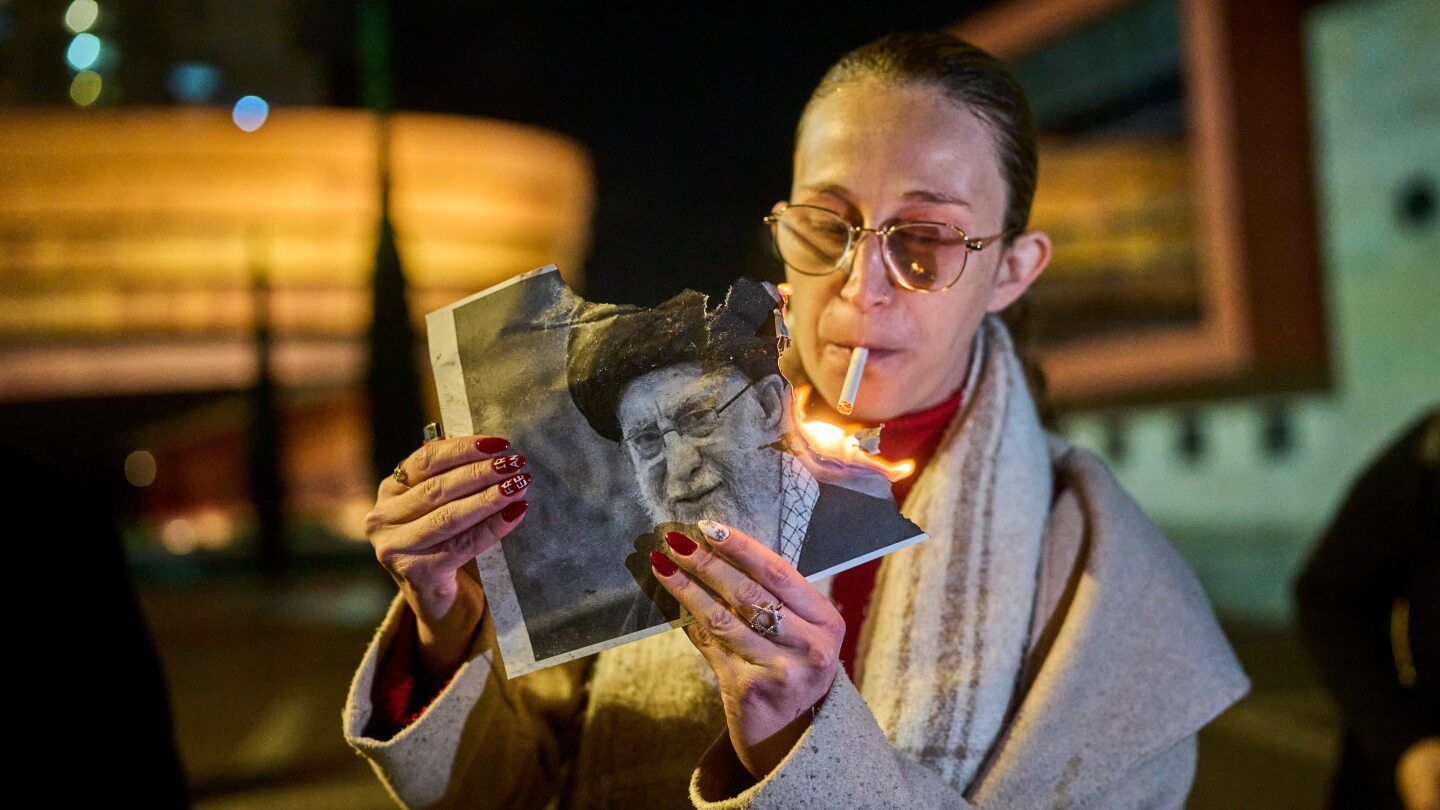
The U.N. Security Council scheduled an emergency meeting Thursday at 3 p.m. ET to discuss Iran’s deadly protests at the request of the United States, even as President Donald Trump left unclear what actions he would take against the Islamic state.
Tehran appeared to make conciliatory statements in an effort to defuse the situation after Trump threatened to take action to stop further killing of protesters, including the execution of anyone detained in Tehran’s bloody crackdown on nationwide protests.
Iran closed its airspace to commercial flights for hours without explanation early Thursday and some personnel at a key U.S. military base in Qatar were advised to evacuate. The U.S. Embassy in Kuwait also ordered its personnel to “temporarily halt” travel to the multiple military bases in the small Gulf Arab country.
What to know:
US sanctions Iranian officials accused of repressing protests: The Treasury Department designated 18 people and companies that the U.S. says have participated in laundering money from sales of Iranian oil to foreign markets. Among other things, the sanctions deny access to any property or financial assets held in the U.S. and prevent U.S. companies and citizens from doing business with them. However, they are largely symbolic since many of them do not hold funds with U.S. institutions.Why the demonstrations started: The collapse of Iran’s rial currency has led to a widening economic crisis in Iran. The nation has been struggling with an annual inflation rate of some 40%. The protests began in late December with merchants in Tehran before spreading. While initially focused on economic issues, protesters soon began chanting anti-government statements as well.At least 2,615 demonstrators killed: The death toll, reported by U.S.-based Human Rights Activists News Agency, exceeds any other round of protest or unrest in Iran in decades and recalls the chaos surrounding the country’s 1979 Islamic Revolution.