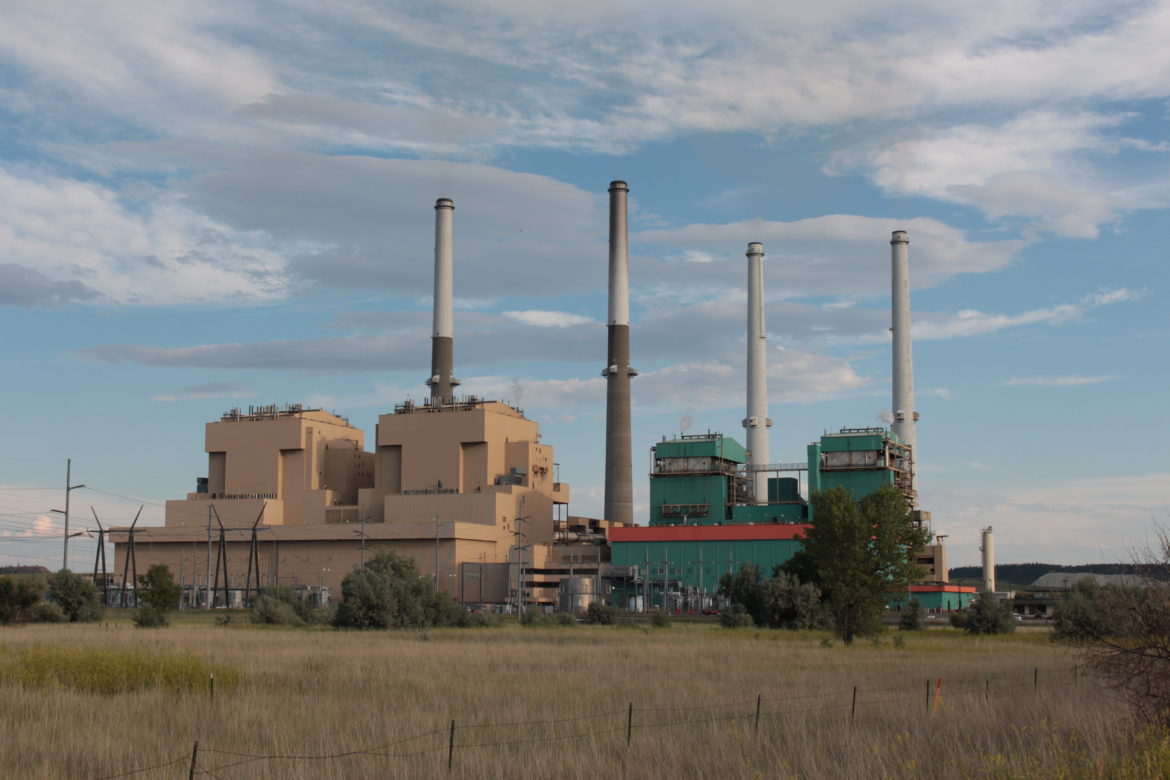
NorthWestern Energy, the utility giant that serves nearly half of Montana’s electricity customers, took official ownership of a majority stake in the remaining operational units of Montana’s Colstrip coal power plant Jan. 1. As a result, the shareholder-owned utility has the ability to generate more electricity than ever before to power Montanans’ homes and businesses — or to sell to new customers.
Energy watchdogs, among them environmental groups that have long hoped to see Colstrip shut down, want to know more about the monopoly utility’s plans for all that extra power, which NorthWestern has touted as a “critical” resource to keep Montana’s grid stable for its 400,000 residential electric customers. Among the questions in circulation are whether the utility will instead use it to serve energy-hungry data centers and how long it plans to keep Colstrip running.
To the chagrin of NorthWestern’s critics and regulators, the company hasn’t been particularly forthcoming about its plans for using its newly acquired Colstrip power, some of which could be used to serve new data centers or sold out of state. The company maintains that existing customers won’t end up paying more as a result of the acquisition.
Montana Free Press parsed regulatory filings and spoke with utility experts to learn more about NorthWestern’s plan to sell power on the open market and how regulators are approaching the issue, which one former Montana utility commissioner described to MTFP as rife with risk for NorthWestern’s ratepayers.
This is what we know.
WHY IS NORTHWESTERN GETTING MORE COAL POWER?
Washington state lawmakers passed a bill to fight climate change in 2019 that bars utilities in that state from having coal-fired power in their portfolio after the end of last year. The law, aimed at reducing atmosphere-warming emissions of carbon dioxide, affects two of the utilities that had major stakes in Colstrip: Avista and Puget Sound Energy.
Avista announced its exit plan in 2023: transferring its 222-megawatt share of Colstrip to NorthWestern when the Washington law took effect. A year and a half later, Puget reached a similar agreement for its 370-megawatt share of the plant. In both cases, NorthWestern agreed to pay “zero dollars” for the transfer, which John Hines, NorthWestern’s vice president of energy supply and government affairs, described at the time as being “absolutely critical for the community, for the state, and allowing us to have sufficient, adequate power in Montana.”
Put together, the shares are capable of generating enough energy to meet the annual electricity needs of approximately 475,000 homes. When combined with the 222 megawatts of Colstrip NorthWestern has owned for years, the acquisitions also give the company a 55% majority ownership stake in the plant, which has historically been jointly managed by an array of utilities in Montana, Washington and Oregon. That expanded stake is enough, NorthWestern hopes, to steer the aging plant’s future amid conflicting views among owners about when it should be shut down — and how much money it’s smart to funnel into operating and maintaining it in the interim.
In a Jan. 1 statement about the share transfer, current NorthWestern CEO Brian Bird described the company’s Colstrip strategy as “responsible progress” that will ensure the company has access to enough generation capacity to keep Montana’s power supply stable when grid-straining cold snaps overlap low-production periods for wind and solar facilities.
“By securing the Colstrip Plant’s capacity today, we’re safeguarding reliability during the harshest weather — and creating space for tomorrow’s opportunities,” Bird wrote.
WHAT ARE NORTHWESTERN WATCHDOGS WORRIED ABOUT?
Even before NorthWestern publicly disclosed its courtship with data centers, longtime NorthWestern critic Montana Environmental Information Center expressed concerns about the utility’s plans for Colstrip.
Along with the Sierra Club, MEIC has argued that the “free” price of the extra Colstrip shares obscures very real costs of owning and operating the 40-year-old plant: coal to fuel it, personnel to run it, a hefty annual property tax bill, and expensive equipment maintenance.
MEIC maintains that it’s foolish for NorthWestern to double down on coal power when other generating options such as solar and wind are cleaner and often cheaper on a per-megawatt-hour basis. The environmental group has also argued for years that the plant is not as reliable as NorthWestern would have its customers believe.
WHAT ABOUT THOSE DATA CENTERS?
MEIC’s concerns escalated last year when NorthWestern announced that it has reached tentative agreements with proposed data centers that would require enormous amounts of electricity. Sabey Data Centers is planning a development outside of Butte that could require up to 250 megawatts and an existing facility in Butte, operated by Atlas Power, is seeking another 150 megawatts of NorthWestern-supplied power. A recently-formed company called Quantica anticipates using an eye-popping 1,000 megawatts of power by 2030 for a “hyperscale” facility for artificial intelligence and other tech applications located in the Billings area. If all three of those projects come to fruition as proposed, their electrical demand will combine to more than double the amount of power NorthWestern currently supplies to Montana customers.
That extra electricity would need to be generated somewhere. It could also need new transmission lines to move it around. While the company has said that new customers will pay “their fair share of service and integration costs,” MEIC and other skeptical observers worry that existing customers will end up on the hook for the costs of retooling the electric grid to serve a handful of massive data centers.
Jenny Harbine, an Earthjustice attorney representing MEIC in energy-related litigation, described the NorthWestern’s Colstrip expansion as “exceptionally costly for ratepayers on Day One” of the transfer. She’s also critical of NorthWestern’s lack of transparency regarding its plans for the facility.
Ken Toole, a former member of Montana’s elected utility regulation board, the Public Service Commission, argued that the combination of “speculative investment” and aging coal infrastructure could set up a dynamic similar to the energy fiasco the state saw in the late 1990s. Back then, the state’s dominant utility company, Montana Power, went all-in for telecommunications, overextended itself and declared bankruptcy. In a 2003 exposé titled “Who Killed Montana Power?” CBS News said the debacle “exemplified the worst of American capitalism.”
“Well, here we are again,” Toole said. “At that time, the big, shiny object was telecom and the rate of return you do in telecom. At this point in time, I think the big, shiny object is data centers. Nobody knows what they are, nobody knows how they operate, nobody knows how stable they are as a business.”
Where the dynamic could get “sticky,” Toole said, is if a data center venture fails, leaving NorthWestern on the hook for the cost of transmission lines and substations built to serve it. The utility could end up paying off the debt it incurred for the undertaking with revenue from its most reliable revenue stream: small business and residential ratepayers.
“Consumers are at risk unless it’s done right, and I’m not sure how easy it is to do it right,” Toole said.
RELATED
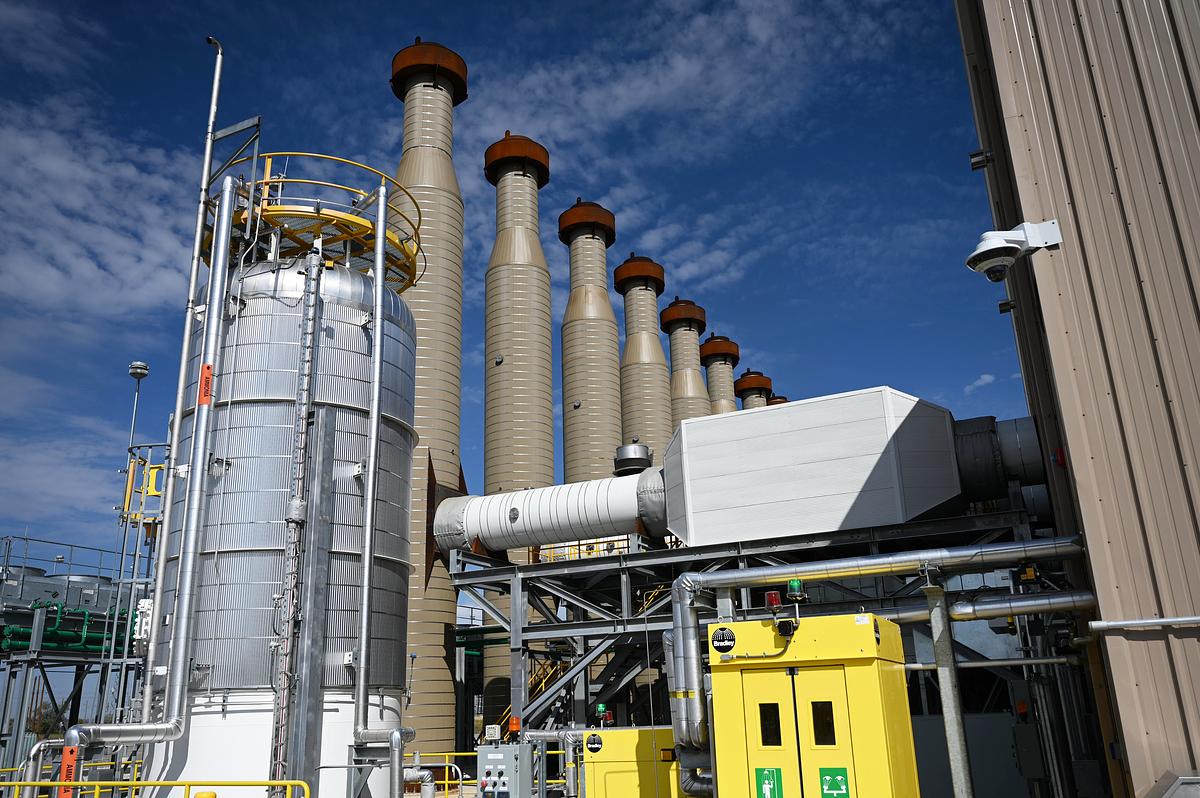
In a petition before the Public Service Commission, a coalition of groups working on energy, climate and social justice issues argued that hundreds of thousands of Montanans will face higher bills unless the state’s utility regulator provides stricter oversight of NorthWestern Energy, the state’s largest utility. NorthWestern has inked agreements with at least three data centers that will, if built, require every megawatt of energy the company can currently generate, and then some.
WHO’S RESPONSIBLE FOR PROTECTING CONSUMERS?
State and federal energy regulators have complementary, but distinct, roles to play.
The state-level utility regulator, the PSC, is generally responsible for balancing the financial health of the shareholder-owned utilities with the interests of their customers, who can’t shop around for service from other companies.
In contrast, the PSC’s federal counterpart, the Federal Energy Regulatory Commission, acts as a referee when companies sell and move power on the open market to ensure that the rates they charge are “just and reasonable.”
MEIC is pushing both state and federal regulators to scrutinize NorthWestern’s plans for any new power-generating capacity it uses to serve new customers, including data centers. But government officials aren’t necessarily on the same page about the best path forward and neither regulatory agency appears to be finished reviewing NorthWestern’s plans for the extra Colstrip shares despite the fact that the transfers have already occurred.
Let’s start with FERC — the federal regulator. In mid-October, NorthWestern formed a wholly-owned, non-utility subsidiary called NorthWestern Colstrip and asked FERC to approve a plan for that subsidiary to sell the electricity from the part of Colstrip previously held by Puget to customers on the open market (as distinct from the homes and companies it currently serves that are part of its PSC-regulated business). In order to do that, the company has pitched the federal regulators on a tariff structure it could use to sell electricity to an international power broker called Mercuria.
MEIC weighed in in opposition to that request before FERC in November, arguing that existing Montana customers are at risk of “cross-subsidization” — a utility no-no where one group of customers pays for another group’s service needs. MEIC also argued that NorthWestern should have sought approval in advance for picking up the shares in Colstrip — something the company didn’t do because it says the zero-dollar purchase price was below a threshold requiring federal scrutiny of power generation asset transactions valued at $10 million or more.
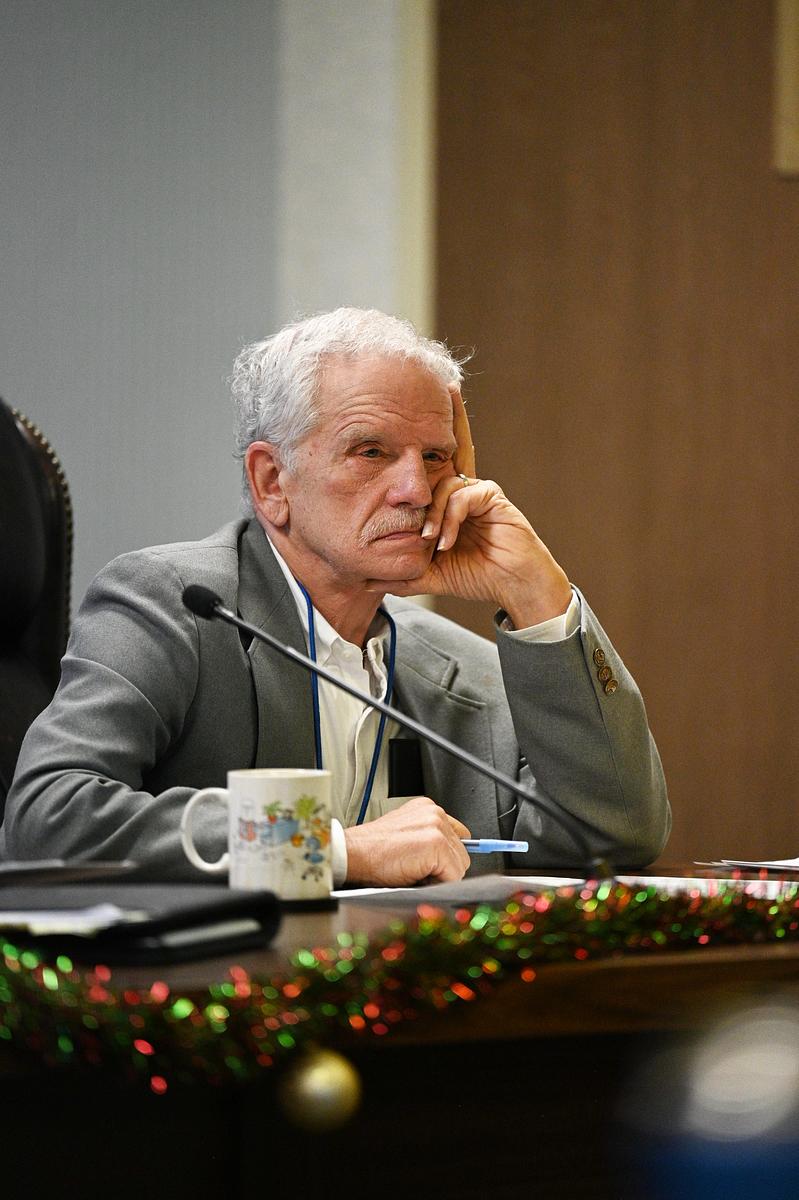 Public Service Commissioner Brad Molnar listens during a Public Service Commission meeting on Dec. 9, 2025, in Helena. Credit: Lauren Miller, Montana Free Press, CatchLight Local/Report for America
In December, Public Service Commissioner Brad Molnar convinced the state regulatory agency to intervene in the matter. He said in an interview that he wants Montana regulators to be part of the conversation because he thinks the new-to-NorthWestern Colstrip power will be cheaper to generate than the power from other NorthWestern-owned assets such as the Yellowstone County Generating Station, $247 million of which is being incorporated into customers’ bills. He’s also critical of the “shell company” NorthWestern created to facilitate the sales.
To Molnar’s chagrin, a majority of his fellow commissioners ultimately decided to reverse course, with one writing in a letter to FERC that the PSC “can assess the prudency of the transactions” on its own and would open its own investigation.
“We have pulled ourselves out of the biggest energy fight that I’m aware of,” Molnar said of the development, going on to accuse his colleagues at the PSC of “pretending to lower rates by nibbling around the edge of what NorthWestern wants.”
WHAT IS THE PUBLIC SERVICE COMMISSION LOOKING INTO?
MTFP reviewed the filings that have been made as part of the PSC’s investigation into NorthWestern’s “acquisition and subsequent treatment of” new Colstrip capacity. So far, the only filings submitted as part of the investigation are a letter from the PSC asking if NorthWestern plans to seek regulatory approval for taking on a bigger share of the coal plant — and a reply letter from the company saying no. Both came before the PSC’s aborted attempt to involve itself in the federal regulatory proceedings.
NorthWestern wrote in its response letter that since the Puget shares would be transferred directly to its new subsidiary, NorthWestern Colstrip, the transaction falls outside the PSC’s jurisdiction. NorthWestern’s attorney, Michael Green, wrote that the arrangement “provides maximum flexibility to deploy this resource in a way that assists existing large loads and facilitates economic development without impacting current utility customers.”
That argument is similar to one Green made last month when he defended the company’s proposal to establish power purchase agreements with a handful of Montana companies for some of the Colstrip power previously owned by Avista. That agreement, tentatively approved by the PSC on Tuesday, makes accommodations for plant maintenance and coal costs and will, according to NorthWestern, protect its existing customers from shouldering those costs.
WHAT ARE FEDERAL REGULATORS DOING?
On Dec. 23, FERC asked NorthWestern for more information about Colstrip’s value — presumably to assess compliance with the $10 million threshold for regulatory review — and for more detail about how disagreements between plant owners are handled.
More specifically, FERC asked to know the “original cost undepreciated” or the “original book value” of Puget’s shares of the Colstrip plant. It also wanted to know more about the timing and logistics of the transfer between Puget to NorthWestern. Finally, it asked for more detail on the ownership agreement that governs the plant’s future. FERC wants to know, for example, if any of the plant’s co-owners have rights or veto powers that are “disproportionate” to other owners.
Why the latter information matters to FERC is hard to decipher. The agency declined multiple requests by MTFP for an interview.
Last week, NorthWestern submitted a suite of materials maintaining that, while the former owner estimated the value of its stake in the plant at $542 million in the mid-1980s, it is now appropriately valued at $0 and will be recorded on its books as such.
William Booth, an attorney who specializes in FERC law, told MTFP that NorthWestern’s response restarted a 60-day timer. That means the plant’s future — at least as it relates to the Puget shares now under NorthWestern’s possession — should come into sharper focus during the first half of April.