

The Bank of Israel governor has not yet been asked to join the statement, but a request is expected, since central bank chiefs are due to receive such appeals soon, according to the international group of governors to which each belongs.
In the past, even before the Trump era, Yaron joined expressions of support for Powell, with both stressing the need to stand firm against political pressure and to safeguard central bank independence.
If the Israeli governor decides in the coming days to sign the statement, it will amount to a clear rebuke of President Trump, the strongest supporter of Prime Minister Netanyahu and of Israel. Such a move could seriously undermine relations between the two, particularly against the backdrop of the severe crisis involving Iran and President Trump’s extensive assistance and support for Israel.
One point is worth noting: Under the law, the governor of the Bank of Israel may serve only two five-year terms. Yaron is already two and a quarter years into his second term. The implication is that he need not “fear” not being reappointed if he signs the statement and therefore has no reason to feel “obligated” to the prime minister.
Time will tell how Netanyahu-Yaron relations develop if the Israeli governor does indeed sign the statement as an act of solidarity with the American central bank chief, who is, to put it mildly, not among President Trump’s favorites.
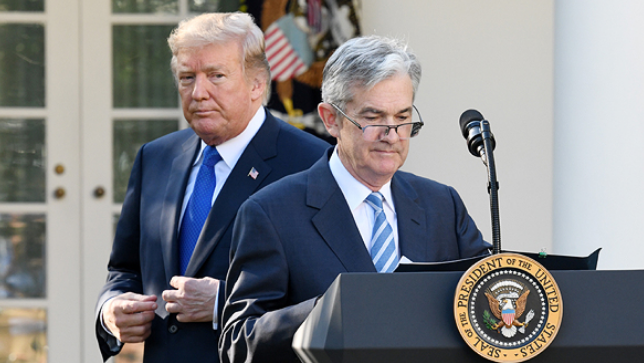
For some time now, many have viewed Yaron as the “responsible adult” guarding the stability of Israel’s economy and banking system. This comes as the government once again failed to approve the state budget on time, as required by law, ahead of the new calendar year, leaving the country to operate under an outdated continuing budget.
Netanyahu and Yaron have clashed before, even quite recently. The latest incident occurred several weeks ago at a Cabinet meeting on the state budget attended by Yaron. Netanyahu barked at the governor, almost as an order: “Lower the interest rate.” Yaron, who was in the middle of remarks about the structure of the budget, was stunned but, as usual, responded with restraint and great courtesy and did not reply directly to the prime minister.
In fact, this amounted to a completely prohibited intervention by political figures, led by the prime minister and at times also ministers, in matters that fall exclusively under the authority of the Bank of Israel, foremost among them monetary policy and the setting of interest rates. In some countries, when such interference with central bank authority occurred, as in Argentina in the past, it led to the governor’s immediate resignation. In Israel, no such resignation is expected following the prime minister’s remark and ministers’ attacks on the governor.

However, in response to a question last week from ynet and Mamon, following the Bank of Israel’s surprising interest rate cut for the second consecutive time by a quarter point, Yaron was asked whether the prime minister’s comment had influenced the decision. He replied in sharp, vivid language. The governor said the Bank of Israel building has well-sealed windows, so outside noises cannot be heard on the seventh floor, where the Monetary Committee meets, and remarks of that kind have no impact on interest rate decisions.
The finance minister, with Netanyahu’s backing, did not heed the Bank of Israel’s calls to reduce coalition funds, close unnecessary government ministries, or raise, and even double, the exemption from value-added tax on personal imports from abroad.
On another issue, the governor appears particularly angry that the finance minister, with the prime minister’s support, decided to impose a new fixed tax on bank profits. Amid recent criticism directed at the Bank of Israel for not intervening to curb banks’ outsized profits, anger within the central bank was fueled by the fact that the special tax was imposed on only one profitable sector, the banks.
Legal experts even argue that the High Court of Justice is likely to strike down the new special tax because it discriminates against banks compared with other highly profitable sectors, such as high-tech, food and apparel.