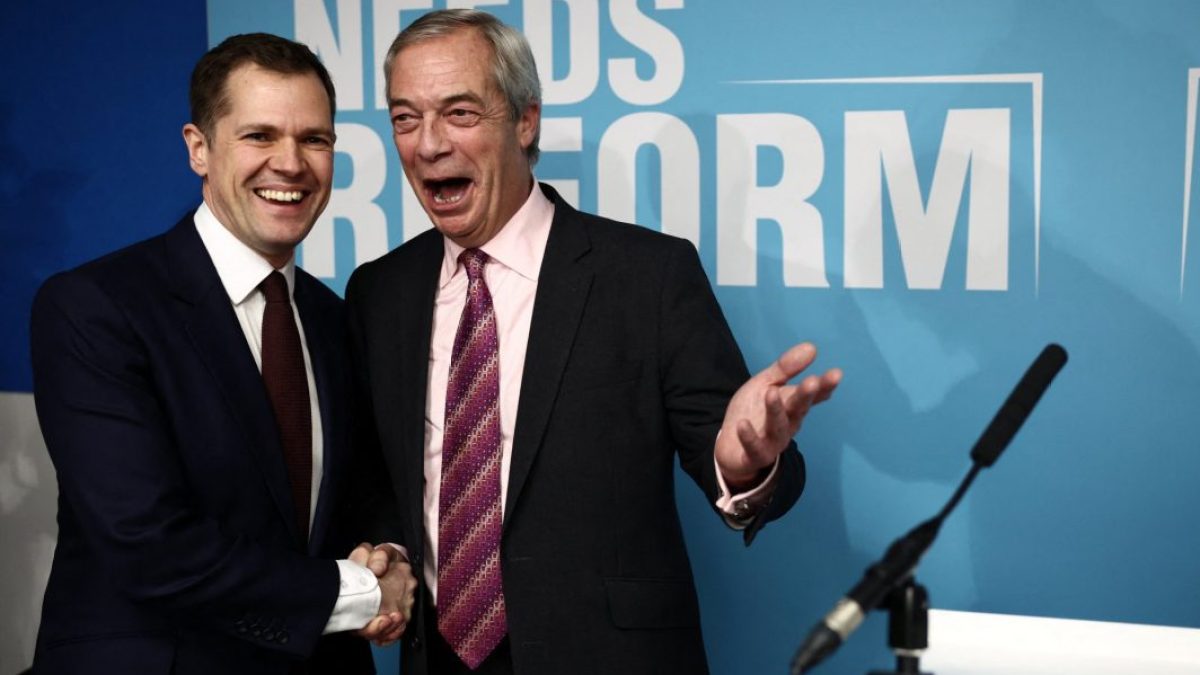
The sacking of Robert Jenrick has been framed as a story about the Tories, another twist in the endless Conservative psychodrama that Kemi Badenoch is so eager to end.
What does this latest saga, however, mean for the party to which Jenrick has defected?
Reform UK looked as though they were peaking at the end of last year. The campaign against Farage picked up in earnest. There were stories dug up from the dim and distant past.
Personally, I think trawling for what someone said 50 years ago at school is pretty desperate. But this scrutiny has had some effect. And, if you think it’s unfair, Nigel, welcome to big-league politics. Anyone who aspires to be a prime minister can expect relentless, remorseless scrutiny.
This year, however, has started with a bang for Reform UK. My old friend, and immediate predecessor as chancellor of the exchequer, Nadhim Zahawi, announced his defection to Reform to great fanfare, only a few days ago.
The Tories accused him, probably correctly, of seeking a peerage from them. Rebuffed, he switched to Reform where he seems to have been welcomed with mixed feelings. Farage knows him and is friendly with him. Lesser figures in Reform remain less convinced. Zahawi left Parliament in the summer of 2024.
Jenrick, on the other hand, is a sitting MP. He came second in the Tory leadership contest which was concluded barely 14 months ago. He has been, since then, an energetic and vocal member of a Shadow Cabinet not particularly known for its visibility.
He is a big scalp for Farage, but he also will create a further problem.
Reform’s leader is not noted for his ability to deal with big egos. Already in this Parliament we have seen a potential rival, in the form of Rupert Lowe, brutally ejected from the party.
Jenrick, sitting in the House of Commons as a Reform MP, will immediately be talked of as a potential leader. Despite inevitable protestations to the contrary, the media and friends and enemies of Farage would see possibilities in this.
He would perform the same function in Reform as he did in the Conservative Party, as a plausible alternative leader. Jenrick acolytes would point to his policy experience, his relative youth, as well as his knowledge of government as a minister. All attributes in which Farage, for all his charisma, is deficient. Jenrick will never be fully trusted by the team around Reform’s current boss.
Beyond the saga of Jenrick, a man for whom I have a lot of affection and respect, there is a wider problem for Reform.
He is the second Conservative MP to turn to the tender embrace of Reform. More significantly, more than 20 former Tory MPs have trodden that particular path.
The danger for Reform is that it will look like a Tory party 2.0, a pale imitation, much like those awful tribute acts to 1980s pop groups that we see from time to time.
This development is unlikely to help Reform win those “Red Wall” seats, so crucial to winning a general election. The egos and ambitions of these former Conservative political refugees will collide with Farage who, for all his outward bonhomie, retains a vice-like grip on the party he created.

Ambitious men (and the Tory defectors have been overwhelmingly male) like Jenrick and Zahawi will think they have a path to the ultimate prize in British politics.
We may think such ideas are fanciful but one should never underestimate the ambition of frontline politicians. They will have worked out a path to the top in their fervid imaginations.
Farage will make a show of welcoming the political refugees from the Tory party. He will be gracious and hospitable to them, but he can see the risk in accepting so many of them into Reform – which is essentially his personal fiefdom.