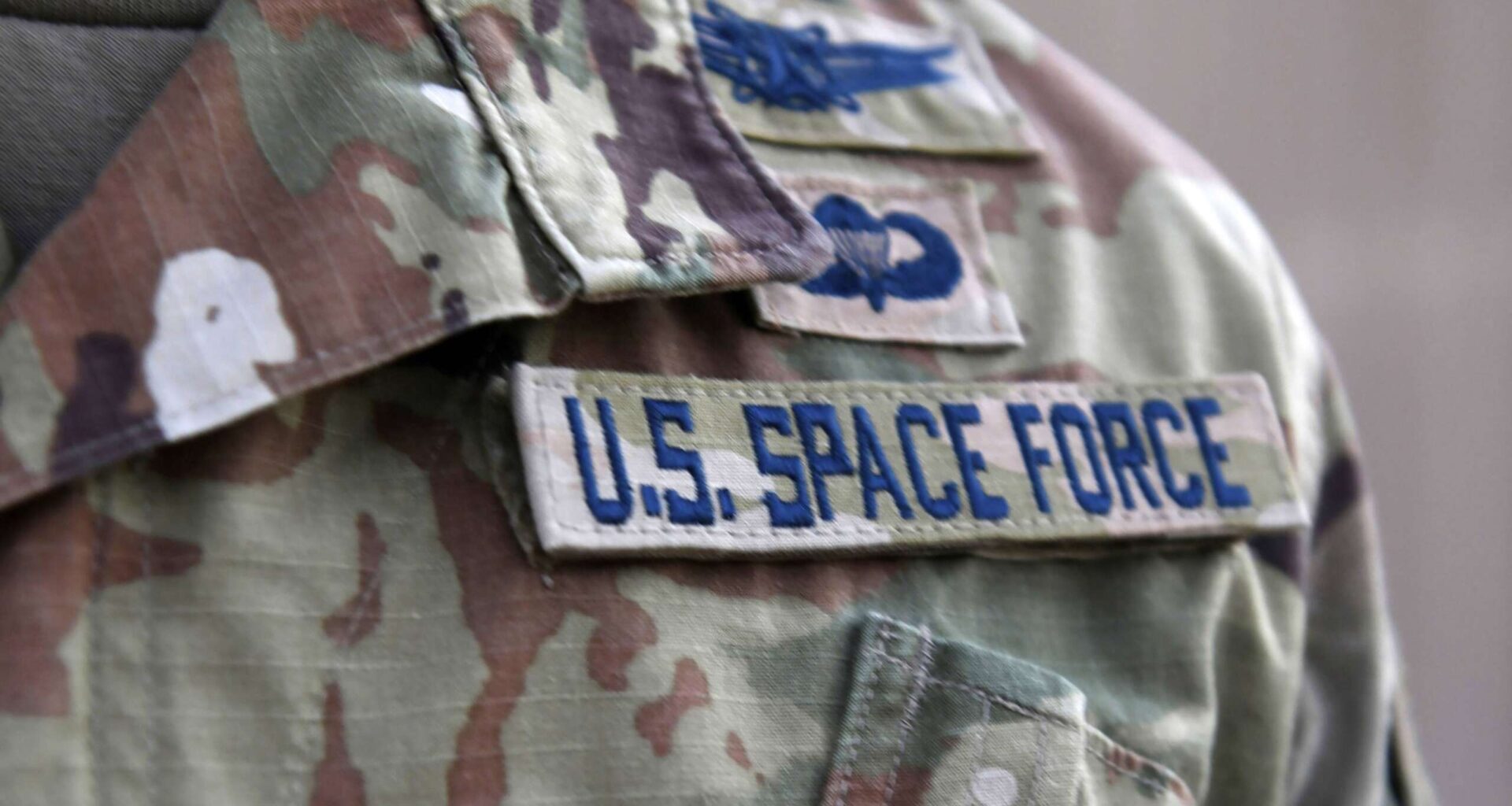
The nation’s newest military service still has a lot of work to do to chart its future. The Space Force had been planning to use a new “Futures Command” to handle that work, and it was supposed to be up and running by last year. That didn’t happen as scheduled, but the idea’s not dead either.
Leaders say they’re still planning a new organization to help shape the service’s future, but they also needed to make sure it aligns with the new administration’s priorities.
The Space Force first unveiled its plans for a new Futures Command almost two years ago. The idea at the time was to combine the existing Space Warfighting Analysis Center and the Concepts and Technologies Center with a new Wargaming Center. Those plans were put on pause late in 2024 when it became apparent new political leadership was on the way.
]]>
But Gen. Chance Saltzman, the chief of space operations, said Air Force Secretary Troy Meink is on board with the overall idea.
“Secretary Meink 100% understands what we were trying to accomplish with Futures Command and the importance of it,” he said during the annual Spacepower conference in Orlando, Florida, last month. “How are we looking at the future? How are we categorizing and characterizing the threats we’re going to face, the missions we’re going to be asked to do, and how are we going to respond so that we can put the force in place to meet those challenges? We will look at concepts, we will do the war gaming, we will do the simulations, we will do all the manpower assessment, we will do the military construction surveys to figure out what facilities are needed, and then document that so that everybody can see what we’re progressing towards. It is this idea of establishing a command that’s focused on what is it we’re going to need in the future and making sure all the planning is done, synchronized with the resources so we get that right.”
And while the Space Force certainly isn’t the first military service in recent years to contemplate a new command as part of big organizational changes, it is the first time in modern history that a service is having to do that from scratch.
“In December of 2019, the law said, ‘There is a Space Force,’ and nothing could have been further from the truth,” Saltzman said. “It legally made there be a Space Force, but it was still in work. It was a thought process, it was pulling things together as rapidly as possible. So I think the hardest thing is overcoming this mentality that there’s been a Space Force for decades, that we’ve got all this figured out. These are hard things to do on a government scale with government oversight and government resources. And so convincing people that we had to start from scratch on almost every process we had, on every decision we make, that was unprecedented. Convincing people that we don’t really have anything to fall back on. If I don’t deliver a service dress [uniform], then we’re using an Air Force service dress — there wasn’t something else. We had plenty of uniform changes when we were growing up, but there was always an Air Force uniform before those changes that we were in until we transitioned. Not the case for the Space Force. We had to start from scratch. We’re not just enhancing the Space Force, we’re actually creating one. And that’s been a real challenge.”
New leadership education initiatives
The Space Force traces most of its roots to the Air Force, and until now, it’s leaned heavily on its sister service within the Department of the Air Force for combat support and other functions. But it’s increasingly working to build infrastructure, doctrine and culture of its own.
As one example, Saltzman said just last month, the Space Force launched its own Captains Leadership Course. That initiative is a partnership with Texas A&M University and led by the Space Force’s Space Training and Readiness Command.
“The bottom line is each service brings something unique in terms of what it focuses on for professional military education. I remember General [Jay] Raymond, when he stood up the service, talked about some of the things that services have to do. You have to have your own budget, you have to have your own doctrine, you have to develop your own people. And that’s kind of stuck with me,” he said. “We have to develop our Guardians for the specifics of the Space Force. And this basic understanding at the captain’s level is going to be foundational to what follows in the rest of their career. And so while we need to find ways to give them experience with other services, I wanted to make sure that the service had a core offering at that grade to educate our officers on the Space Force. Now we’re going to include joint doctrine, will include communications and leadership. But they need that foundational understanding of the service first before they start to branch out and figure out how they integrate with the other services.”
]]>
First Space Force OTS graduates
And in 2025, the service graduated its first group of newly-minted officers from officer training school. Those first 80 officers, Saltzman said, represent a mentality within the service that seeks to build “multidisciplinary” leaders. The enlisted force, he says, will be tactical experts, while officers will need expertise in “joint integration.”
“Do we need deep expertise? Absolutely. Do we need people that broadly understand how to integrate with a joint force? Absolutely. How do you do both? This is the tough part of the job, you have to get that balance just right,” he said. “If you go down to kind of the micro management side of this and ask how you develop a single Guardian to best perform, then you get caught in that conundrum. I have to think about what I need the entire service to be able to do. Do I need deep experts? Yes. Do I need broad integrators? Yes. So we have to find a way to, across the entire service, create opportunities to maximize what people can do, what they do best, and fill the jobs that are required based on those skills and those competencies. You have to make sure you think about it from an enterprise perspective, and what might apply to any one Guardian doesn’t necessarily have to apply to all Guardians.”
Copyright
© 2026 Federal News Network. All rights reserved. This website is not intended for users located within the European Economic Area.