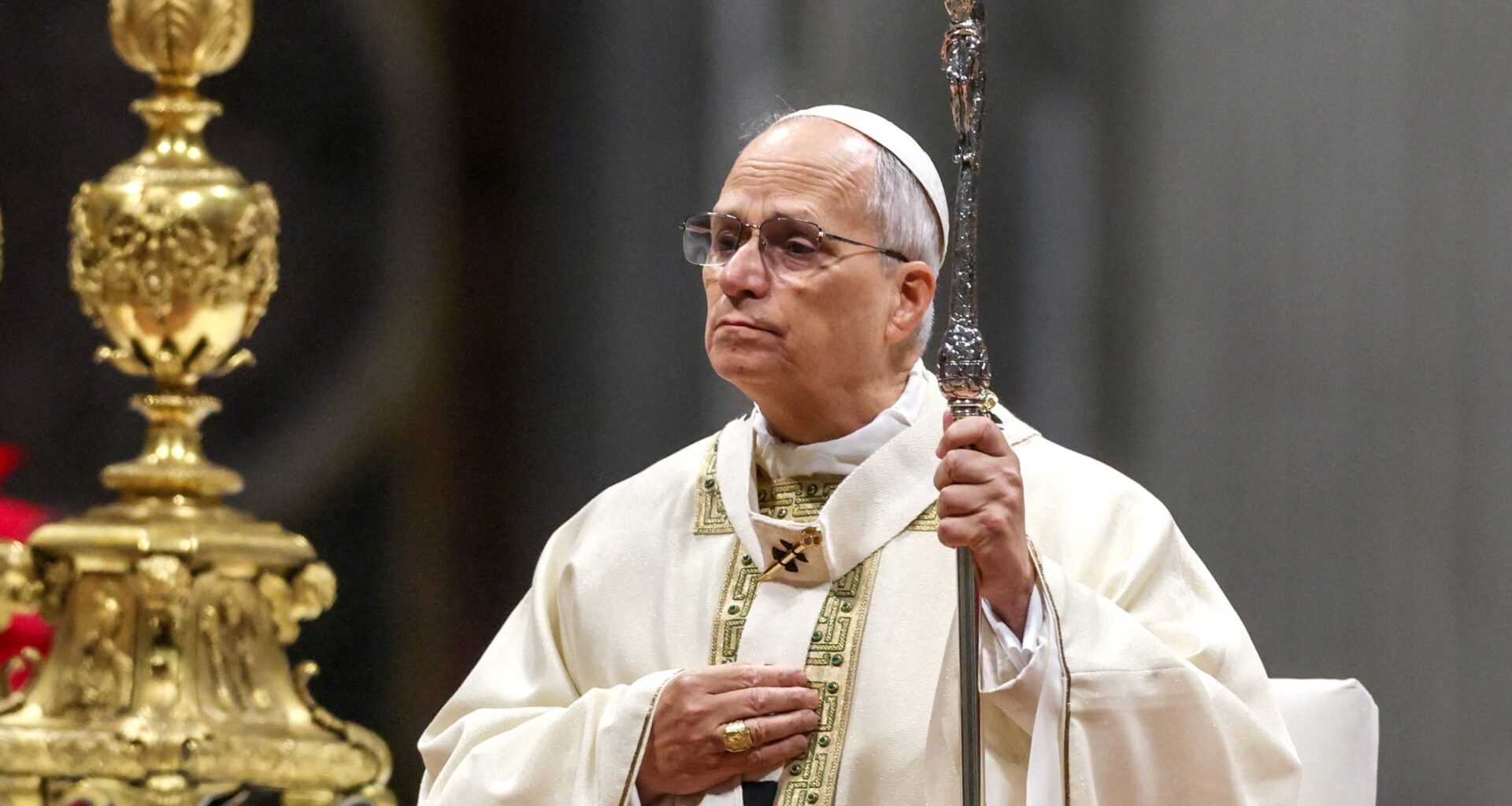
In Pope Leo XIV’s apostolic exhortation “Dilexi Te,” the divine declaration “I have loved you” echoes a clarion call that orients the church toward the poor, the excluded and the marginalized. For African women on the margins who have lived under the weight of social, economic and spiritual marginalization, this message is not only affirming; it is also transformative.
Love is a lived reality, not a fleeting sentiment. It manifests in the grandmother raising her grandchildren after losing her children to H.I.V./AIDS, in the poor woman in a rural village who shares her meager meal with a neighbor or the widow who leads a small Christian community under a tree with courage and hope. This is the kind of love that “Dilexi Te” calls us to recognize—a love that is incarnational, resilient and rooted in solidarity.
As an African woman theologian, I read “Dilexi Te” not as an abstract ecclesial document, but as a reflection of the spiritual wisdom and lived theology of African women. The exhortation’s insistence that “faith cannot be separated from love for the poor” rings true for us as the foundation of our theology and our daily lives.
Pope Leo’s invocation of the “Magnificat” in the pastoral letter is a profound theological gesture. “He has cast down the mighty from their thrones and lifted up the lowly” (Lk 1:52) is not merely a poetic flourish; it is a statement of protest. For African women, the “Magnificat” is not confined to liturgical recitation. It resonates in the fields, in refugee camps, in the quiet corners of homes where women gather to pray and lament. It is the voice of those who challenge patriarchal structures, who demand justice in the face of corruption, who nurture life in the midst of crisis. It is an unspoken theology of hope forged in the crucible of suffering.
One of the most compelling aspects of “Dilexi Te” is found in its call to move from charity to solidarity. Charity, while well-intentioned, gives from abundance and surplus without challenging the systems that create scarcity. Solidarity, by contrast, is embodied. It walks alongside, listens and learns. It shares in the struggle.
African women have long practiced this theology of solidarity. In informal sharing groups, in community health initiatives and in grassroots peacebuilding efforts, we have modeled what it means to love in action. “Dilexi Te” challenges the global church to learn from these models, moving beyond paternalism and toward partnership. This shift is especially urgent in theological education and ecclesial leadership. “Dilexi Te” calls for a more inclusive and contextual theology that honors the voices, experiences and insights of African women.
The exhortation’s attention to migration, education and equality speaks directly to the realities facing African women today. Migration is not merely a geopolitical issue—it is a theological one. Women who flee conflict, climate disasters or economic hardship carry with them stories of faith, resilience and divine accompaniment. They are modern-day analogues of Mary of Nazareth, seeking refuge while bearing life.
Education, too, is a theological imperative. In many African contexts, girls’ education remains undervalued. Yet, when women are educated, they become leaders and changemakers. “Dilexi Te” affirms that education is a tool for development and a path to liberation, a means of reading Scripture, interpreting tradition and challenging injustice.
Equality is the third strand in this concern. African women theologians have long argued that patriarchy is not divine; it is a distortion of God’s justice. “Dilexi Te” strengthens this argument as a Gospel truth, calling the church to recognize and elevate the voices of women—not as tokens, but as theologians, prophets and leaders.
The African philosophy of ubuntu—“I am because we are”—offers an apt theological lens through which to read “Dilexi Te.” This communal ethic aligns with the exhortation’s vision of a church rooted in love, justice and shared humanity. To love the poor is to affirm our interconnectedness; to defend the excluded is to defend the image of God in each person. This theology of communion challenges the individualism and indifference of our times and calls us to see the church not as a hierarchy of power but as a body of mutual care. If African women, often relegated to the margins, are brought to the center, their stories, their wisdom and their leadership will add to the health and holiness of the church.
More than a pastoral letter, “Dilexi Te” is a prophetic invitation to reimagine the church. It calls us to rethink leadership, liturgy, ministry and mission through the lens of those on the margins. This means elevating women’s voices in theological education, in preaching and in decision-making. It means celebrating liturgies that reflect African communal struggles and honor women’s labor and lament. It also means confronting ecclesial and societal structures that perpetuate exclusion. The church must be a sanctuary not only in name but in practice, a place where the poor are empowered, women are celebrated and love is practiced.
In the end, “Dilexi Te” is a love letter from Christ to the poor, reminding us that divine love is not abstract but embodied and life-giving. For African women, this love has always been a source of strength, a wellspring of hope, a call to action.
As an African woman theologian, I receive this exhortation with both gratitude and urgency. Gratitude for the recognition of our dignity, our wisdom and our witness. Urgency to continue the work of liberation and to proclaim through word and deed that Christ’s love is for all, especially those the world forgets easily. In every act of justice, every prayer and every song of resistance, we hear the voice of Christ saying again: Dilexi Te—I have loved you.
Editors’ note: A shorter version of this essay appears as the Last Take in the February 2026 issue of America.
This article appears in February 2026.
Related