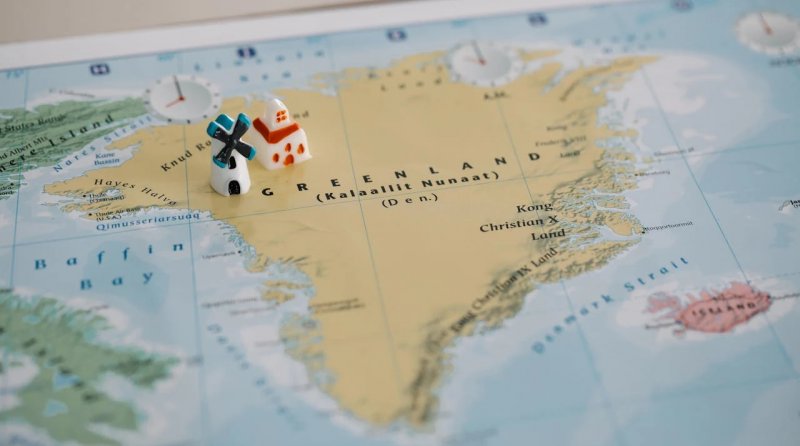
In mid-January 2026, Greenland moved to the center of international attention after Denmark began deploying small contingents of European allied troops to the island, News.Az reports.
The move is led by Denmark and supported by several European partners on a rotational basis. Copenhagen has described this as the beginning of a more sustained security presence in the High North, reflecting heightened geopolitical sensitivity around Greenland and the wider Arctic.
Why are European troops going to Greenland
The immediate backdrop is renewed political tension linked to statements from the United States suggesting interest in acquiring Greenland. Danish and Greenlandic leaders have categorically rejected such ideas, stressing sovereignty and international law. Denmark is presenting the troop deployments as a defensive and alliance-based measure, aimed at strengthening Arctic security, improving surveillance and readiness, and demonstrating NATO solidarity in a strategically exposed region.
What did Denmark and Greenland say about U.S. pressure
Officials in both Copenhagen and Nuuk have reiterated that Greenland is not for sale and that only the people of Greenland can decide their future. Recent high-level discussions with U.S. officials reportedly ended without agreement, underlining a fundamental divergence of views. Greenland’s leadership has emphasized self-determination, while Denmark has underlined its responsibility to protect the territory within the framework of the Kingdom and international law.
Is this a NATO mission or a Danish initiative
Formally, the deployments are Denmark-led rather than a full NATO mission. However, NATO allies are involved, and the alliance increasingly treats Greenland and the Arctic as matters of collective security. The distinction is important politically, but in practice the operation reflects NATO’s broader reassessment of the High North as a strategic priority.
What military presence does the United States already have
The United States already operates Pituffik Space Base, formerly known as Thule Air Base, which is the only permanent U.S. military installation in Greenland. The base plays a critical role in missile warning, space surveillance, and Arctic operations. This long-standing presence explains why Greenland is viewed in Washington as vital to North Atlantic and global security architecture.
Why Greenland’s location matters so much
Greenland sits astride the shortest air and missile routes between North America and Europe. This geography makes it central to early-warning systems, tracking of long-range threats, and control of North Atlantic and Arctic approaches. In strategic terms, Greenland functions as a natural platform for surveillance and deterrence in the High North.
How Russia and China are reacting
Russia has rejected Western claims that it poses a threat to Greenland, accusing NATO countries of exaggeration and double standards. China, for its part, has urged the United States not to use other countries as a pretext for expanding its influence, while repeating that its interests in the Arctic are peaceful and economic. Both responses underline how Greenland is becoming entangled in broader great-power rivalry.
What is Greenland’s political status
Greenland is a self-governing territory within the Kingdom of Denmark. Since the 2009 Self-Government Act, Greenland has controlled most domestic affairs, while Denmark retains responsibility for defense, security, and parts of foreign policy. The act recognizes Greenlanders as a people with the right to self-determination under international law, creating a clear legal pathway for future choices.
Could Greenland become independent
Independence remains a long-term option, but it is politically and economically complex. It would require a decision by the people of Greenland, followed by negotiations with Denmark on issues such as finances, citizenship, defense arrangements, and international representation. Ongoing discussions in Nuuk about constitutional development show that the question is alive, even if no immediate timetable exists.
Why minerals and rare earths are central to the debate
Greenland is widely believed to hold significant mineral resources, including rare earth elements that are critical for clean energy technologies, electronics, and defense systems. These resources attract attention from the United States and Europe, particularly as they seek to reduce dependence on Chinese supply chains. For Greenland, however, mineral development raises difficult questions about environmental protection, local consent, and long-term economic sustainability.
Why mining has not taken off despite the hype
Despite geological potential, mining in Greenland faces major obstacles. The climate is harsh, infrastructure is limited, and projects require large upfront investment in ports, roads, power supply, and skilled labor. Regulatory processes and political debate over environmental and social impacts have also slowed progress. As a result, many projects remain at the exploration or planning stage.
Which projects are being discussed most
Some rare earth projects, including those in southern Greenland, have recently attracted renewed media and investor attention because of geopolitical developments. However, analysts caution that political interest does not automatically translate into commercial viability. Concrete progress depends on financing, infrastructure commitments, and regulatory approval.
How climate change factors into Greenland’s importance
Greenland’s ice sheet plays a major role in global sea-level rise, making it a focal point for climate science. Recent observations show periods of unusually intense melting, reinforcing concerns about long-term impacts. This environmental dimension ensures that Greenland remains central not only to security debates but also to global climate policy discussions.
Does melting ice affect security and shipping
Reduced sea ice can extend seasonal access for shipping and operations, potentially increasing traffic in Arctic waters. This raises demand for monitoring, search and rescue capabilities, and protection of critical infrastructure. While the Arctic is not becoming an open ocean highway overnight, changing conditions do increase its strategic and economic relevance.
How Greenlanders are responding to the current spotlight
Greenland’s political leaders have consistently stated that decisions about the island’s future belong to its people alone. Public debate inside Greenland reflects a mix of caution and assertiveness, with concern about external pressure but also interest in leveraging global attention for economic development on Greenlandic terms. The issue has also sparked public discussion and demonstrations in Denmark.
What happens next
Diplomacy between Denmark, Greenland, and the United States is likely to continue, focusing on managing disagreements while maintaining practical cooperation. Denmark’s enhanced security posture may evolve into a more permanent allied presence, signaling a long-term shift in Arctic defense planning. At the same time, mineral development, climate change, and internal political debates about independence will continue to shape Greenland’s trajectory.
The bigger picture
Greenland’s return to the headlines reflects the convergence of several forces: sovereignty and self-determination, NATO’s evolving Arctic strategy, great-power competition, resource politics, and climate change. None of these factors alone explains the current moment. Together, they ensure that Greenland is no longer a peripheral issue but a central piece of twenty-first-century geopolitics.