
HOLLYWOOD, Florida — US special envoy Steve Witkoff suggested on Thursday that the Trump administration prefers a diplomatic resolution, rather than a military one, to the ongoing tensions with Iran, sparked by the regime’s deadly violence against protesters.
Asked in an onstage interview at the Israeli-American Council conference in Florida if he thinks a US military strike against Iran is likely, Witkoff responded, “I hope there’s a diplomatic resolution. I really do.”
The US envoy said a diplomatic agreement with Iran would address four issues: “(1) nuclear enrichment, (2) missiles — they have to cut back on their inventory; (3) the actual [nuclear] material that they have, which is roughly 2000 kilograms enriched anywhere between 3.67 percent and 60%; and (4) the proxies.
He suggested that Iran may be willing to compromise on all four issues because its economy is in such dire straits.
“If they want to come back to the League of Nations, we can solve those four problems diplomatically, then that would be a great resolution. The alternative is a bad one,” he said.
Get The Times of Israel’s Daily Edition
by email and never miss our top stories
By signing up, you agree to the terms
Asked if he has a message to the people of Iran who want the regime to fall, Witkoff responded, “They’re incredibly courageous people, and we stand with you.”
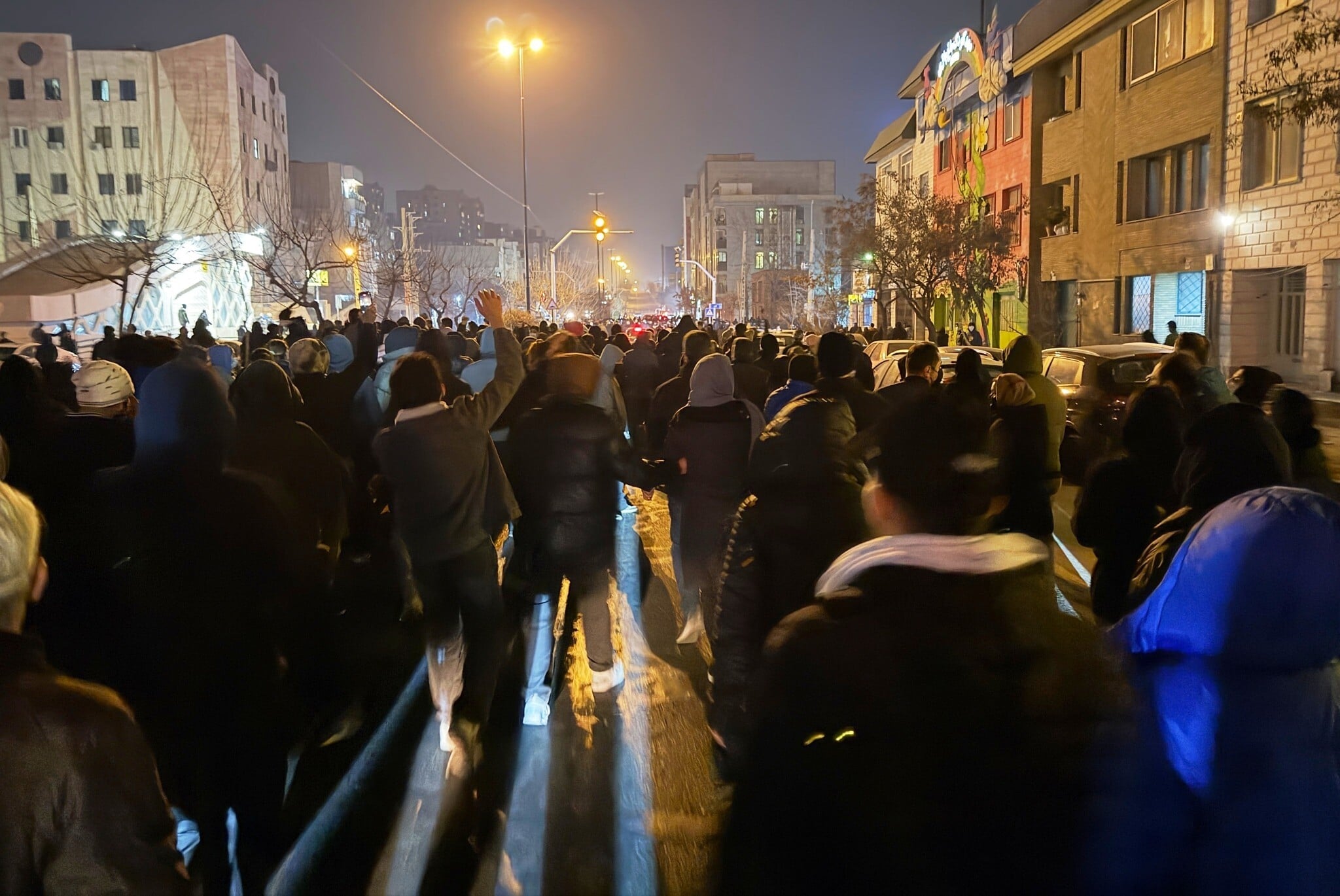
In this photo obtained by The Associated Press, Iranians attend an anti-government protest in Tehran, Iran, January 8, 2026. (UGC via AP)
US President Donald Trump has repeatedly threatened to strike Iran if the regime killed protesters, something it did to the tune of several thousand.
But on Wednesday, Trump announced that Tehran had notified him that the killing of protesters had stopped, leading to speculation that Washington would not strike Iran. Over the past day, though, the US has been shifting additional military assets to the region.
Jeremy Shapiro, research director of the European Council on Foreign Relations, said Trump may have decided to hold off on strikes because of concerns about the current US force posture in the Middle East.
There are currently no US aircraft carriers, considered a critical asset in a significant military operation, in the region after the USS Gerald R. Ford and its strike group were deployed to the US Southern Command region as part of a massive counter-narcotics operation focused on Venezuela.
“We communicated with the Iranians yesterday, and one of the things we were concerned about was the killers that were rumored to be on the way — mass hangings, and that’s been shut down,” Witkoff said.
According to The Wall Street Journal, Trump will further monitor Iran’s response to demonstrations before deciding on the extent of possible strikes against the country, after being advised that a major attack is unlikely to topple the Islamic Republic and could lead to a broader conflict.
Citing US officials, the report said Trump’s advisers told him the US needs more military assets in the Middle East to carry out a significant attack, as well as to protect both American troops in the region and allied nations like Israel if Iran responds.
The newspaper said both US officials and unspecified Middle Eastern partners told the White House that wide-scale strikes were unlikely to bring down the regime and that while a more targeted attack could improve morale among demonstrators, it was unlikely to end the deadly crackdown on protesters.
According to the officials in the report, Trump called for military assets to be moved into position in case he chooses to order intensive strikes, but has yet to make a decision.
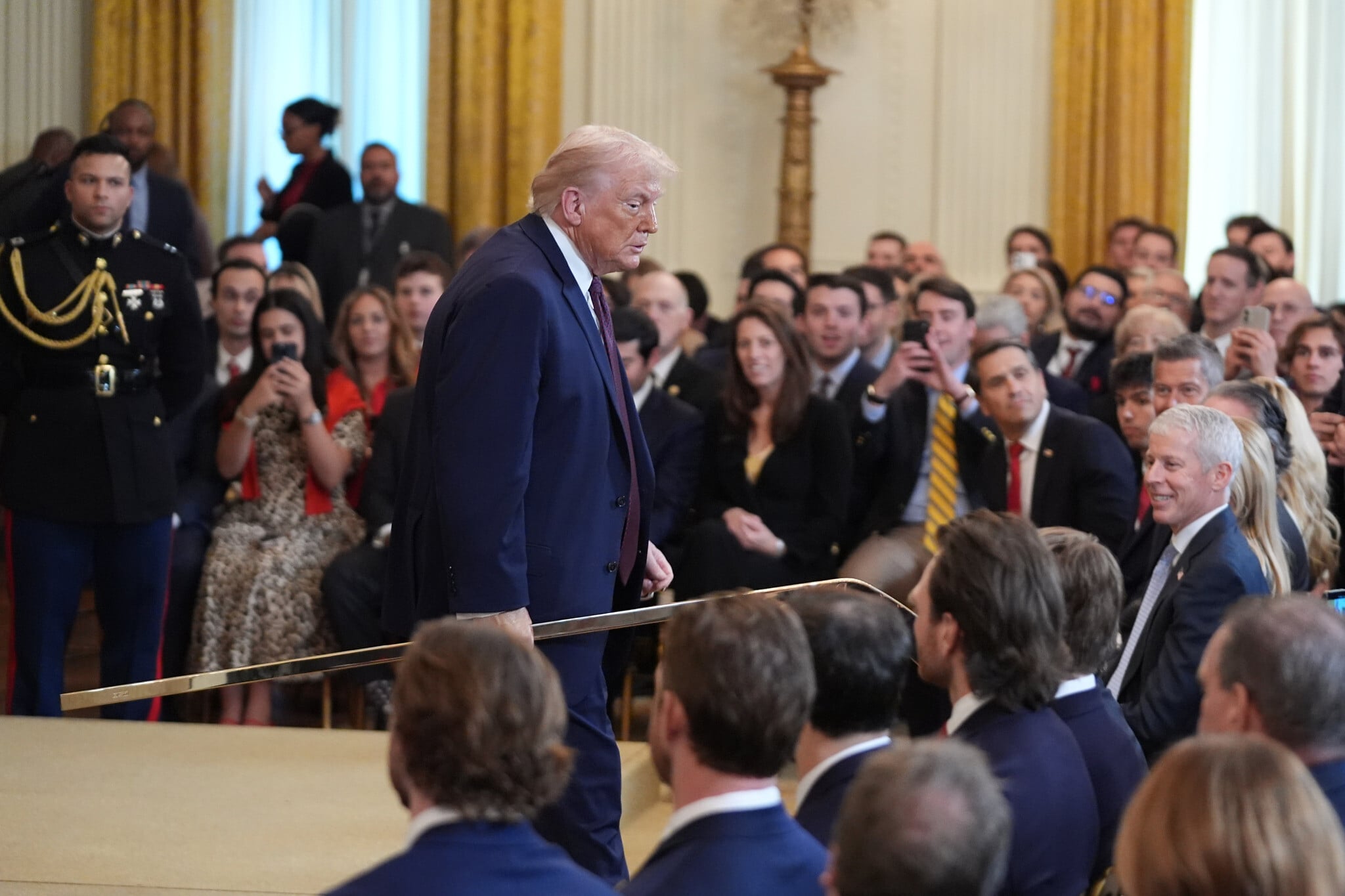
US President Donald Trump carries a hockey stick as he departs an event to honor the 2025 Stanley Cup Champion Florida Panthers in the East Room of the White House on January 15, 2026, in Washington. (AP/Evan Vucci)
“The president and his team have communicated to the Iranian regime that if the killing continues, there will be grave consequences,” White House press secretary Karoline Leavitt said on Thursday.
“Only President Trump knows what he’s going to do and a very, very small team of advisers are read into his thinking.”
On Monday, Trump said he would slap 25 percent tariffs on countries doing business with Tehran “effective immediately,” but the White House has not provided details on that move.
China, the United Arab Emirates, Turkey, Brazil and Russia are among the economies that do business with Tehran.
On Thursday, the Trump administration also announced new sanctions against Iran, including against the secretary of the Supreme Council for National Security, whom the Treasury Department accuses of being one of the first officials to call for violence against Iranian protesters.
The Treasury Department’s Office of Foreign Assets Control also designated 18 people and companies that the US says have participated in laundering money from sales of Iranian oil to foreign markets as part of a shadow banking network of sanctioned Iranian financial institutions Bank Melli and Shahr Bank.
More than 600 protests have taken place across all of Iran’s 31 provinces, the Human Rights Activists News Agency has said, and at least 2,637 people have been killed, and more than 16,700 people detained.
The demonstrations are the biggest Iran has seen in years — protests spurred by the collapse of Iranian currency that have morphed into a larger test of the supreme leader, Ayatollah Ali Khamenei, and his repressive rule.
Is accurate Israel coverage important to you?
If so, we have a request.
Every day during the past two years of war and rising global anti-Zionism and antisemitism, our journalists kept you abreast of the most important developments that merit your attention. Millions of people rely on ToI for fact-based coverage of Israel and the Jewish world.
We care about Israel – and we know you do too. So we have an ask for this new year of 2026: express your values by joining The Times of Israel Community, an exclusive group for readers like you who appreciate and financially support our work.
Already a member? Sign in to stop seeing this
You appreciate our journalism

You clearly find our careful reporting valuable, in a time when facts are often distorted and news coverage often lacks context.
Your support is essential to continue our work. We want to continue delivering the professional journalism you value, even as the demands on our newsroom have grown dramatically since October 7.
So today, please consider joining our reader support group, The Times of Israel Community. For as little as $6 a month you’ll become our partners while enjoying The Times of Israel AD-FREE, as well as accessing exclusive content available only to Times of Israel Community members.
Thank you,
David Horovitz, Founding Editor of The Times of Israel
Already a member? Sign in to stop seeing this