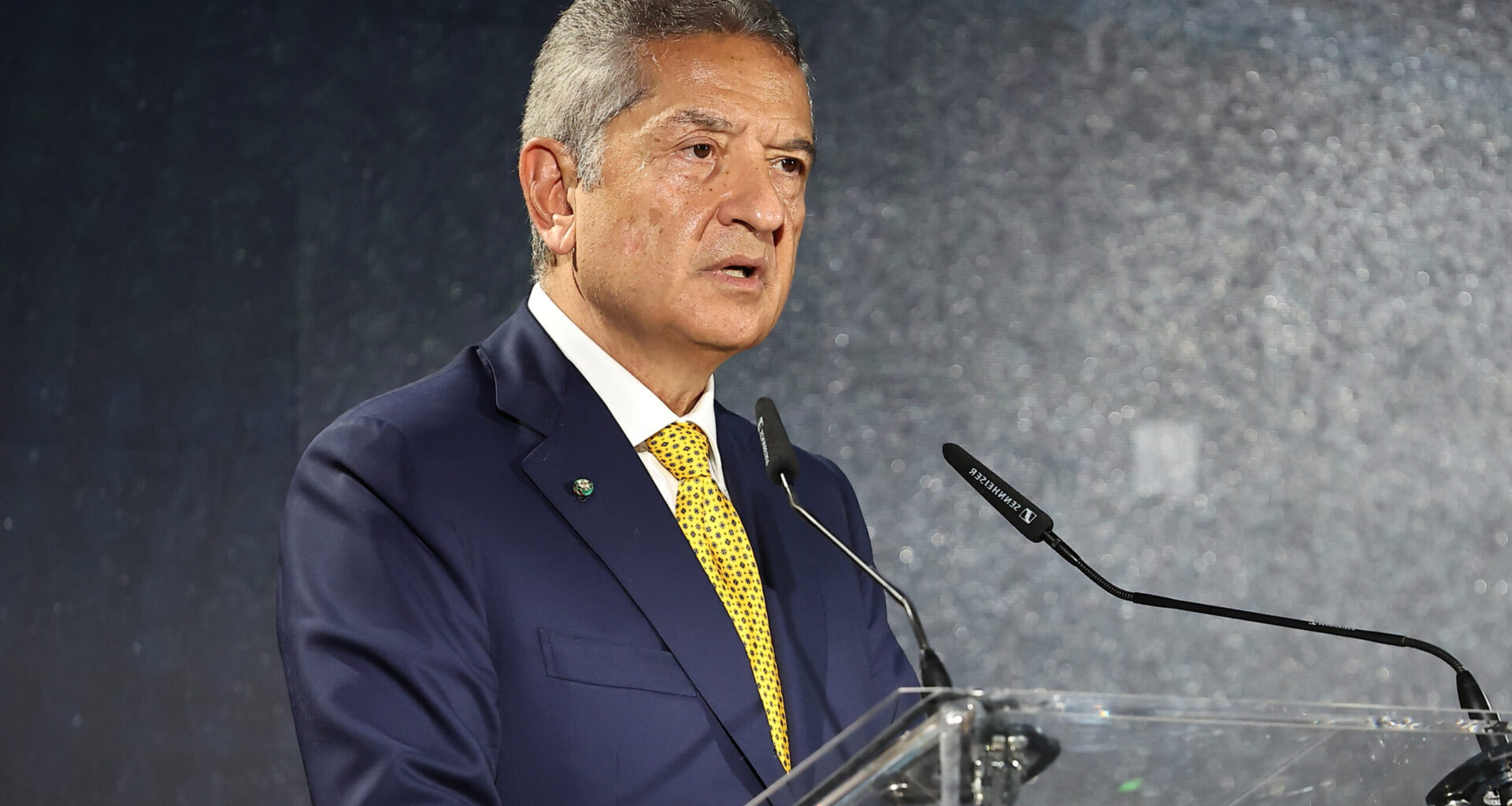
The Italian economy has improved in recent years, but growth is expected to be modest in the coming years. To achieve high economic and social returns, our country is called upon to increase spending on education and knowledge, especially university education. This measure could also have a positive impact on the unstoppable demographic crisis that is affecting Italy, among other countries. Universities can therefore play an important role by attracting students from abroad and encouraging them to stay in Italy after graduation. This is the current situation in Italy regarding the relationship between universities and the economy, as outlined by the Governor of the Bank of Italy. Fabio Panetta, spoke today at the inauguration of the academic year at the University of Messina.
On the economic front, Panetta’s medium-term forecasts—including those of the government and leading analysts—foreshadow “modest growth” in the coming years and bring the Italian economy’s structural weaknesses to the fore. In the five-year period 2020-24, also with the support of fiscal policy, the Italian economy recorded “growth rates higher than those of the previous decade and in line with the euro area average,” he noted. However, the Bank of Italy governor also emphasized that “growth has recently weakened, as in other European countries.” In recent years, however, the Italian economy has demonstrated an “adaptive capacity,” Panetta noted, which has “surprised” many observers.
Economic performance is also supported by positive employment data, which has now reached “the highest levels ever, and the labor market participation rate has increased significantly,” Panetta added. The banking system, “which just ten years ago represented a factor of vulnerability, is today overall solid, well-capitalized, and profitable,” he emphasized, also noting that the most significant surprise came from Southern Italy. Since the pandemic, GDP in the southern regions has grown by almost 8 percent, over 2 percentage points more than in the Center-North. However, one issue remains: the gender gap. Female employment and fertility “are not contradictory,” Panetta observed. On the contrary, “they can mutually reinforce each other, as the experience of countries with the highest labor market participation rates shows,” he explained.
However, without adequate productivity growth, the demographic imbalance will “inevitably” translate into a reduction in GDP and overall well-being, Panetta explained, noting that according to the latest demographic projections, Italy will lose over 7 million people of working age by 2050. Even assuming a further increase in labor market participation, ISTAT estimates a reduction in the labor force of over 3 million. The demographic constraint “is crucial,” he added, because it is “a complex issue that must be addressed on multiple levels. It requires, first and foremost, increasing labor force participation, particularly among women and young people: despite the progress made since the beginning of the century, there remains considerable room for improvement. It also requires a careful immigration policy,” he emphasized.
An adjustment in spending on university education “would strengthen the quality of the system, leveraging the high levels of expertise already present in universities, enhancing technology transfer, and creating more favorable conditions for the development of innovative businesses and the attraction of internationally renowned researchers and faculty,” Panetta assured. Given demographic constraints, stable growth “must be based on increased productivity. This requires investment in innovation and human capital, two areas in which universities play a central role,” Panetta noted. In Italy, however, public resources allocated to education are less than 4 percent of GDP, almost one percentage point less than the European Union average and the lowest level among the major eurozone economies,” Panetta noted. According to the Governor of the Bank of Italy, half of the gap compared to the rest of the EU reflects lower investment in university education. Therefore, Italy “is the only major European country where public spending per university student is significantly lower than that allocated to secondary education; in other countries, on the contrary, investment per student increases with the level of education,” he continued.
Universities can therefore play “an important role,” according to Panetta, also in combating the brain drain by “attracting students from abroad.” The positive effects “could be significant in the long term, especially if a significant portion of these students choose to remain in Italy after graduation, also contributing to demographic growth,” he warned, emphasizing that this is the case in other major European countries. In France and Germany, foreign students represent over 10 percent of the total; in the Netherlands, 18 percent; in the United Kingdom, 23 percent. In Italy, the share is less than 5 percent.
Read also other news on Nova News
Click here and receive updates on WhatsApp
Follow us on the social channels of Nova News on Twitter, LinkedIn, Instagram, Telegram