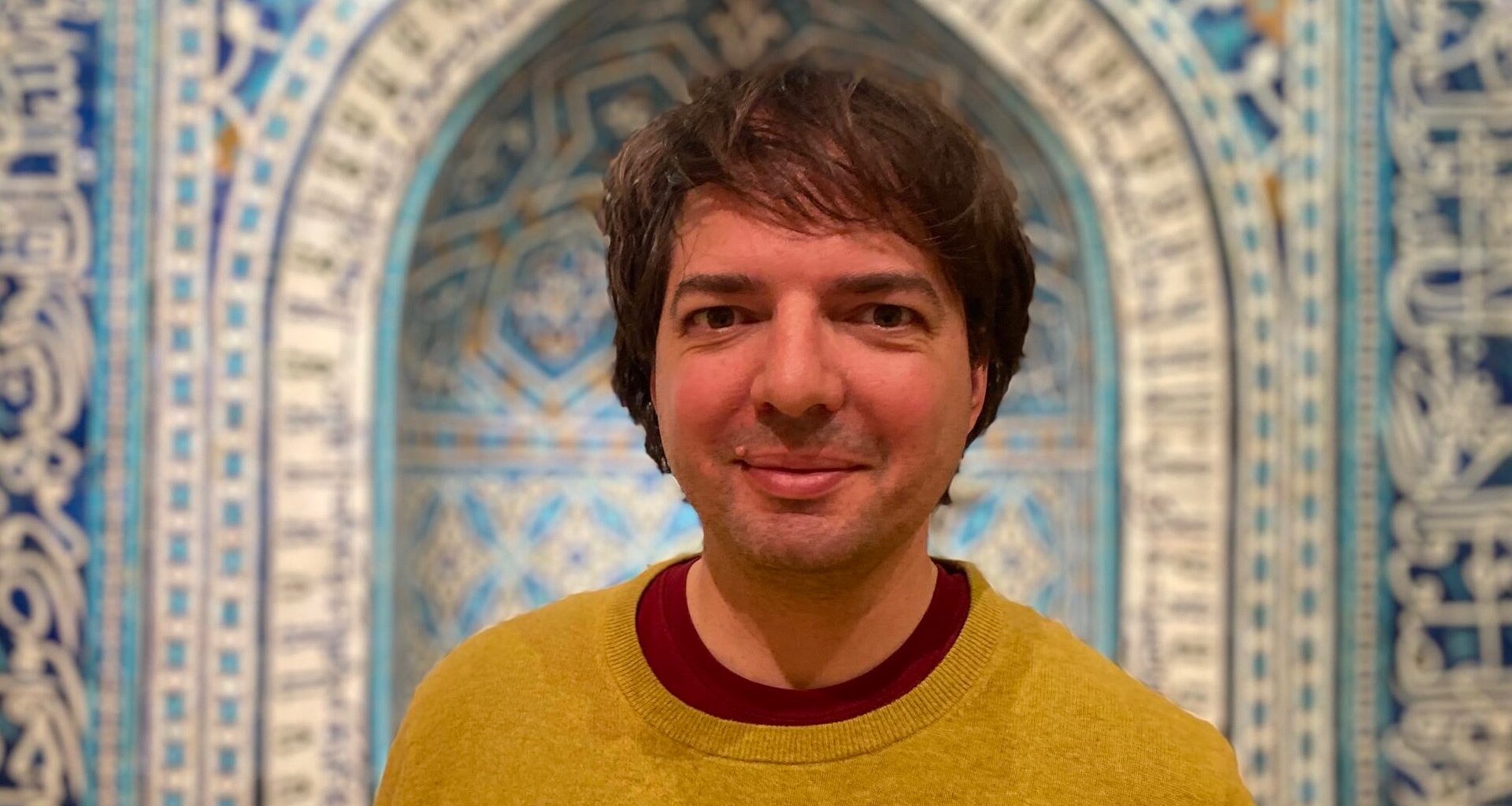
An interview with Ferenc Laczó, assistant professor of history and co-editor of A Global History of Hungary. Interviewer: Emese Vig.
January 16, 2026 –
Emese Vig
Ferenc Laczó
– 
Interviews
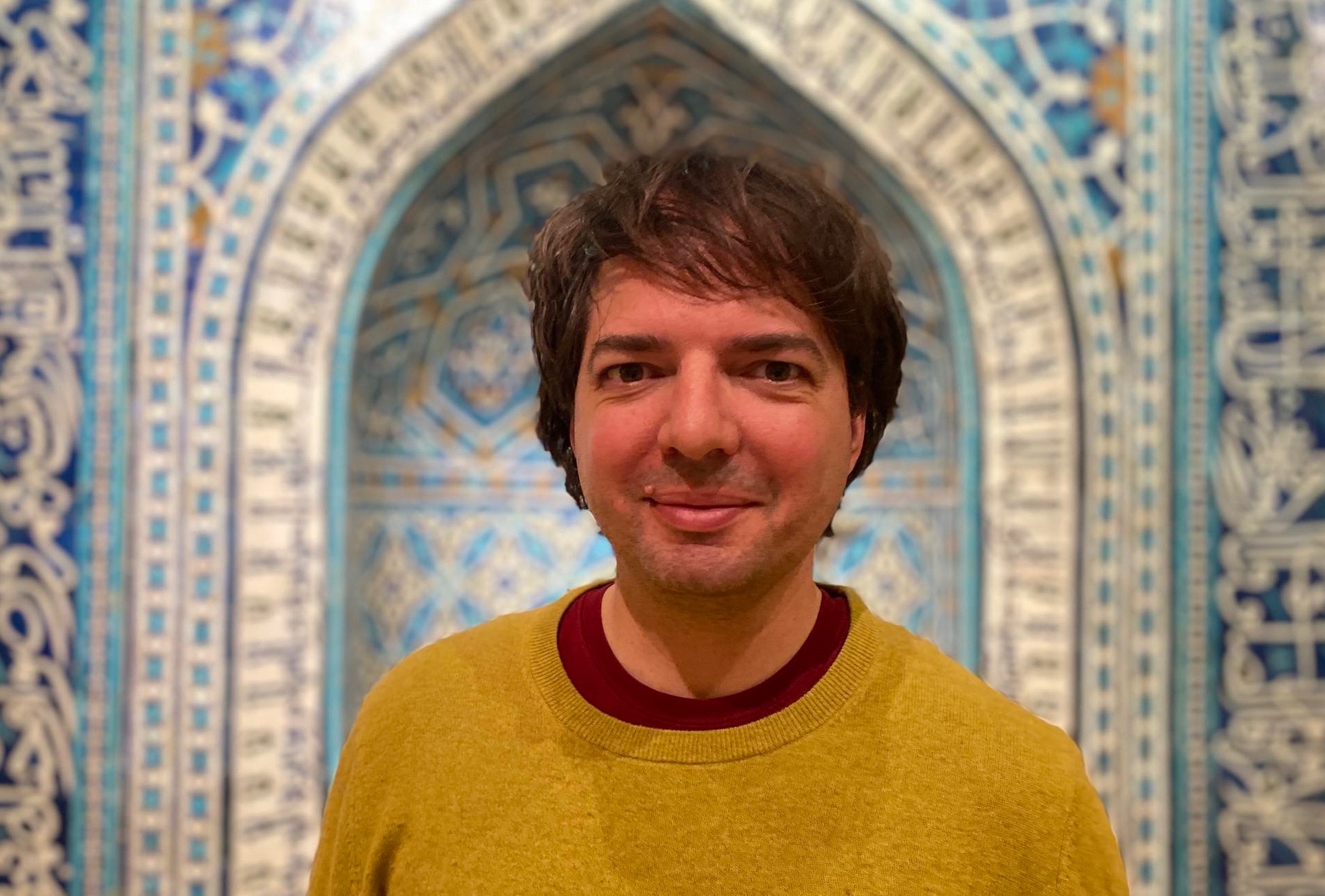
Ferenc Laczó. Photo: Maastricht University
EMESE VIG: Why do you think that Hungarians, Romanians, Poles and Czechs in fact share far more common historical reference points than we tend to employ today? Where did this shared language break down?
FERENC LACZÓ: If I may start on a personal note, I would say I think this largely because of my many years spent in West European environments. I was born in the early 1980s, and for members of my generation it is a foundational experience just how many things connect me with people from our East European region. When I moved to the Netherlands as a university student back in 2000, this struck me as rather obvious from the very beginning.
In my experience, what connects us often appears in a mixture of anxieties and ambitiousness, fears and a desire for informality. It may manifest itself in scepticism and humour, and at times in blunt criticism of institutions.
As for when this broke down, or one might even ask when Eastern Europe as a region ceased to exist, I do see that for young people who have grown up in the EU this regional framework indeed means less than it did to us back then. Today, it is much harder to distinguish between a young person from Romania and France, or from Hungary and Germany. At the same time, the history of Eastern Europe is still not widely known further west, so our system of references—such as family experiences of persecution, the proximity of poverty, an acute awareness of the fragility of all things—probably still connects even today’s East European youth to some extent.
When you write about the lack of “symbolic bridges”, what exactly do you mean by that? What do you think would be the shared knowledge or memory that could genuinely connect different parts of the region?
In connection with 1918–1920, my colleague Marius Turda and I reflected on the idea that the creation of Greater Romania and the imposition of the Treaty of Trianon—although we rarely think of them this way—are an important part of the shared history of Romania and Hungary, and that discussing them in that manner could even serve as a kind of symbolic bridge that might ultimately promote reconciliation. Today this may sound like a rather utopian idea, since on both sides the exclusivity of one’s “own” perspective clearly dominates.
I believe that, if approached sensitively, the issues I just mentioned could serve as common ground: how have societies in the region processed experiences of persecution within families? How do they deal with social injustices, and how do they relate to the very visible and tangible reality of poverty? How could we communicate to westerners—who typically grew up in prosperity and security and who now seem to be getting unsettled—our acute sense of the fragility of all things, which in turn prompts a different kind of preparation for the future? Eastern Europeans, I believe, possess significant knowledge concerning all three of these issues – knowledge that can be considered significant even on a global scale. Unfortunately, all three of them look extremely relevant today.
In one of your studies you describe the Fidesz project as a “restoration”, which deliberately runs counter to the official image of modernization. What exactly do you mean by restoration? Which political logic from the past does the system seek to rebuild?
I agree with Stefano Bottoni that the Orbán regime expects familiar mentalities from members of Hungarian society, mentalities which are by no means tied to just one earlier regime. One could say that the imperial dream from the era of the Dual Monarchy, the resentful nationalism of the Horthy period, and the petit bourgeois traditions of the Kádár era get combined here—typically, I fear, without much concern for coherence. Meanwhile, the regime’s performance in terms of modernization is distinctly weak: as my colleague Gábor Scheiring has pointed out, since 2010 Hungary has had a state that accumulates capital but is not a developmental state.
In many respects the Orbán regime is a product of the 21st century, but an important source of its legitimacy is its attempt to build on what is familiar, habitual and explicitly comfortable. It despises and condemns current cultural trends, openness, anything genuinely new. It tries to convince people that they do not need to change because it will protect them. I see all of this as a contemporary manifestation of the paternalism characteristic of restoration regimes.
If this is a restoration, then what exactly is it trying to restore? A lost national sovereignty? An idealized model of power? Or rather a social hierarchy?
The logic of restoration is based on the presumption of past innocence, on the construction of an image of a kind of golden age. I do not think the Orbán regime has firm goals. However, it is quite consistently Schmittian in its mode of exercising power—it conceives of politics as a battle between friends and enemies and is visibly eager to locate ever newer enemies. It is well known that the regime’s exercise of power is leader-centred, and that the current truth is always whatever the prime minister declares it to be.
Let us look at concrete matters, though. Is Hungary more sovereign than it was a decade and a half ago? According to the regime’s rhetoric, certainly, but in terms of real power relations it has hardly become less dependent—if anything, quite the opposite. Is Hungarian society more hierarchical than in 2010? Yes, but I would certainly not dare to call the new elite organic or meritocratic. In the regime’s foreign policy I see much striking but ultimately self-serving maneuvering. If Hungary were able to draw down the EU funds it is theoretically entitled to, Orbán would not need to court the favour of Putin and Trump. From this perspective, foreign policy grandstanding is unfortunately compensatory—and evidently insufficient even at that.
One of your key claims is that Orbánism rewrites national identity, not just institutions. What do you see as the central moment in this rewriting?
How does a project that prefers to call itself national, but is in fact transnational, function when it is primarily built on rejecting something that never truly existed in Hungary in the first place, i.e. the social dominance of liberal values. This question has preoccupied me a great deal. A strong feminist movement and effective programmes for gender equality? A serious examination of the history of racism and an open cultural struggle to overcome racially structured hierarchies? Let us just say that this is not how I remember Hungary before Fidesz acquired its supermajority in 2010.
Despite this, Orbánism has built a new form of national identity around the rejection of contemporary liberalism, which I argue in my book amounts to a kind of pre-emptive rejection of current western trends. These trends are deliberately stigmatized before they can have any serious impact in Hungary. I see this as a stance against modernity, since the theory of modernity holds that the future will inevitably be different from the past. Even a conservative interpretation of this concept warns that while one must be selective when it comes to innovations, one must nonetheless always move with the times to some extent. For this reason, the political experiment of pre-emptive rejection strikes me as inherently harmful.
In the book you write that illiberalism is not an Eastern European peculiarity, but rather a mirror of the West’s crisis. What exactly do you mean by this? Which western weakness does the Orbán regime exploit most effectively?
The free and open world can only survive if people fundamentally trust in the future and feel that the foundations of their existence are stable. As a result of rapid transformations—mass outsourcing of jobs, growing inequalities, digitalization, and swift cultural changes—many people in the West now feel that their prospects have deteriorated. Many of them also believe that political elites do not care enough about their everyday problems. They fear, or even dread, the future, in which—entangled with Europe’s declining global position and influence—their standard of living may decline further and their life opportunities may narrow.
I believe this is why some people beyond Hungary’s borders are receptive to the Orbán regime’s loudly proclaimed ideological offer. Orbánism essentially claims that modern western liberalism failed first in Eastern Europe, and especially in Hungary. In this view, the post-liberal era thus began here and has allegedly now reached an advanced stage.
While I believe the illiberal response to the crisis only exacerbates the symptoms, the diagnosis is not entirely misleading insofar as large parts of Eastern Europe entered a deep economic and social crisis already at the time of the regime change of 1989, and has since only partially managed to escape it. One might say it was the misfortune of the region that its experiment with democratization coincided with a severe crisis and, unlike Western Europe’s post-1945 history, could hardly be called a success story. Western celebrations of the supposed East European successes after 1989 were therefore quite shortsighted or even counterproductive.
In the absence of earlier democratic successes, illiberalism can also appear stronger. This is partly why Orbánism has become a benchmark in some conservative and far-right circles: not because of any outstanding performance, but because in Hungary it was easier to undermine liberal democratic values.
One of the strongest claims in your chapter on Holocaust memory and antisemitism is that Hungarian Holocaust research is internationally quite successful, while within Hungary’s public sphere an increasingly relativizing, self-exculpatory tone has gained ground. Why do you think this divide between scholarship and politics has emerged?
The Holocaust was carried out in Eastern Europe and the overwhelming majority of its victims were East European Jews. Yet, if we disregard the crucial case of Poland for a moment, its research and remembrance were at first, during the Cold War years institutionalized elsewhere—further west, and of course in Israel. After 1989, Eastern Europe paradoxically began to re-import knowledge and established forms of memory about its own history.
I am afraid that to this day we can observe a fundamental time lag. In Germany, according to Ulrich Herbert, the most intensive phase of Holocaust research took place between 1985 and 2000. In Hungary, ironically, it was precisely by the early 21st century that a broader, highly trained, and active generation of historians had come of age—just as Hungarian history politics took an illiberal turn that, to put it mildly, did not seek to promote serious Holocaust research within the country. Internationally, attention at that time increasingly shifted toward the few countries that bore significant responsibility for the Holocaust but whose research into it had not been particularly detailed or deep—Hungary certainly among them but Romania, Croatia or Slovakia could also be mentioned in this context.
This is roughly how the strange divide I discuss in detail in my new book came into being. Its Hungarian origins can, of course, be traced back to around 1989: even then there was a striking tension between new ways of cultivating Holocaust memory and nationalist attempts to restore a sense of continuity stretching across the Soviet period.
In your view, why is a significant part of Hungarian society today less receptive to the ethical language of responsibility than it was twenty years ago? Is this the result of generational change, patterns in political communication, or something like a deeper cultural symptom?
All three play a role. Political communication today typically aims to elicit immediate identification; many online platforms function as forums for the expression of vanity; and for younger generations, the history of the 20th century is no longer as much a part of communicative memory, i.e. memory that is alive within the family. I must admit that I have come to believe that we increasingly live in a rather superficial culture built around a triad of careerism, consumerism and visuality, a culture that is often organized around simple slogans.
The ethical language of responsibility would require a great deal of work and often painful self-reflection. It is my conviction that it can only really be learned effectively as part of institutionalized communities, whose influence today remains quite limited.
Is it possible today in Hungary for a narrative to gain majority support that openly states: the Hungarian state and society were complicit in genocide? Or does this sentence already, by its very nature, establish political front lines?
I am afraid that such explicitly critical statements will always have sworn enemies. One only has to think of the fierce American resistance, what is often referred to over there as a backlash, to Black emancipation and to the memory of slavery, which intensified again during Trump’s political rise. I believe that the two—namely, an accepting majority and the drawing of political front lines—would, even under favourable circumstances, emerge simultaneously. In that case, a majority would share a realistic understanding of history, while only a political minority would reject it in order to protect its political identity.
However, we are currently far from this, and in fact seem to be moving further away: the politicization of history today often works against critical engagement with the past and against a more honest self-assessment. In Eastern Europe, this is probably the most obvious consequence to date of the rise of what is typically referred to as memory politics.
Why do you think that today even the definition of antisemitism has become a political weapon? How did it slip from being an interpretative to being a manipulative concept?
Antisemitism is the name of a prejudice against an ethnic or religious group and the negative sentiments directed toward it. It is clearly something that must be rejected and condemned, especially in post-Holocaust Europe. However, criticism of the policies of any state—whether that state defines itself as Jewish or as anything else—must be considered part of free expression. This is an essential distinction.
There are antisemitic critics of the State of Israel, and their antisemitism must of course also be rejected and condemned. It is far from true though that everyone who criticizes Israel is antisemitic – to say nothing of the fact that the policies of the Israeli state are also criticized by many Jews. Anyone who claims otherwise—and many influential actors are currently insisting on this—engages, in my view, in manipulation and cynically turns this grave accusation into a political weapon, with the effect of narrowing fundamental freedoms.
Where exactly the line lies between antisemitic and non-antisemitic criticisms of Israel is a vexing question. Much depends here on context, on our sense of proportion, and ultimately our capacity for judgment. What is clear to me, however, is that not every exaggerated or even plainly mistaken criticism of Israel is motivated by antisemitism. As the Jerusalem Declaration on Antisemitism phrases it: in general, the line between antisemitic and non-antisemitic speech is different from the line between unreasonable and reasonable speech.
🎙️ Listen to the latest Talk Eastern Europe podcast episode:
The spiral of radicalization is a powerful image. What do you mean by it when it comes to today’s European public sphere? And why does this spiral feel so all-consuming right now?
I have long been preoccupied with the question of why the horrific—and tragically ever more devastating—shared history of Israel and the Palestinians, a history of living next to each other and recurrently inflicting mass violence on each other, is such a divisive issue in Europe, when in principle we could emphasize consensual points such as peace and equal rights.
There are, of course, many possible answers to that, but perhaps the most fundamental, it seems to me, is that Europeans are able to project both their sense of responsibility for the Holocaust and their sense of responsibility for colonialism onto this conflict, thereby identifying perpetrator and victim in two diametrically opposed ways. These acts of identification clearly polarize interpretations of the conflict. In other words, we seem to be witnessing a strange drama of Europe’s own identity narratives. At the same time, very few people appear to be aware of the shared historical sources and intertwined histories of colonialism and the Holocaust – even though someone like Hannah Arendt already addressed these connections in her in principle very well-known book on the origins of totalitarianism. I consider this lack of familiarity a serious problem, and in my new book I therefore try to discuss these sources and points of connection in several places.
Just think of the following: while antisemitism has its explosive features as a form of racism, the antisemitic racism of the 19th and 20th centuries could have only developed on the basis of racism emerging in the context of colonial history, and the Holocaust was committed in the immediate context of German empire-building in Eastern Europe, so much so that ethnic German settler colonialists were lured to Auschwitz during the Second World War, just as the most infamous Nazi camp complex came to be operated as a factory of death.
One more thing I would like to add here is that algorithms currently pull many people even deeper into spirals of radicalization. Engagement-based platforms, driven purely by numbers and profit, have become extraordinarily effective arenas for political propaganda, creating parallel perceptions of reality around the bloody conflict between the State of Israel and the Palestinians. I am afraid that since 2023 both sides have been exporting their war propaganda with particular intensity, while many people have been importing it into Europe in an uncritical way.
Let us talk about the CEU affair, which you discuss in a partly personal essay. When you say that the expulsion of the CEU represented a civilizational rupture, what do you mean by that? What was it that went beyond a university dispute?
As a young person I spent seven very useful years at the CEU. I believe I came to know the institution quite well from the inside. At the same time, the CEU was and remains a symbol for me, one of the key symbols of the promise of the regime change: a high-quality, western-oriented, internationally embedded institution with East European sensibilities operating within the region while also seeking to become globally aware. It was a quite unique institution. Even at the time, I experienced the obstruction of its degree-granting programmes in Hungary not only as an attack on academic freedom but also on the western embeddedness and global openness of Hungarian culture. The defeat of CEU Budapest and the move to Vienna thus appeared to me like a milestone, for reasons that are doubtlessly partly personal.
I also saw a conscious provocation in this attack, which did not occur by chance during Trump’s first presidency—conspiracy theories surrounding George Soros are, after all, enthusiastically shared both by Fidesz and by the Trumpist movement. The CEU affair was followed by an escalating series of attacks on universities, both in Hungary and in numerous other countries, which now includes the United States. Seen from today, CEU’s ordeal looks like a kind of test case and a starting point for negative trends. In my assessment, the EU’s political elites also bear responsibility for the success of this initial provocation, as they have proven unwilling to take an open stand in defence of academic freedom.
In your view, what did those in power fear most about the CEU? Critical thinking, its international embeddedness, or simply the fact that it could not be controlled?
My personal view is that they did not really fear it. They attacked it precisely because the CEU could be presented as powerful while in reality it was in a vulnerable position. If I may use an analogy: why did the much-mentioned gas fitter from Felcsút become the richest man in Hungary? I believe primarily because the country’s prime minister wanted to show that he could do that as well. I must admit that I see no more compelling explanation for either development.
One of your main themes is the difference between East and West. Why do you think that East–West differences were not resolved around 1989? What makes you feel that these fault lines are not political in nature, but rather historical and social in structure?
The structure of the EU is extremely complex. There are many political fault lines, of which the East–West divide is important but by no means always the most important. Historical experiences and interpretations, however, differ significantly, since the West European nation-states that make up the EU emerged from imperial core territories, whereas East European ones, according to their national self-understanding, were liberated from imperial domination in the recent past. Accordingly, the former tend to condemn nationalism, while the latter are visibly more afraid of imperial overreach.
Even more important is the fact that West European societies remain far wealthier to this day—a fact that is best understood not so much through the often-cited differences in wage levels, but through looking at the amount of accumulated wealth. As East Europeans we may be particularly sensitive to the spectre of imperial domination, but if we think pragmatically about the EU, we really ought to be arguing for a much more integrated Union that redistributes far greater resources—and that at the same time takes rule-of-law criteria seriously. Eastern Europe would be a massive beneficiary of a doubled or even tripled EU budget. I must admit that I do not really understand why a loud pro-EU lobby has not yet emerged around this proposal in Eastern Europe.
What do you think Eastern Europeans fail to understand about the West? What are the deeply entrenched assumptions or grievances that repeatedly derail our relationship with one another?
I find that this relationship remains asymmetrical. Part of the problem is that Western Europeans are not particularly interested in Eastern Europe—far less so than East Europeans, in a somewhat naïve and self-important manner, like to assume. In my experience, West Europeans have remained fairly ignorant in this respect, and many of them also find it difficult not to relate to East Europeans in a condescending or outright patronizing way. There are, of course, many refreshing exceptions, but unfortunately the tendency is strong.
One of the core theses of my book is that East Europeans want to be equal to West Europeans, which would require quite substantial changes, while West Europeans would prefer this relationship not to change very much at all—deep down, they believe Eastern Europe should essentially remain on Europe’s periphery while not causing too many headaches. From this perspective, one source of contemporary tensions is that many Eastern Europeans have meanwhile learned western languages, graduated from one or another prestigious western university, and have, so to speak, learned to intervene in debates. These interventions do not always take the most beneficial forms, but I have the sense that some westerners still need to get used to the fact that East Europeans do not merely want to nod along while listening to their greater wisdom…
If both sides read each other through such strong historical patterns, can there even be a shared European framework capable of accommodating these differences, or was this an illusion from the outset?
It is very much possible—but in reality we are only at the beginning of this process. Intercultural communication within Europe is unfortunately still in its infancy, and in Hungary it barely has any space at all, even though it would be urgent to extend it to a global scale as well. To pose just the most obvious question: how can we exist in the 21st century without even a cursory knowledge of Chinese culture and ways of thinking?
I should perhaps mention that I happen to be part of a new research project titled LEXI.ECO that examines contemporary European history in a dozen languages and focuses on key concepts such as empire, war, freedom, migration, borders, and so on. I secretly hope that through this project we might be able to deepen the understanding among Europeans—and perhaps even help realize Umberto Eco’s related dream.
If you were to pick up this book again in twenty years’ time, which of your claims do you think would still hold up the most?
Perhaps the one concerning the urgent need for more solidaristic remembrance. The currently dominant forms of remembrance tend to reinforce exclusionary identity narratives. More dialogical and inclusive remembrance could apply equally to the history of Slovaks in Hungary, Hungarians in Romania, Algerians in France, Pakistanis in the United Kingdom, or Turks in Germany while real progress would only really be possible, I think, if we did not essentialize our ethnic or religious categories.
And which is the one you secretly hope will no longer be true by then?
That one is easier to answer: I long for a Russia that no longer relates violently to its western neighbors and no longer categorically rejects liberal democratic values. We are currently very far from this, and it is not at all clear how we might get there—but twenty years is, fortunately, a long time.
Ferenc Laczó is an assistant professor with tenure in European history at Maastricht University. He is the author or co-editor of thirteen books, including Magyarország globális története (A Global History of Hungary) in two volumes.
Emese Vig is an editor and journalist from Cluj-Napoca. She has worked for over two decades in both television and online media. Emese has covered a wide range of topics, most of them about the everyday life of the Hungarian minority in Transylvania.
New Eastern Europe is a reader supported publication. Please support us and help us reach our goal of $10,000! We are nearly there. Donate by clicking on the button below.
