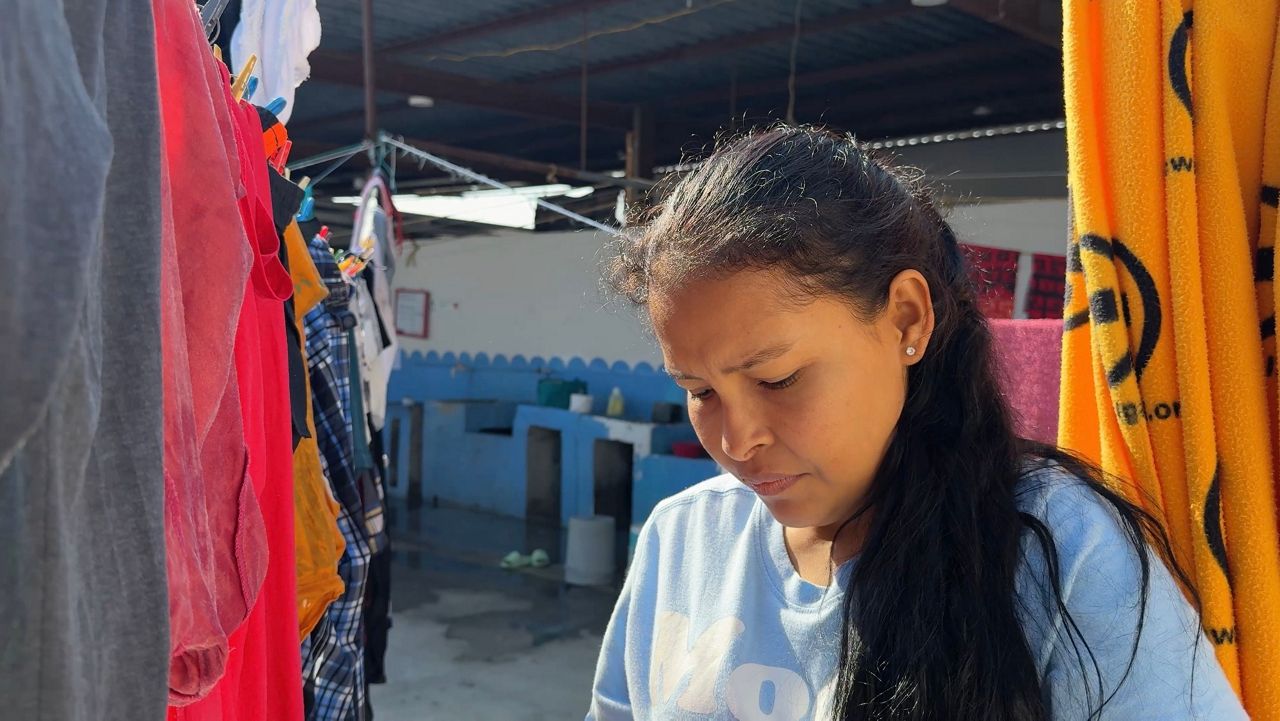
TEXAS — Venezuelan migrant Rosiris Rodriguez has been living in the Senda de Vida shelter in the border town of Reynosa, Mexico, for a full year now, hoping for a change in the United States’ asylum policy. She was initially shocked when U.S. forces captured Venezuelan President Nicolás Maduro, but then she felt a deep uncertainty about her own hopes of receiving asylum
“It’s going to be more difficult for us to get asylum now because the U.S. believes that just because Maduro is gone the country improved, but it’s not like that,” Rodriguez said.
Rodriguez, her husband and two young daughters are among the few Venezuelan migrants who escaped the Chavista Venezuelan regime and made their way to the U.S.-Mexico border.
When the Rodriguez family finally reached the border, everything changed, and their hope of entering the U.S. was shattered.
“We didn’t want to enter the United States because Trump was about to start his term. We got here on January the 8th, and we decided to wait and see what he (President Donald Trump) was going to do,” said Rodriguez.
Despite the federal government’s assertion that Venezuelans can now go back home, political experts in the region warn that Maduro’s removal doesn’t mean the end of the regime.
For Roxanna Vigil of the Council on Foreign Relations, the U.S. involvement in Venezuela could create even more instability if there is no clear transition plan.
“Even if the U.S. is focused on rebuilding the oil sector, it’s more likely that the Venezuelan people will not benefit. The regime will continue to benefit, and if the Venezuelan people don’t see their lives improve, there’s gonna be a situation in which Venezuelans will decide to leave,” said Vigil.
Rodriguez has reached the same conclusion, but hers comes with a sense of dread.
“There is anxiety in Venezuela, and we don’t see any future for now. We feel is going to be the same or worse,” she said.
For Vigil and other experts, the Venezuela crisis’ impact on immigration is clear. Neighboring countries such as Colombia are preparing at their borders for a new massive exodus.
“If there’s more instability, their neighbors are on the front lines; they’re the ones who are gonna be reviving those migrants,” said Vigil.
For the Rodriguez family, there is no path forward and no way back either. The family has decided to await a change while they expect that soon they will be joined by more of her fellow Venezuelans at the Texas-Mexico border.