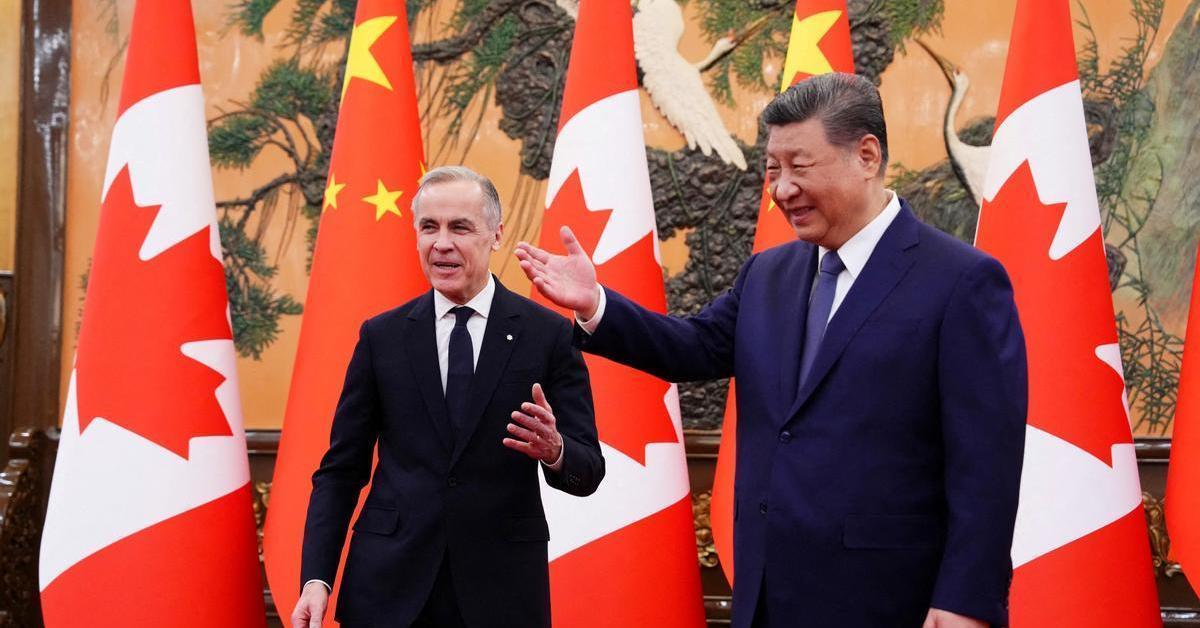
Mark Carney’s visit is the first by a Canadian head of government since Justin Trudeau’s in December 2017. At that time, relations between the two countries were good, but they deteriorated rapidly when Canada arrested Meng Wanzhou, a Huawei executive and daughter of the company’s founder. The arrest was made on a US warrant when Meng stopped over in Canada, where she held several residences. China responded by arresting two Canadians in the People’s Republic—Michael Kovrig and Michael Spavor—accusing them of espionage. Tensions escalated with reciprocal sanctions until 2021, when diplomatic mediation secured the simultaneous release of all three. However, in 2023, Canadian intelligence expelled a Chinese diplomat and accused Beijing of attempting to interfere in the general elections. Canada has a large Chinese immigrant community and has also been the destination for many dissidents and residents of Hong Kong who sought refuge after the curtailment of freedoms in the former British colony. In 2024, the disagreement became commercial, resulting in a tariff dispute: Canada penalized Chinese electric vehicles and steel, and Beijing responded with increased tariffs on Canadian canola, pork, and seafood.
Rapprochement and Agreements
Donald Trump’s pressure on Canada, a country he has even threatened to annex and turn into a new US state, as well as the tariff war Washington is waging with China, have spurred a new phase of trade agreements. The United States is the main destination for Canadian exports. Nearly 75% of sales are made to its neighbor. Although China is the second largest market, it only accounts for 4% of exports. Ottawa’s objective is to reduce its dependence on the United States. Relations between Beijing and Ottawa began to thaw in October, during the APEC summit held in South Korea. Xi Jinping invited Carney to Beijing. Donald Trump’s aggressive policies have forced both countries to seek new trading partners and re-establish bilateral contacts. Negotiations have progressed, culminating in the current visit, during which numerous agreements have been signed. China will import more fossil fuels and food products such as seafood, while Canada is interested in Chinese green technology. Agreements have also been signed on forestry, culture, and tourism.

Canadian Prime Minister Mark Carney’s trip began on Wednesday and ends on Saturday. His agenda included meetings with his Chinese counterpart, Li Qiang, and with business leaders. Canadian Foreign Minister Anita Anand also met with Chinese Foreign Minister Wang Yi, where they both emphasized the need to eliminate “interference” and promote “stable, sound, and healthy” development. It remains to be seen how the United States will react to Canada’s rapprochement with China, especially given that it is currently reviewing the old free trade agreement and Washington is threatening to withdraw from it. Donald Trump’s policies are prompting a wave of visits to Beijing in search of trade deals. British Prime Minister Keir Starmer will visit China this month, and German Chancellor Friedrich Merz is scheduled to visit next month.