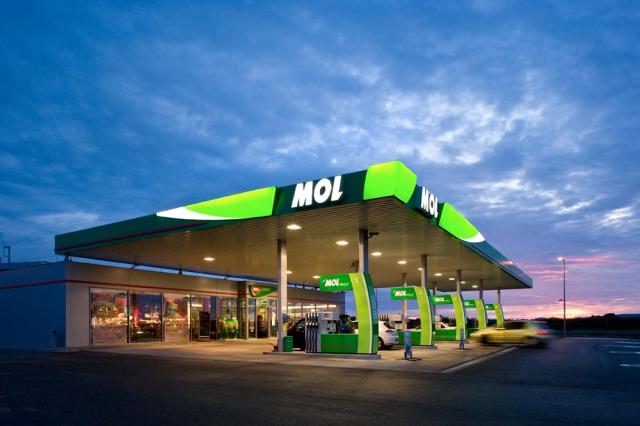
For the Petroleum Industry of Serbia (NIS), a way out of a difficult situation after the introduction of US sanctions; for the Hungarian company MOL, domination of the market for oil derivatives in the Balkans.
This could be the outcome of taking over the majority Russian ownership in NIS, after several months of negotiations at a table where politics had the main say, while business interests had less prominent seats.
According to several official sources, MOL is in advanced negotiations to purchase a majority stake in NIS, an artery of economic life in Serbia.
“The Government of Hungary supports MOL’s intention to purchase shares in NIS, because this would ensure a huge step forward in terms of the security of supply of one of the key energy sources for Central Europe,” said Péter Szijjártó, Hungary’s foreign minister, in Belgrade on 15 January after talks with Serbia’s Minister of Energy Dubravka Handanović-Đurović.
MOL is the largest Hungarian energy company, which previously acquired majority shareholdings in Croatia’s oil company INA and Slovnaft, a Slovak oil company that owns the only oil refinery in that country.
On the same day, Szijjártó told RTS that he had “good news”. “MOL and Gazprom Neft have made quite rapid progress in negotiations, so there is a real chance that within one to three days they will reach a key agreement,” said Szijjártó.
At the same time, Szijjártó continued, MOL is in close negotiations with ADNOC, the state oil company of the United Arab Emirates. “I think it will be great news if this integrated action of three markets in the region also receives support in the form of cooperation with ADNOC and MOL with regard to Serbia, but that is their business,” the Hungarian foreign minister added.
MOL’s entry into Croatia’s INA was accompanied by numerous controversies, and former prime minister Ivo Sanader even served a prison sentence on charges that he took a €10 million bribe from the Hungarian company.
Since 2009, MOL has controlled more than 49 per cent of INA’s shares and has so far proven to be a “very high-quality and well-managed company that safeguards its own interests”, says Davor Štern, an oil engineer and former director of INA, speaking to BBC Serbian.
“However, when your interests are primary, someone else’s have to be secondary,” adds Štern, who was also Croatia’s economy minister at the beginning of the 21st century.
As examples of such conduct, he cites the closure of the Sisak refinery and the shipment of oil from Croatia to Hungary for processing, as well as the “exceptionally long period” of modernisation of the Rijeka refinery.
All these moves were understandable and in the company’s interest, but not in Croatia’s interest, believes this expert, who was last employed at INA in 2010 as chairman of the Supervisory Board.
The purchase of NIS is, he says, in MOL’s commercial interest, but it also contributes to the expansion of the company’s influence and its consolidation as a regional leader. MOL’s moves will depend on the contract that Russia’s Gazprom previously concluded with Serbia and on the way in which the most important decisions are made. But if everything depends on MOL’s leadership, Štern expects the company to pursue its own commercial interests.
“If they have spare capacity in their refineries in Bratislava and Budapest, so that they can meet NIS’s demand, it would be logical to close the Pančevo refinery as well, as they did in Sisak. I believe that at the moment they do not have sufficient capacity for that,” Štern concludes.
Although negotiations are being conducted with Hungarian and Arab partners, according to announcements by Serbian President Aleksandar Vučić, the official Zagreb has also offered to participate.
Croatia is interested in preserving production at the Pančevo Refinery, precisely because of previous experience, said Croatian Economy Minister Ante Šušnjar.
“Our logic is clear – we are protecting the interests of JANAF, but also the stability of the oil derivatives market in the region. Sanctions have once again shown everyone that it is an illusion to think that, in transactions involving strategic energy companies, only ownership is being sold. In such transactions, ultimately, control over the future is also being sold,” Šušnjar wrote on X.
How did MOL take over INA?
MOL first purchased 25 per cent ownership plus one share in INA in 2003, and five years later bought an additional 22 per cent. In total, it spent around €1.2 billion, which many experts in Croatia considered a sale below value.
The County Court in Zagreb later established that former prime minister Ivo Sanader had received a €10 million bribe from the director of the Hungarian company in order to enable it to take over a majority ownership stake in the Croatian Oil Industry (INA). Because of that and another corruption-related offence, Sanader served a 10-year prison sentence, but despite this MOL remained the majority owner.
Today, MOL controls 49.08 per cent of ownership, the Republic of Croatia 44.84 per cent, and small shareholders 6.08 per cent, according to INA’s website.
There is no public evidence that MOL holds a majority block of shares, yet it makes decisions independently, says Štern. Although these decisions are “legitimately confirmed through the management and the Supervisory Board, they are not always in line with Croatia’s strategic interests”, he claims.
Since taking over INA, MOL has purchased two more chains of petrol stations in Croatia, and today INA and MOL stations operate in the country, effectively under the same owner, which Štern considers a “conflict of interest”.
MOL today controls 390 INA petrol stations and another 49 belonging to the company Tifon, owned by the Hungarian giant since 2007, according to data from MOL’s website.
During his term at the head of INA, Štern negotiated in 1998 and 1999 on the “merger” of the Croatian and Hungarian companies, the aim of which was for a new regional company to “dominate the Central European market by entering Slovakia, the Czech Republic, Slovenia, even Poland”, he says.
This was abandoned after political changes following the death of Croatia’s first president Franjo Tuđman, he claims.
“If MOL now enters NIS, that will effectively happen, but INA will no longer be a protagonist and partner, but merely a subsidiary of MOL,” he adds.
Why was the Sisak refinery closed?
In 2019, the Hungarian company made a “business decision” to close the refinery in Sisak, a town in central Croatia, because of the losses it had been operating at.
The oil that had been processed in Sisak was redirected via the Adriatic Oil Pipeline (JANAF) to a refinery in Hungary, which led to numerous criticisms being directed at both INA’s management and the government of Andrej Plenković.
That refinery was at a “very low level of modernisation and would have required a great deal of investment, while the market was not large enough” for that to pay off, so the company’s decision is understandable from a commercial standpoint, says Davor Štern.
“But when MOL bought 25 per cent plus one share in 2003, it took on the obligation to modernise the refineries in both Sisak and Rijeka.
“I would have done the same if I had been in charge of the company, if I had been allowed to; the bigger question is why they were allowed to do it,” Štern adds.
He also notes that after the closure of the refinery, which covers eight square kilometres on the banks of the River Sava, the facilities were not repurposed for other uses, but are instead “rotting and being sold off as scrap metal”.
“Several hundred jobs were lost, which might have been redirected elsewhere, and there was not much political resistance to this, not even in Sisak itself,” says Štern.
INA soon began modernising the oil refinery in Rijeka, a port city in north-western Croatia, investing €700 million, and it is due to start operating in the “first quarter of 2026”, the company announced.
The overhaul, which has been going on for several years, which is unusual for refinery operations, shows that the Hungarian company views the Rijeka facility as a “secondary refinery”, Štern believes.
“There is no reason for it not to operate, except in the case of a lack of market for derivatives, but the Hungarians primarily want to utilise their refineries in Slovakia and Hungary to the maximum, which is logical from a commercial perspective.
“Rijeka operates primarily in line with how attractive the Mediterranean market is, which is not MOL’s primary market, and due to low oil prices it has not been so for the past two or three years,” explains the former director and chairman of INA’s Supervisory Board.
What would MOL’s arrival bring to NIS?
MOL has been present in Serbia since 2005, when the company opened its first petrol station in Belgrade.
Today it has 72, according to data from the company’s website.
Along with ownership and management, a “large amount of accumulated knowledge” from MOL would also arrive at NIS, which would probably bring “improvements in refining and marketing”, Štern believes.
In November, Hungary secured a one-year postponement of US sanctions on the import of Russian oil, which could also be significant for the fate of NIS.
MOL’s plans for the Pančevo refinery will depend on this, but also on JANAF’s capacity to meet the future needs of refineries in Slovakia, Hungary and Serbia.
If that capacity proves insufficient, “the question is what would then be in MOL’s commercial interest – to close Pančevo or not to use Rijeka, which has a different position because it is on the sea and can receive any kind of oil at lower prices”, says Štern.
“After Croatia’s and INA’s experience with MOL, I would always rather sell such a company to someone who is not my neighbour, with whom I do not share a border, because interests can overlap.
“The surplus capacity of MOL’s refineries was reflected in Croatia, and it could similarly be reflected in Serbia,” the Croatian expert concludes.
MOL in figures
The company was founded in 1957 as a national oil and gas enterprise headquartered in Budapest, the capital of Hungary, and has operated under its current name since 1 October 1991.
Its current market value is almost eight billion dollars; it operates in more than 30 countries and employs over 25,000 people, according to the company’s website.
In the Balkans, it is present in Romania, the first country to which it expanded its operations back in 1995, as well as in Serbia, Montenegro, Bosnia and Herzegovina, Slovenia and Croatia.
In addition to countries in Central and Eastern Europe, MOL also operates in Egypt, Iraq, Kazakhstan, Azerbaijan and Pakistan.
It owns three oil refineries, around 2,400 petrol stations and two petrochemical processing plants. The main oil refinery is in Százhalombatta near Budapest, while the remaining two are in the vicinity of Bratislava in Slovakia and in Rijeka in Croatia.
(BBC Serbia, 16.01.2026)