For the last century, the U.S. has been the world’s effective lender of last resort. While that role has typically been mediated through the International Monetary Fund, more recently — notably in 2008 and in 2020 — it has been the Federal Reserve that has stood directly between the world and financial meltdown, making vast amounts of dollars available to other central banks at moments of panic to keep the system from collapse.
Under Jerome Powell there had been no doubt internationally that the Fed would step up again if another crisis threatened. But Powell — whose term as Fed chair ends in May — is now under criminal investigation by the U.S. Department of Justice. The probe is seen both at home and abroad as part of a broader pressure campaign to put the central bank under the effective control of U.S. President Donald Trump. At which point, seemingly, all bets on international cooperation would be off.
Sunday’s news from the U.S. was scary enough to prompt central bankers from South Korea to Europe and Australia to issue a joint statement in support of Powell on Tuesday — a reflection, analysts said, of fears that politicizing the Fed could lead to higher U.S. inflation, higher market interest rates and higher all-round volatility.
“The attacks on the Fed have a domestic impact of course … but they have an international application because the dollar is the anchor of global financial stability,” José Manuel González Paramó, a former ECB board member now teaching at the IESE business school in Spain, told POLITICO.
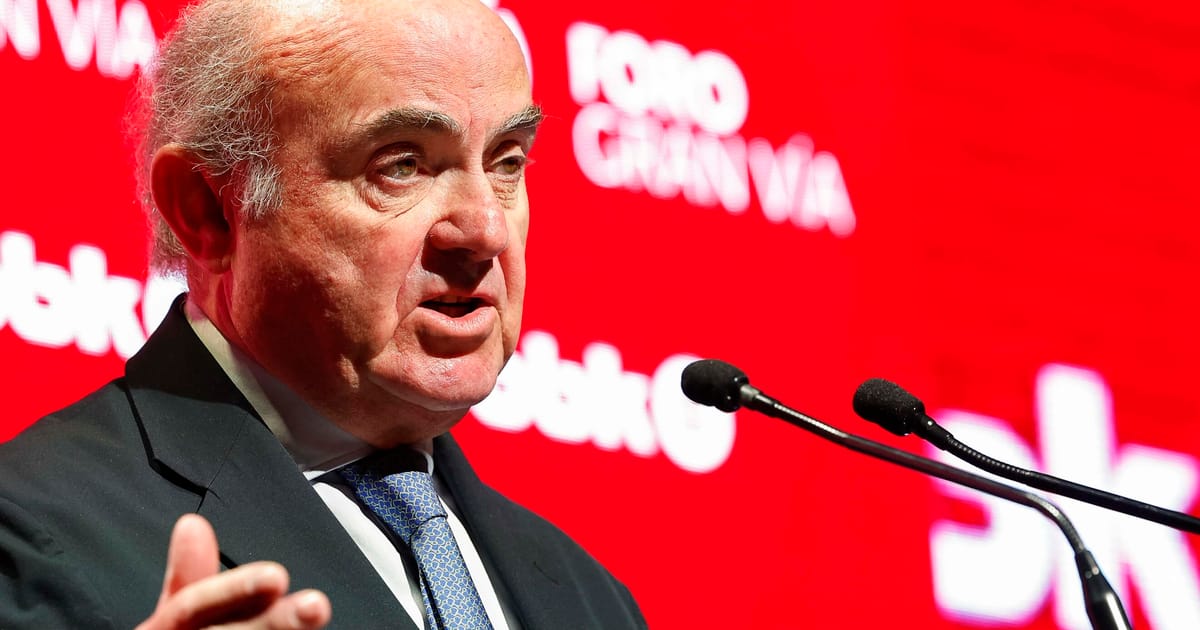
De Guindos defended what has been an unchallenged assumption for the last 40 years: that leaving a central bank to set interest rates free from political direction is the best guarantee of low inflation.
The best evidence, he argued, is from the markets, whose setting of long-term interest rates through bond yields reflects the degree of confidence in the ability of a currency to keep its value.