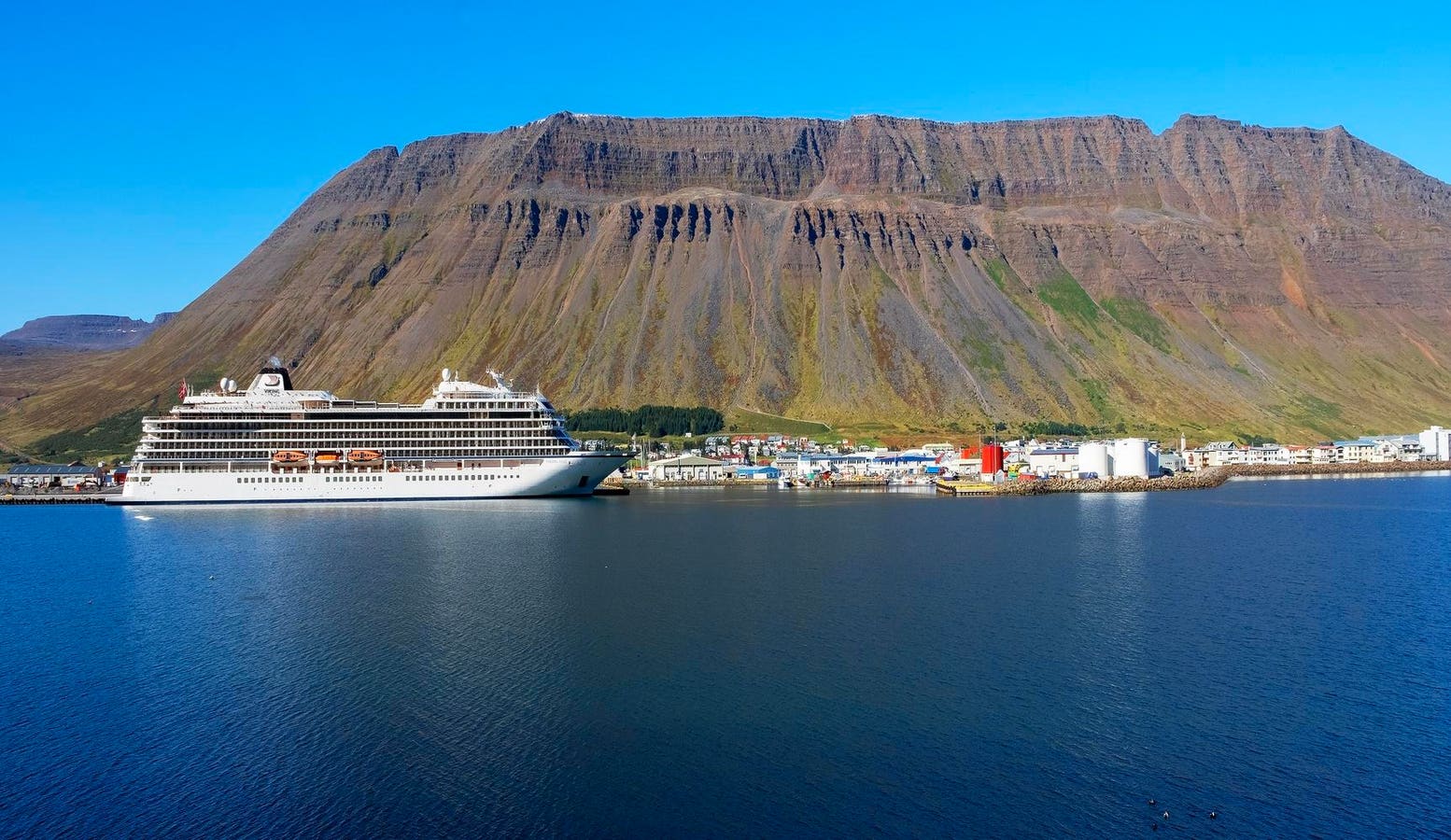
Isafjordur is one of Iceland’s cruise ports that’s grown in popularity in recent years.
getty
Iceland is often discussed alongside cruise destinations such as Norway and Alaska, yet the experience it offers is fundamentally different.
In Norway and Alaska, the ship itself becomes a front-row seat to the landscape, with scenic sailing ranking among the highlights of the itinerary. Alaska’s Glacier Bay and Norway’s Inside Passage are prime examples, turning a sea day into a destination in its own right.
In Iceland, the opposite is often true. The coastline offers only a partial introduction. Much of the volcanic landscape that defines the country lies inland and requires deliberate exploration ashore.
Iceland Is A Shore-Based Destination
Unlike the fjords of western Norway or the Inside Passage in Alaska, Iceland’s coastline is generally low and understated. While there are attractive harbor towns and the occasional dramatic headland, most of the country’s iconic sights lie away from the coastline and ports.
The volcanic landscapes, erupting geysers, geothermal fields, glaciers, lava plains and powerful waterfalls that define Iceland are rarely visible from the ship. They require overland travel, often by coach or small-group tour, sometimes for several hours, adding cost.
This makes Iceland fundamentally different from cruise destinations where staying onboard can still deliver the headline scenery. In Iceland, remaining on the ship will save money, but you will miss what makes the country extraordinary.
Reykjavik Overnights Are Helpful But Not Sufficient
Overnight calls in Reykjavik have become increasingly common, and for good reason. Iceland’s capital offers excellent museums, the impressive Hallgrimskirkja church and a compact center that rewards unhurried exploration.
Hallgrimskirkja church is a landmark of Reykjavik and a must-visit on any Iceland cruise.
getty
However, even with an overnight stay, Reykjavik alone does not showcase Iceland’s defining landscapes. The famous Golden Circle, geysers, and waterfalls lie well outside the city, and reaching them requires a full-day excursion.
There is also a practical consideration many first-time visitors overlook. Most large cruise ships now dock at terminals some distance from central Reykjavik, meaning passengers must factor in transfer time before sightseeing even begins.
An overnight stay improves the experience, but it should be seen as a starting point rather than a complete introduction to Iceland.
Cruising Helps Sample Iceland’s Regions
Where cruising excels is in offering access to multiple Icelandic regions in a single trip. Each coastal area has a distinct character, and a well-planned itinerary reveals just how varied the country is.
In the north, Akureyri offers fjord scenery, a walkable town center, emerging spa resorts and access to waterfalls and the volcanic landscapes around Lake Myvatn.
In the remote Westfjords, Isafjordur delivers dramatic mountains and a sense of isolation that feels worlds away from the capital, while on the east coast, Seyðisfjörður charms visitors with its artistic culture.
Seeing these regions back-to-back highlights Iceland’s diversity in a way that even a land-based trip can struggle to match without significant driving.
Shore Excursions Are Not Optional In Iceland
In many cruise destinations, shore excursions are an optional enhancement. In Iceland, they are essential.
Whether booked through the cruise line or independently with local operators, excursions unlock the country’s defining experiences: standing beside erupting geysers, walking across volcanic plains, visiting powerful waterfalls, or exploring geothermal landscapes that look almost otherworldly.
Eruption of Strokkur Geysir on the Golden Circle route in Iceland.
getty
For guests wishing to focus on just one tour or simply save money, a condensed version of the classic Golden Circle tour is the best way to see Iceland’s natural highlights on a single excursion.
Others may prefer the opportunity to visit the famous Blue Lagoon from Reykjavik, or alternate natural spas near other ports.
Independent tours can offer smaller group sizes and more flexibility, while cruise-line excursions provide reassurance in a country where distances are long and weather can change quickly. Either way, budgeting for excursions should be considered an integral part of the cost of an Iceland cruise.
A Pivotal Time For Iceland Cruise Tourism
Although 2025 data is not yet fully confirmed, 2024 marked a strong year for cruise tourism in Iceland. Passenger visits reached record levels, reflecting the island’s continued appeal to travelers seeking nature-driven experiences and cooler-climate itineraries.
Reykjavik remains the busiest port, but regional destinations across the north, west, and east continue to benefit from cruise calls.
At the same time, Iceland is actively debating how to manage cruise tourism sustainably, particularly in smaller communities where infrastructure and environmental pressures are more pronounced.
Cruise visits in 2025 were actually expected to plateau or even fall because of a new government tax. For cruise travelers, this means itineraries may evolve, but Iceland’s status as a major North Atlantic cruise destination appears secure.
MORE FROM FORBESForbesFor Authentic Iceland, Look Beyond The Golden CircleBy David NikelForbesThe Icelandic Highlands Are Open For Just Eight Weeks A YearBy David NikelForbesA Norway Cruise In 2026 Is About More Than Just The FjordsBy David Nikel