Diversification matters — especially for regional economic growth.
Regional economic success typically depends on leading industries anchored by major companies and organizations that attract multiple tiers of support businesses.
In Tucson and Southern Arizona, several bellwether industries drive the economy:
• Aerospace and Defense: Raytheon and Davis-Monthan AFB
• Healthcare: Banner Medical Center and Tucson Medical Center
• Education: University of Arizona and Pima Community College
• Tourism: Winter weather, Old West heritage, Gem Show, spas, resorts and golf
• Technology and Innovation: IBM, University of Arizona and Tech Parks Arizona
People are also reading…
It’s time to add a new industry sector to this list: Sports.
The sports industry encompasses collegiate, professional and youth sports.
While collegiate and professional sports are well-established, Tucson is carving out a significant presence in the burgeoning youth sports sector — a $40 billion industry with considerable growth potential.
Investment in local sports
The University of Arizona has achieved national prominence in college sports. Both the football and basketball programs compete at the highest level, and there are multiple national titles among several sports.
Every December, Tucson hosts the Arizona Bowl, a major college football game that brings two different fan bases to the city, contributing significantly to the local economy and benefiting numerous charities.
Tucson’s professional sports landscape has always maintained a solid foundation.
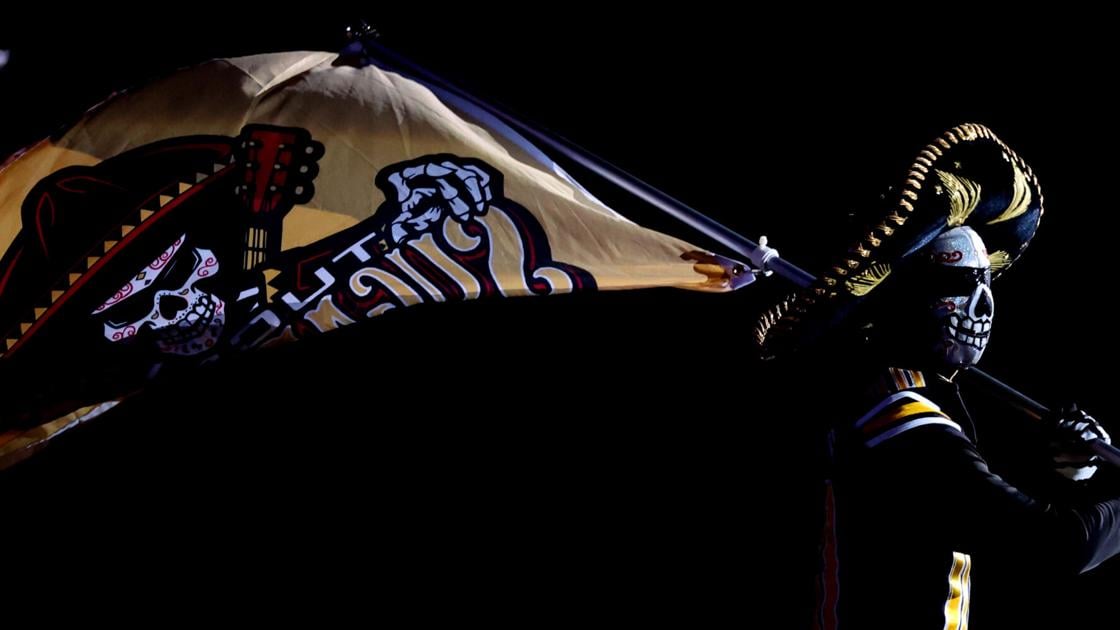
The city currently supports three professional teams: the AHL Hockey Tucson Roadrunners, the IFL Football Tucson Sugar Skulls, and USL League Two soccer team FC Tucson.
In 2025, Edmund Marquez and a group of business leaders purchased the Tucson Sugar Skulls. Their investment in operations and marketing is elevating the team’s value and should drive higher attendance and revenues.

Bones leads the Sugar Skulls players onto the field for a home game in July.
Kelly Presnell, Arizona Daily Star, File 2025
Blake Eager, Director of the Southern Arizona Sports Tourism and Film Association, led a team effort in bringing World Baseball Classic games to Tucson.
Eager also helped establish the Tucson Baseball Team, the first U.S. International team in the Mexican Pacific League — the world’s third-largest baseball league behind only Major League Baseball and Japan’s Nippon League.
FC Tucson, established in 2010, is Southern Arizona’s premier soccer club. The organization features a pre-professional men’s team competing in USL League Two, an amateur women’s team in the WPSL and a boys’ youth academy program through USL Academy.
The Snoop Dogg Arizona Bowl Every is a major college football game that brings out-of-town fans to Tucson, contributing significantly to the local economy and benefiting numerous charities.
Grace Trejo, Arizona Daily Star, File 2025
El Tour de Tucson, a road cycling event held every November since 1983, has grown from 185 riders to between 7,000 and 10,000 cyclists annually.
In youth sports, facilities and complexes form the foundation that makes the industry viable. This is where Tucson truly separates itself from the competition.
3 premier assets
Kino Sports Complex is an expansive facility on Tucson’s south side that’s divided into three areas:
• The main complex features a major league baseball stadium seating 11,000, seven full-sized regulation baseball fields (four with lights), two infield-only baseball fields, 33 pitching mounds, two lighted soccer fields, and a full-service clubhouse.
• The north complex serves soccer with eight fields (two regulation-sized and lighted with permanent seating), two lighted softball fields, and two full-service clubhouses.
• The south complex opened in 2020 on 167 acres with 12 lighted natural grass multipurpose fields for rugby, football, soccer, lacrosse, and other sports. It has a 20-court pickleball facility and concessions.
Across all three complexes, 3500 free parking spaces are available.
Sporting Chance Center
The Sporting Chance Center serves youth basketball and volleyball through tournaments, leagues, camps, clinics and open play.
The air-conditioned 40,000-square-foot facility can be configured with up to eight volleyball courts or five full basketball courts.
Mosaic Quarter
The newest addition to Tucson’s sports infrastructure is The Mosaic Quarter, a $425 million multi-venue complex scheduled to open in 2027.
This ambitious project will serve as a hub of youth sports activity for years to come.
The first phase includes the 175,000-square-foot MQ Iceplex and the 131,000-square-foot MQ Field House.
Mosaic Quarter is a 90-acre development being built near Kino Parkway and Interstate 10.
Mosaic Quarter
Successive phases will add the MQ Sportsplex and the MQ Pavilion.
The size and flexibility of these facilities enable Mosaic Quarter to serve a wide variety of youth sports teams and leagues.
By the time the project is complete, you could find any of the following sports conducting regional, statewide, and national competitions: archery, badminton, basketball, cheerleading, curling, dance, ice skating, football, futsal, hockey, judo, lacrosse, pickleball, soccer, track and field, volleyball and wrestling.
Sports add to economic diversity
When it comes to sustainable growth, multiple thriving industries operating simultaneously reduce the risk of significant losses during economic shifts.
Tucson’s leading industries are diverse, and the burgeoning sports industry represents the latest example of this strategic economic approach.