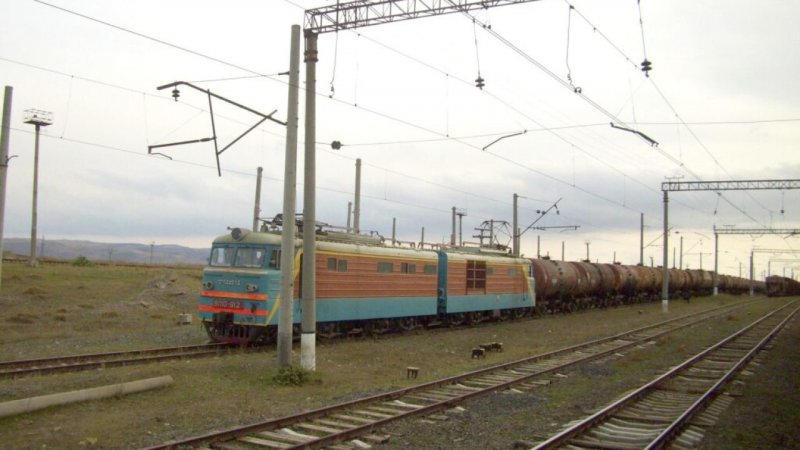
Following yesterday’s developments, the issue of restoring railway connections between Armenia, Azerbaijan, and Türkiye has ceased to be a matter of distant perspective and has moved into the category of urgent tasks. This was stated by Armenian Prime Minister Nikol Pashinyan in comments to journalists on January 15, News.az reports
As reported by News.Az with reference to Armenian media, the head of the Armenian government stressed that the necessary conditions for launching the work have already matured and that further delays are unacceptable. According to him, important processes are unfolding in the region, which Yerevan will comment on additionally, but it is already clear that the restoration of transport communications must be accelerated.
Pashinyan recalled that the resumption of railway links had been discussed with Russia within the framework of the TRIPP project (Transport, Infrastructure and Peace Project). In particular, this issue was raised during his meeting with Russian President Vladimir Putin.
The Armenian prime minister made it clear that Moscow currently plays a key role in advancing the project.
“We ask our Russian partners to make a decision on this issue,” Pashinyan said, effectively directing his appeal specifically to Russia and emphasizing that further progress largely depends on the Kremlin’s position.
Experts note that the restoration of railway communication between Armenia, Azerbaijan, and Türkiye is one of the most important elements of the post-war transformation of the South Caucasus. The implementation of this project could open new economic opportunities for the region, improve logistics, stimulate trade, and reduce political tensions.
At the same time, the process faces a number of challenges — from political disagreements to security issues, route control, and the role of external mediators. In this context, Russia’s involvement is seen as critically important, since it remains a key player in regional negotiations and a guarantor of several agreements.
Pashinyan’s statement shows that Yerevan seeks to accelerate its integration into regional transport projects, while still relying on Moscow’s support and expecting a more active stance from Russia.
How events will unfold will become clear in the coming weeks, but it is already evident that the topic of restoring railways is moving to the forefront of the South Caucasus agenda.