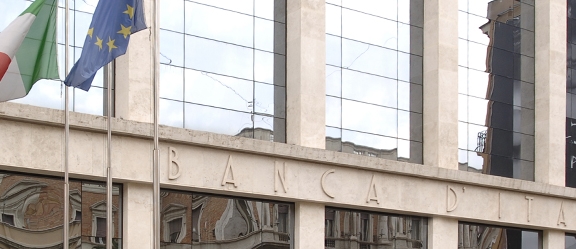
In the fourth quarter, Italy’s economic activity continued to expand moderately, driven by the services sector, especially those for businesses, and a recovery in industry. This is according to the Bank of Italy’s Economic Bulletin. In the third quarter, Italy’s GDP increased slightly, driven by a sharp rise in exports and an expansion in investment, which benefited from tax incentives and other measures related to the National Recovery and Resilience Plan (NRRP). Household consumption grew modestly, reflecting continued unfavorable expectations for the global economic outlook. The outlook for manufacturing remains uncertain, partly due to intensifying Chinese competition in several sectors. Our projections prepared in December—the Bank of Italy emphasizes—forecast GDP growth of 0,6 percent in 2026, expected to strengthen in the two-year period 2027-28.
In the third quarter of 2025, the US economy continued to grow strongly. As in the first half of the year, investments in artificial intelligence (AI) technologies made a significant contribution, while also boosting international trade. The OECD forecasts a slight weakening in global growth in 2026, weighed down by downside risks associated with trade and geopolitical tensions and possible corrections in financial markets in the technology sector.
During the summer months, euro area GDP accelerated slightly, with very heterogeneous trends among the main countries. According to our estimates, the Bank of Italy reports, output increased moderately in the fall, supported in particular by the renewed increase in service activity. Last December, Eurosystem experts revised upward their GDP growth projections for the area to 1,2 percent this year and 1,4 percent for 2027-28. Consumer price inflation, which averaged 2,1 percent in 2025, is expected to decline slightly in both 2026 and 2027, before returning to 2,0 percent in 2028.
Between July and September, the current account surplus remained high, thanks to favorable developments in the balances of goods and investment income. After contracting in the spring months, exports in volume began to increase again in the third quarter, partly due to some extraordinary sectoral developments. In the two-month period from October to November, exports, net of some highly volatile components, stabilized. Net purchases of Italian government bonds by foreign investors continued, at a slower pace. The net international credit position expanded.
Employment numbers began to rise again in the autumn months. The unemployment rate declined further; labor market participation among young people declined. In the private non-farm sector, wages continued to expand modestly, slightly above inflation.
In the fourth quarter, inflation remained low compared to the euro area, due to more moderate growth in services prices and a more pronounced decline in energy prices. Net of the most volatile components, inflation fell below 2 percent. Source pressures continue to ease. According to our projections prepared in December, the Bank of Italy emphasizes, consumer price inflation will fall to 1,4 percent in 2026, from 1,7 percent last year. It will gradually rise over the next two years, reaching an average of close to 2 percent in 2028, reflecting the temporary increase in the energy component due to the introduction of the European ETS2 regulation.
In the fall, the cost of bank funding and lending rates remained essentially unchanged. Lending to households and businesses accelerated. Among economic sectors, credit growth to service companies strengthened, and construction lending returned to positive territory; the decline in manufacturing eased. According to the survey of Italian banks conducted between the end of September and the beginning of October, as part of the survey of bank lending in the euro area, both the lending criteria and the terms applied to loans to businesses remained unchanged in the third quarter.
Based on the most recent information, net borrowing as a percentage of GDP would have decreased in 2025, while public debt would have increased. The budget law approved last December leaves the deficit unchanged in 2026 compared to the previous legislation and increases it by an average of 0,3 percentage points of GDP per year over the following two years.
US tariffs have prompted a shift of Chinese products to alternative markets. Although the short-term effects are currently limited, a significant portion of the companies interviewed in our surveys expect their business to be affected by increased Chinese competition in their sales markets.
Household spending increased slightly in the third quarter. The propensity to save increased further, reaching among the highest levels since the global financial crisis, excluding the abnormal levels observed during the pandemic. According to the Bank of Italy’s assessments, consumption continued to expand modestly even in the autumn months, reflecting the weakening labor market outlook and households’ cautious expectations regarding the macroeconomic outlook.
Read also other news on Nova News
Click here and receive updates on WhatsApp
Follow us on the social channels of Nova News on Twitter, LinkedIn, Instagram, Telegram