“A Spirit of Dialogue”: the theme for this year’s World Economic Forum, the gathering of the global elite in the sparkling Alpine air of Davos, seems a heroic stretch, when star guest Donald Trump has spent the past year smashing up the world order.
The president will touch down alongside the snowcapped Swiss mountains with the largest US delegation ever seen at the WEF, including the secretary of state, Marco Rubio, the treasury secretary, Scott Bessent, the commerce secretary, Howard Lutnick, and the special envoy Steve Witkoff.
Last year, just days after his second inauguration, Trump was beamed in to Davos on screen to deliver a punchy speech, in which he threatened across-the-board tariffs, urged Nato countries to raise defence spending, and called on the Federal Reserve to slash interest rates “immediately” – setting the tone, as it turned out, for a chaotic 12 months.
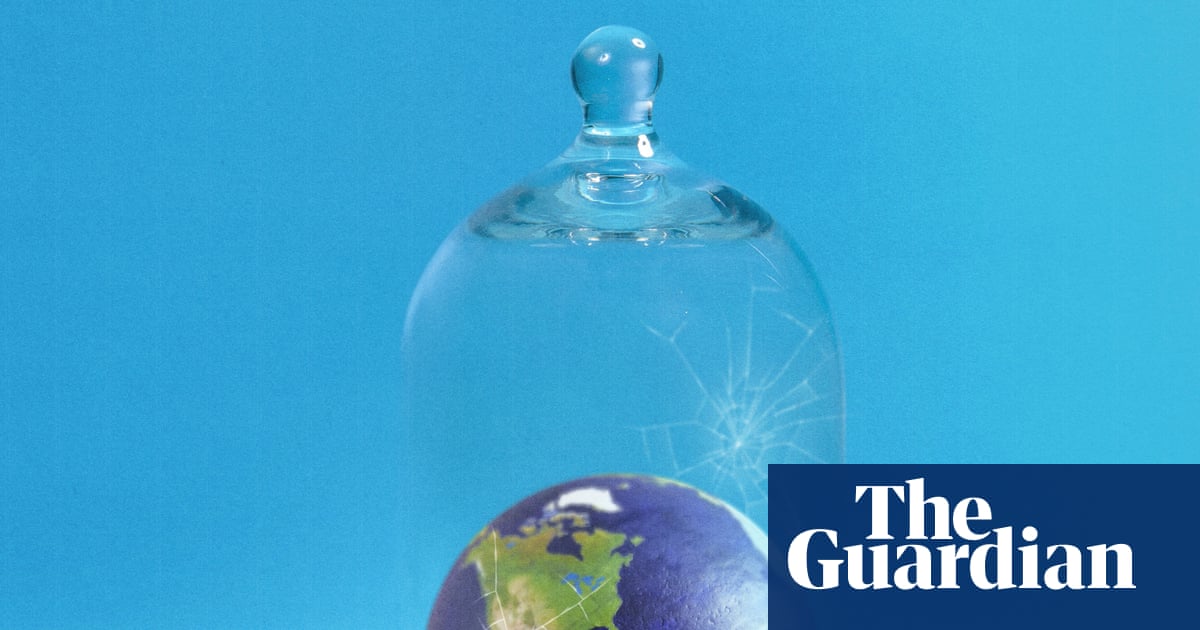
A year on, what was left of the fraying rules-based global order, already jeopardised by Russia’s invasion of Ukraine and the rising power of the autocratic regime in Beijing, is rapidly unravelling, and the “spirit of dialogue” has been distinctly hard to find.
This year’s meeting is taking place at a time of extraordinary geopolitical tumult. War continues to rage in Ukraine, whose president, Volodymyr Zelenskyy, is making the trip to Davos as he continues to rally support.
Just days before heading to the WEF, Trump suggested that Ukraine was more reluctant to see peace than Russia.
When WEF asked more than 1,300 politicians, business leaders and academics about their fears for the future, they identified “geoeconomic confrontation” as the most pressing risk for the next two years – the clash for economic dominance between the big powers. The second most popular choice was outright war between nations.
In recent weeks alone, Trump has sent troops to seize the president of Venezuela, Nicolás Maduro; stepped up his rhetoric on annexing Greenland; and threatened to attack Iran if protests continue to be repressed.
Yet with the kind of multilateralism WEF was founded to foster apparently on its last legs, there is a fightback under way, too. It was clearly evident in the decision of usually reticent central bankers this week to wade into the row over the independence of the Federal Reserve chair, Jerome Powell, by publishing an unprecedented joint letter.
And while Trump is coming mob-handed, other leaders will be flying in to Davos intent on making the argument for free trade, transatlantic cooperation and the staunch defence of Ukraine in the face of Russian aggression. They include The Nato chief, Mark Rutte, the French president, and the European Commission president, Ursula von der Leyen.
Another attender will be António Guterres, the UN secretary general. On Thursday, as he reviewed his priorities for 2026, he said that “when leaders run roughshod over international law – when they pick and choose which rules to follow – they are not only undermining global order, they are setting a perilous precedent.”
Russia may have begun that process with the invasion of Ukraine, while the conflict in the Middle East has raised acute concerns about war crimes, particularly from the near total bombing of Gaza by Israel, but it is US behaviour that has brought the postwar international order closer to the brink. “The erosion of international law is not happening in the shadows,” Guterres added.
Senior diplomats quietly believe the projection of US military power into countries such as Venezuela could prompt a growing resistance around the world. Photograph: Nicole Combea/Pool/Nicole Combea – Pool/CNP/Shutterstock
Global military spending now amounts to $2.7tn (£2tn), an annual increase of 9.4%, the steepest rise since the end of the cold war. Countries around the world racing to increase war spending either in response to perceived threats from Russia, China and the US and the events of 2026 alone are likely to persuade leaders from democracies and dictatorships of the need to spend more.
But for all the projection of US military power into countries such as Venezuela, senior diplomats also quietly believe it could prompt a growing resistance among populations around the world. Though American power is significant, China and other developing countries continue to grow as a share of the global economy, meaning the long-term balance is slowly tipping away from the US.
So far Trump’s efforts to force a pro-Russian peace on Ukraine have failed amid a concerted European pushback. The US president pulled back from an attack on Iran, partly after intense lobbying from Saudi Arabia and other Gulf countries concerned about the risk of a regional war, but also because it was not obvious there was a credible external military response to the Iranian regime’s crackdown.
Multinational cooperation continues, but it gains fewer headlines. This year the UN will launch an independent scientific panel on artificial intelligence: a 40-strong expert group to try to temper the commercially driven AI models dominated by the US companies that will be showing their wares along Davos main street, the Promenade.
More than 50 years after its founding, the pulling power of the WEF for the rich and powerful is undimmed: more than 60 heads of state or government are expected, as well as 55 economy and finance ministers, and more than 800 chief executives or chairs of big corporations.
Companies pay 27,000 Swiss francs (£25,000) for each member of their delegation, in addition to a chunky annual membership fee. In a gesture at inclusivity, WEF uses some of that income to subsidise participants from civil society groups.
The pulling power of the World Economic Forum for the rich and powerful is undimmed. Photograph: Gian Ehrenzeller/EPA
Stomping between conference venues in ski boots and fur hats, participants join public discussions and debates; hold thousands of private meetings across the sprawling conference site; and swap gossip at champagne-fuelled late-night parties in the resort’s hotels and après-ski spots, many taken over by private sector sponsors for the duration.
Corporate movers and shakers due to attend include Nvidia’s president, Jensen Huang, the Microsoft chief executive, Satya Nadella, and the Anthropic founder and chief executive, Dario Amodei – all key figures in the AI boom that has buoyed Wall Street and further enriched a cohort of US billionaires over the past 12 months.
Analysis commissioned by environmental charity Greenpeace before the meeting found the number of private jet flights associated with Davos more than tripled between the 2023 and 2025 meetings, highlighting the climate impact of the annual shindig.
The WEF president, Børge Brende, a former Norwegian minister, hopefully told Time magazine in a pre-Davos interview “we know that President Trump [and his] secretaries are very much into deal making, and to make deals, you have to have a dialogue”. But he conceded the meeting was taking place against “the most complicated geopolitical backdrop since the WEF was founded”.
Winnie Byanyima, the executive director of UNAids, who co-chaired Davos in 2015, using the platform to press for action on global inequality, says Trump’s presence is hard to reconcile with WEF’s stated purpose.
“It’s such a contradiction, in my view. A world where the WEF would contribute is a rules-based world, where there’s predictability, where business works with governments – business to achieve their profits but governments to meet the needs of their people. But him, he represents might is right.”
This year’s meeting is expected to be the first without ‘Mr Davos’, WEF founder Klaus Schwab. Photograph: Salvatore Di Nolfi/EPA
This year’s gathering is the first of a new era, without the looming presence of “Mr Davos” – the WEF’s founder, Klaus Schwab. The 87-year-old, who hosted the first Davos summit in 1971, stepped down from the organisation’s board last year, after whistleblowers raised allegations, including unauthorised spending, against Schwab and his wife, Hilde.
He publicly contested the claims, insisting “throughout this journey, Hilde and I never used the forum for personal enrichment”.
After an investigation by the Swiss law firm Homburger, WEF’s board of trustees cleared him of “material wrongdoing” last August. “Minor irregularities, stemming from blurred lines between personal contributions and forum operations, reflect deep commitment rather than intent of misconduct,” a WEF statement said at the time.
Schwab is not expected to be present at this year’s gathering; but in a hint that he may be missing the limelight, is publishing a new book – one of a series – to coincide with Davos. Titled Restoring Truth and Trust, the 110-page volume is peppered with phrases such as “having devoted my life to public service” and “for someone who spent years in diplomatic circles”.
Danny Sriskandarajah, the director of the New Economics Foundation thinktank in the UK, was once one of WEF’s Young Global Leaders, who bring the perspectives of civil society and business into Davos discussions.
He is not attending this year, and argues that the WEF no longer serves the purpose for which Schwab founded it more than half a century ago. “My view is, it was ahead of its time, but now it’s a relic of the past,” he says.
“He [Schwab] was ahead of the game, in that he said, ‘we’re only going to tackle the world’s problems if we do a multi-stakeholder approach and we think about the global dimensions of these problems’”. But with any semblance of a “rules-based global order” now gone, he argues, “it’s problematic for lots of reasons, mostly because it is just unaccountable and there’s no real legitimacy to it.”
Bono helped launch the Make Poverty History movement at Davos in 2005. Photograph: Laurent Gilliéron/EPA
Jamie Drummond, another Young Global Leader, who co-founded the One charity with the U2 lead singer Bono, says that in the late 1990s and early 2000s, before the global financial crisis, discussions in Davos helped to shape the diplomatic year ahead.
In 2000, it was the venue for the launch of Gavi, the public-private alliance that has since vaccinated more than 1 billion children. “I turned up with Bono a few times,” he says. “It was useful to get the vaccines initiative going; it was useful to advance debt cancellation in the millennium and the years after that, and I think its peak was when we helped launch Make Poverty History there in 2005.”
He argues that such optimism has long evaporated – but he will still be there this year, not as a formal delegate, but in the hope of influencing some of the world’s most powerful people. “This is not Davos’s heyday, it is on the decline – but it’s not dead yet,” he says.