One of the side benefits of working in journalism: You learn something new every day, by necessity.
That was the case in 2025 as The Enquirer covered immigration stories.
There seemed to be local immigration news every week – sometimes, every day – as soon as Donald Trump began his second term.
We wrote about Emerson Colindres and Ayman Soliman. We talked to Butler County’s Sheriff Richard Jones and officials with Northern Kentucky jails. We covered protests and prayer services. We probed the president’s plan to go after the “worst of the worst of criminal immigrants.” We asked ICE officials to respond to these local situations.
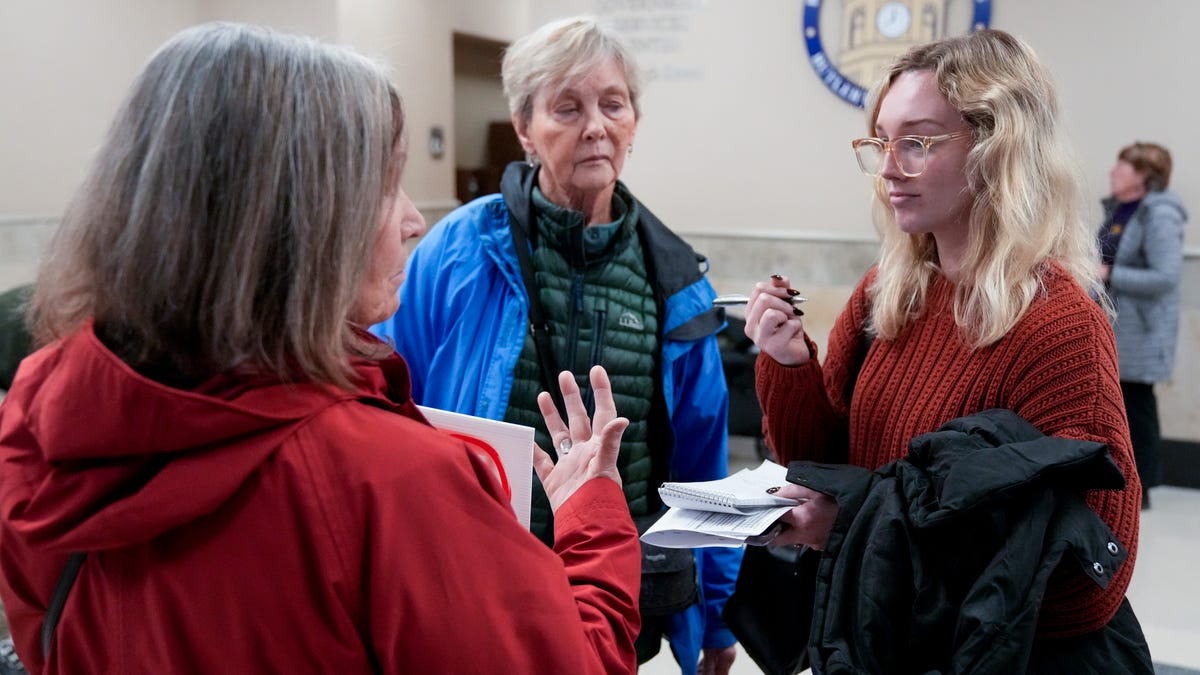
Four journalists contributed reporting for our Year of ICE project, working with investigations and enterprise editor Terry DeMio, photo director Cara Owsley, and the 2025 work of multiple other staffers.
Here’s what the four learned as they wrote that story and other pieces last year.
Patricia Gallagher Newberry, enterprise reporter
Early in Trump’s new term, I became familiar with the president’s agenda by covering stories about his cost-cutting efforts and their impact on federal offices and employees in Greater Cincinnati.
I joined colleagues covering immigration news by mid-June, when I made the first of three trips to the Blue Ash offices of Immigration and Customs Enforcement for press conferences.
I wrote the most about Soliman, the former Cincinnati Children’s chaplain who attracted national media attention, covering his story on the day of his arrest, the day of his release and many days in between. Most recently, I met an immigrant from Mauritania, who fled violence there to join family here. He cried as he talked about his four children and his hopes to bring them and his wife to Cincinnati.
Every story brought new learning. About the immigration court system. About local ICE activity and surveillance of that activity. About immigrants across Greater Cincinnati, where they live and how they make a living. About empathy and activism in support of immigrants.
ICE will no doubt remain active here this year. I’m ready to keep writing about whatever comes next.
Victoria Moorwood, suburban Cincinnati reporter
Going into 2025, I knew it was only a matter of time before Butler County partnered again with ICE. Sheriff Richard Jones gave me a tour of a jail housing pod, which, at that time, only housed local inmates, and told me about his plans to resume work with ICE.
After the commissioners agreed to a new partnership, things happened fast. I quickly had to understand complicated federal agreements and learn where to find information about the people who were being detained and deported.
I covered protests and talked to Homeland Security staffers, Cincinnati lawyers, local immigrants and their advocates. For one story, we had to figure out how to get court records from El Salvador. For another, we trudged through hundreds of spreadsheet pages.
We did tough interviews, including one with a man in jail, detained by ICE. We got translators’ help for some of those conversations. I signed up for Spanish classes.
There’s still a lot to learn, and so much more work to do.
Jolene Almendarez, Northern Kentucky reporter
The most difficult part of writing this story was acknowledging there’s so much we’ll never be able to bring to light about how new immigration policies impact Greater Cincinnati.
A woman who’s shouldering the responsibility of running a business, caring for children, and helping her aging parents after her husband’s deportation in 2025. A group of sisters who are grieving the deportation of one of their sons back to the authoritarian-led Venezuela.
So many people we spoke to or were told about were too scared to talk to us on the record because it could put their lives or freedom at risk.
That creates a devastating reality that essentially makes these people’s lives – their pain, grief, struggles – invisible. Like living ghosts.
I definitely cried with helplessness because, really, what can I (or my colleagues) ever do about that?
Grace Tucker, education reporter
My short time covering immigration as an education reporter has been peppered with brief moments of transparency in between lots of ambiguity.
The superintendent of the largest district in the region, Cincinnati Public Schools, said before hordes of media that fear about ICE is a motivator behind kids being chronically absent from school. But weeks of effort to uncover concrete testimonies from district staff who work with those kids brought little clarity. Affected families have shared their fears on social media. But when approached by a reporter, they have also been, understandably, hesitant to talk.
There is a fear that speaking out – beyond the anonymity of social media or formal district statements – will put a target on certain neighborhood schools. So, much of my reporting so far has ended with unanswered messages and phone calls.
And in districts like CPS where we’ve seen a documented surge in homelessness among students or in Mount Healthy where financial turbulence has gutted entire programs, the fear around ICE only exacerbates already-dire circumstances.
In 2026, as students wrap up the first full academic year amid these new concerns, numbers that reflect student anxieties will start to trickle in. Graduation rates, chronic absenteeism rates and math and reading proficiency are all measures I’ll have my eye on this spring.