BRUSSELS — The European Union faced calls on Sunday to implement a never-before-used range of economic countermeasures known as the “Anti-Coercion Instrument,” as part of the bloc’s response to US President Donald Trump’s tariff threats against European allies over Greenland.
That weapon — never used before and dubbed the EU’s trade “bazooka” — allows for curbing imports of goods and services.
Trump vowed on Saturday to implement a wave of increasing tariffs on EU members Denmark, Sweden, France, Germany, the Netherlands and Finland, along with Britain and Norway, until the United States is allowed to buy Greenland, escalating a row over the future of Denmark’s vast Arctic island.
All the countries, already subject to tariffs of 10 and 15 percent, have sent small numbers of military personnel to Greenland.
Cyprus, holder of the rotating six-month EU presidency, summoned ambassadors to an emergency meeting in Brussels on Sunday, which EU diplomats said was due to start at 5 p.m. (1600 GMT).
In a joint statement Sunday, all eight countries targeted by Trump said they would “stand united” in their response.
“Tariff threats undermine transatlantic relations and risk a dangerous downward spiral,” Britain, Denmark, Finland, France, Germany, the Netherlands, Norway and Sweden said. “We will continue to stand united and coordinated in our response. We are committed to upholding our sovereignty.”
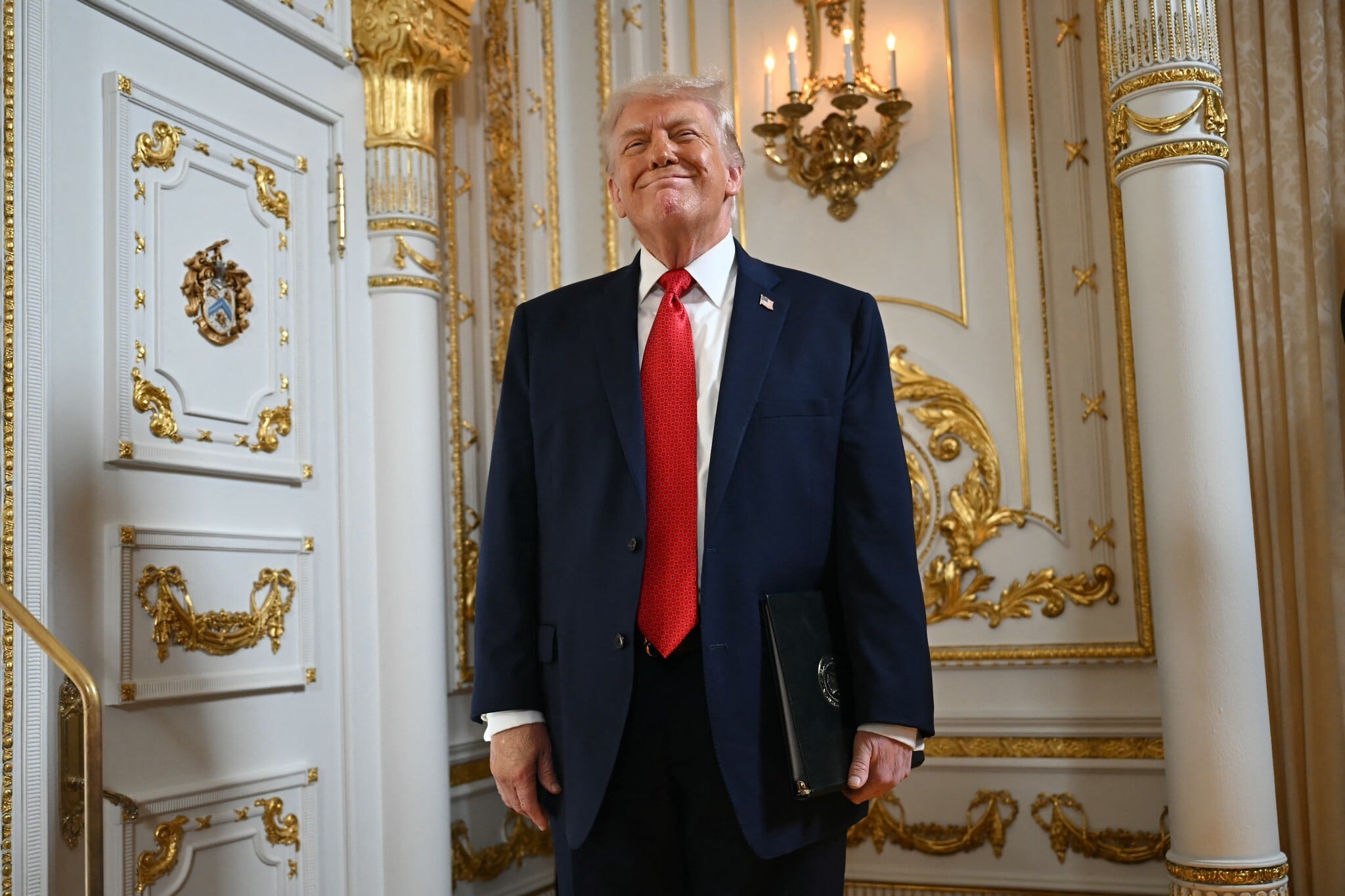
US President Donald Trump reacts as he arrives at a dedication ceremony for Southern Boulevard, in the ballroom at Mar-a-Lago in Palm Beach, Florida, on January 16, 2026. (ANDREW CABALLERO-REYNOLDS / AFP)
Coordinated European response
A source close to French President Emmanuel Macron said he was working to coordinate a European response and was pushing for activation of the Anti-Coercion Instrument, which could limit access to public tenders in the bloc or restrict trade in services in which the US has a surplus with the EU.
In social media posts late Saturday, Bernd Lange, the German Social Democrat who chairs the European Parliament’s trade committee, and Valerie Hayer, head of the centrist Renew Europe group, echoed his call, as did Germany’s engineering association on Sunday.
However, some EU diplomats said now was not the time to escalate the situation.
Italian Prime Minister Giorgia Meloni, closer to Trump than some other EU leaders, described the tariff threat on Sunday as “a mistake,” and told a briefing during a trip to Korea that she had spoken to Trump a few hours earlier and told him what she thought.
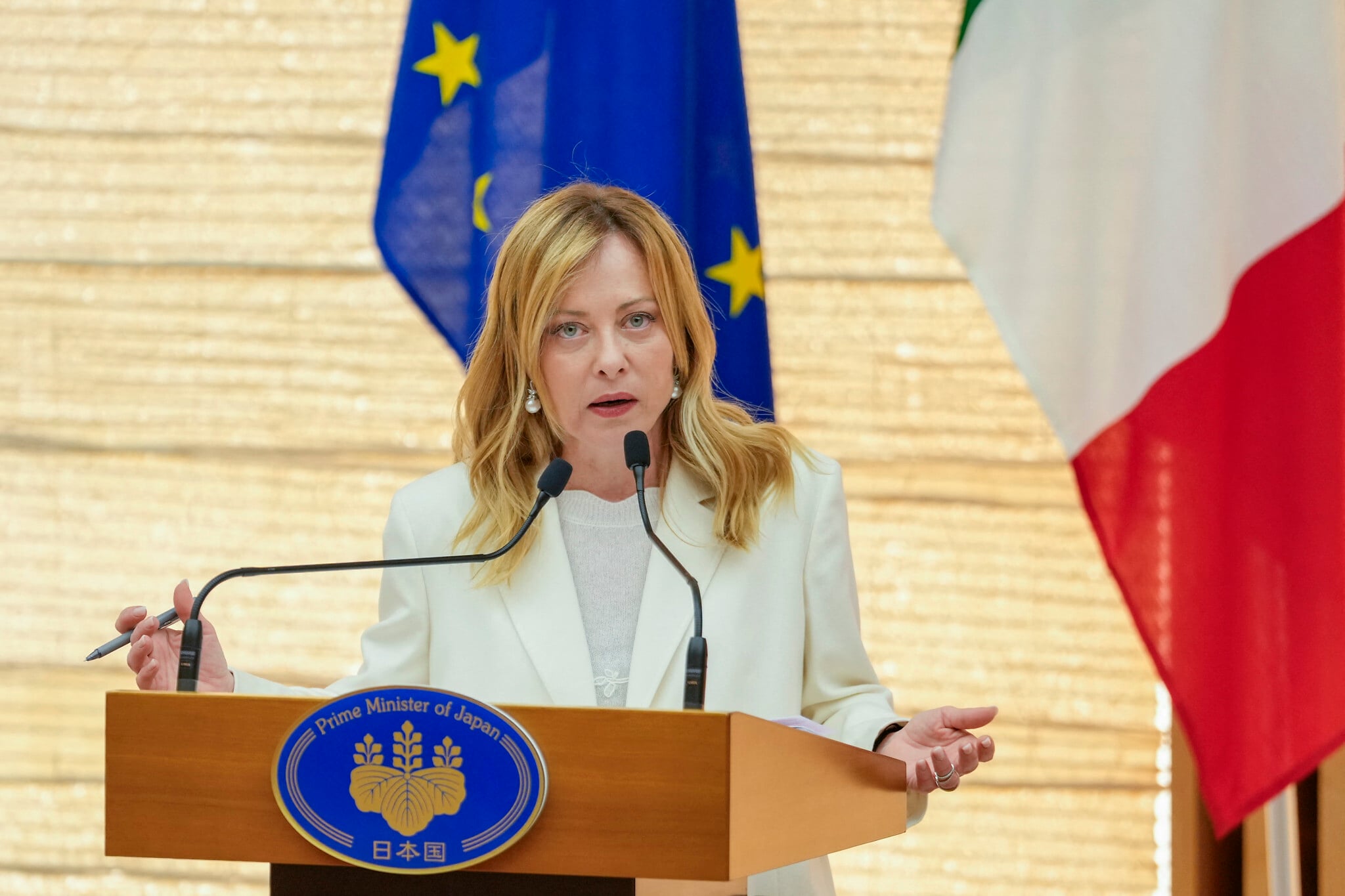
Italy’s Prime Minister Giorgia Meloni speaks during a press conference with Japan’s Prime Minister Sanae Takaichi at the prime minister’s official residence in Tokyo on January 16, 2026. (Toru HANAI / POOL / AFP)
She planned to call other European leaders later on Sunday. Italy has not sent troops to Greenland.
The deployment to Greenland of small numbers of troops by some European countries was misunderstood by Washington, Meloni said, explaining the deployment was not a move against US but aimed to provide security against “other actors” that she didn’t name.
Britain’s position ‘nonnegotiable’
UK Prime Minister Keir Starmer, who leads the center-left Labour Party, said the tariffs announcement was “completely wrong” and his government would “be pursuing this directly with the US administration.”
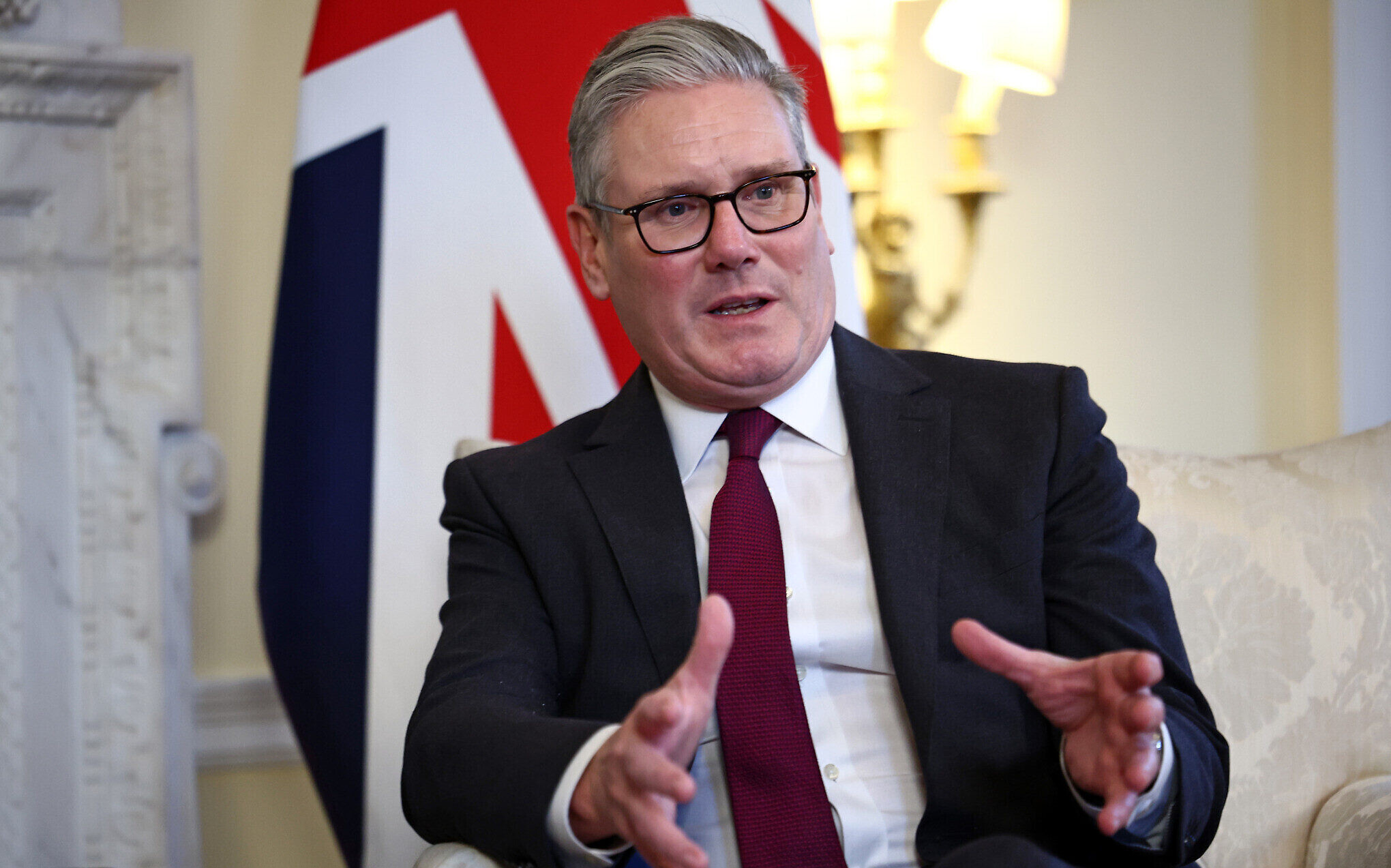
Britain’s Prime Minister Keir Starmer at 10 Downing Street, London, January 16, 2026. (Henry Nicholls/Pool via AP)
Asked on Sunday about how Britain would respond to new tariffs, UK Culture Secretary Lisa Nandy said allies needed to work with the United States to resolve the dispute.
“Our position on Greenland is nonnegotiable… It is in our collective interest to work together and not to start a war of words,” she told Sky News.
Denmark’s Foreign Minister Lars Lokke Rasmussen announced he would visit fellow NATO members Norway, the UK, and Sweden in the coming days to discuss the alliance’s Arctic security policy.
France’s Agricultural Minister Annie Genevard warned that tariffs would hurt Washington, too.
“In this escalation of tariffs, [Trump] has a lot to lose as well, as do his own farmers and industrialists,” she told broadcasters Europe 1 and CNews.
Dutch Foreign Minister David van Weel meanwhile, called Trump’s threat an “inexplicable” form of “blackmail.”
There are immediate questions about how the White House could try to implement the tariffs because the EU is a single economic zone in terms of trading, according to a European diplomat who was not authorized to comment publicly and spoke on the condition of anonymity. It was unclear, too, how Trump could act under US law, though he could cite emergency economic powers that are currently subject to a US Supreme Court challenge.
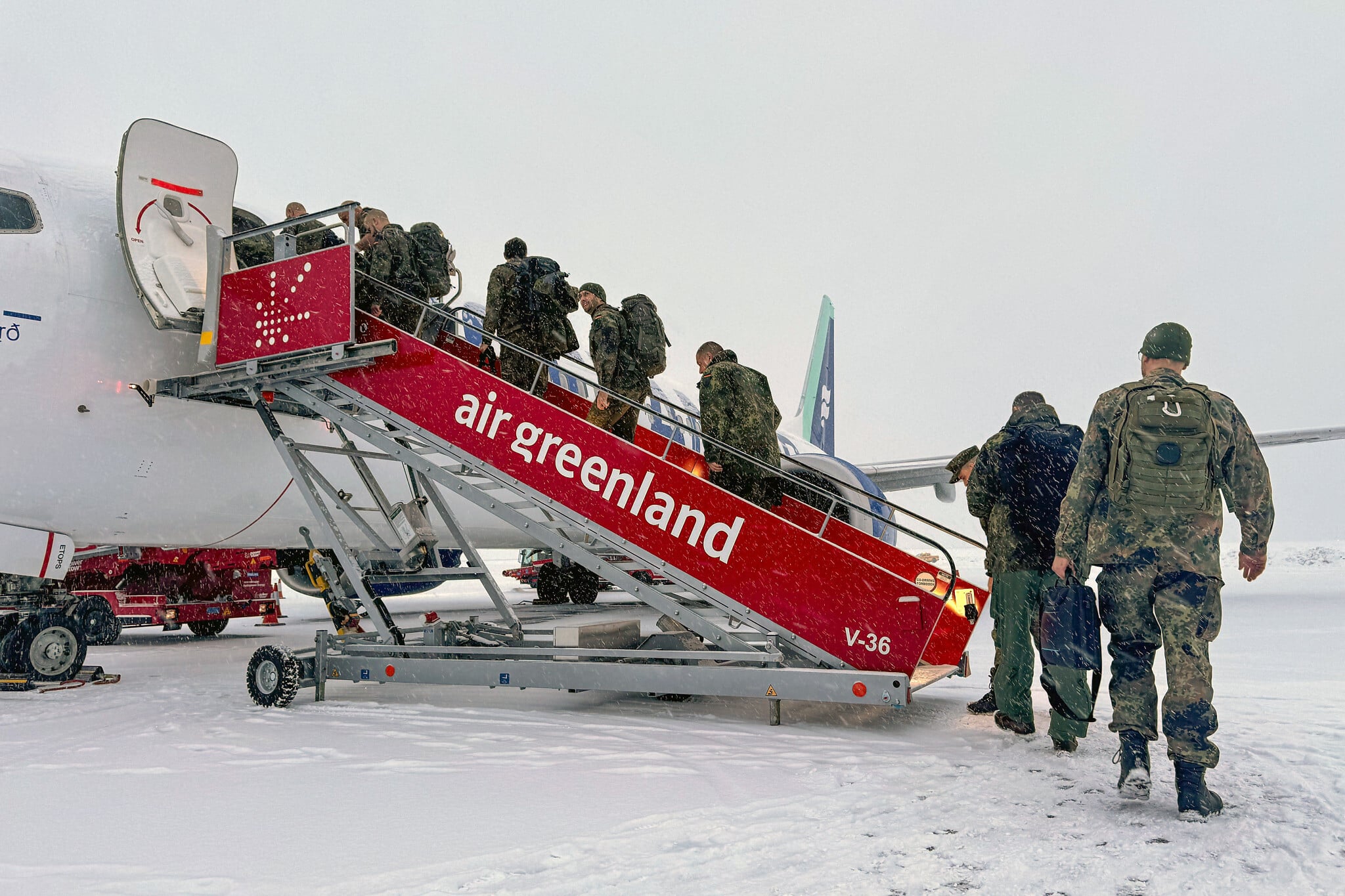
Military personnel from the German armed Forces Bundeswehr board Icelandair flight leaving Nuuk airport for Reykjavik on January 18, 2026 in Nuuk, Greenland. (Alessandro RAMPAZZO / AFP)
European Union foreign policy chief Kaja Kallas said China and Russia will benefit from the divisions between the US and Europe. She added in a post on social media: “If Greenland’s security is at risk, we can address this inside NATO. Tariffs risk making Europe and the United States poorer and undermine our shared prosperity.”
The tariff threats do, though, call into question trade deals the United States struck with Britain in May and the European Union in July.
The limited agreements have already faced criticism about their lopsided nature, with the United States maintaining broad tariffs, while its partners are required to remove import duties.
The European Parliament looks likely now to suspend its work on the EU-US trade deal struck in July. The assembly had been due to vote on removing many EU import duties on January 26-27, but Manfred Weber, head of the European People’s Party, the largest group in parliament, said in a post on X late on Saturday that approval was not possible for now.
Trump’s threat came just as the European Union was signing its largest-ever free trade agreement, with the South American bloc Mercosur, in Paraguay. EU Commission chief Ursula von der Leyen said that the agreement sent a very strong signal to the rest of the world.
“We choose fair trade over tariffs. We choose a productive, long-term partnership over isolation,” she said.
Thousands of people in Greenland’s capital Nuuk, Copenhagen and other Danish cities protested against the prospect of US annexation on Saturday.