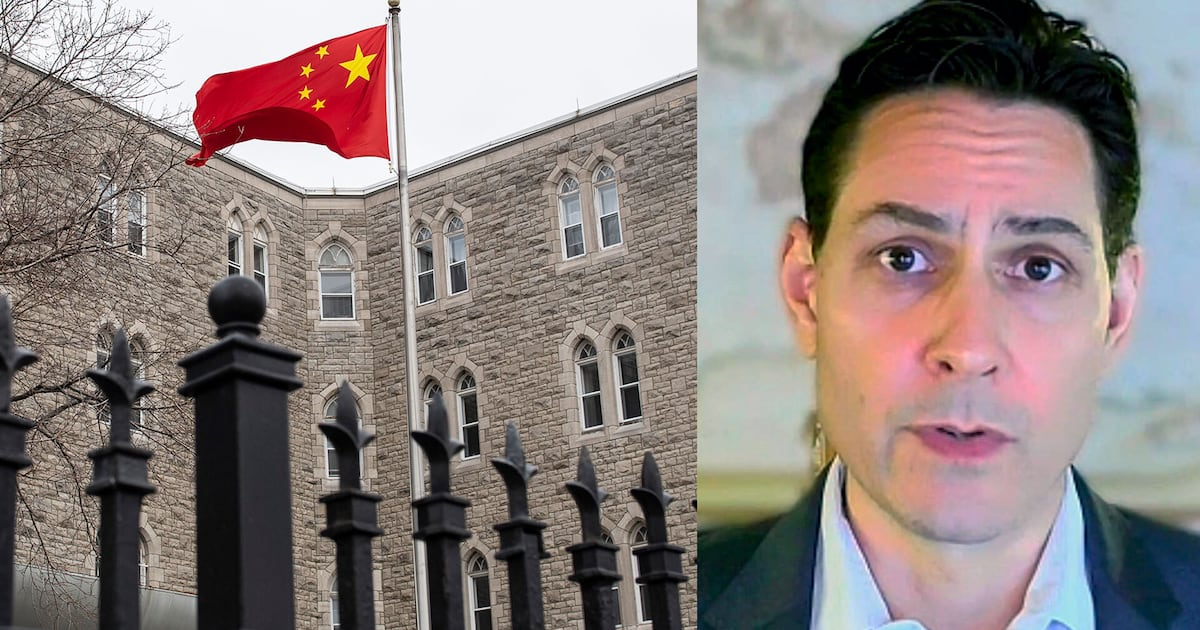
Former Canadian diplomat Michael Kovrig — who was detained by China for more than 1,000 days between 2018 and 2021 — says Prime Minister Mark Carney’s tone and messaging during his trip to China were “worrisome.”
In a bid to reset relations with China and counter trade threats from the United States, Carney became the first Canadian prime minister to travel to the Asian country in eight years this week.
During the trip, Carney took meetings with Chinese President Xi Jinping and Chinese Premier Li Qiang, and stated progress in Canada-China relations is “(setting) up well for the new world order,” comments which drew widespread reaction, including from Kovrig.
“Diplomacy is necessary, grinning is optional, and looking like a supplicant is undignified,” Kovrig said in an interview airing Sunday on CTV’s Question Period. “That’s not a good look. So, the optics could have been better.”
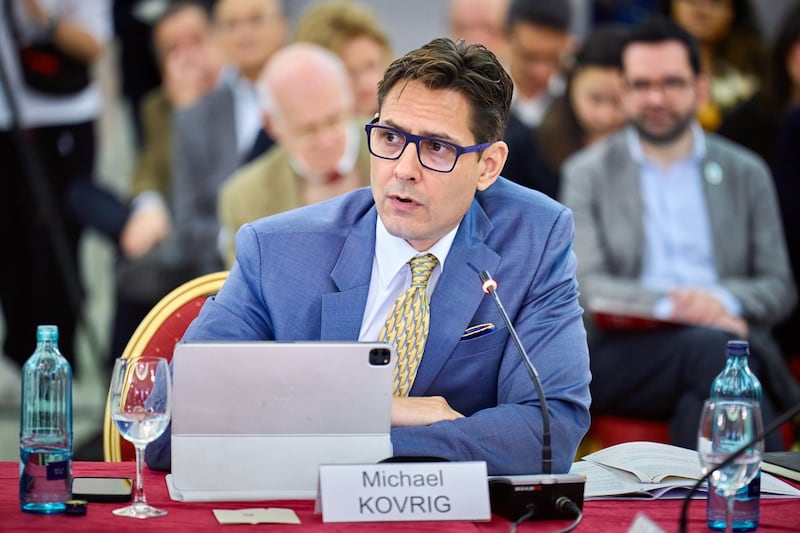 Michael Kovrig speaks at the conference, “War and Peace in the 21st Century: China and the US: Can Bipolar Confrontation Be Avoided?” at the Barcelona Centre for International Affairs on Mar. 11, 2023. THE CANADIAN PRESS/Handout – CIDOB (Mandatory Cr… Michael Kovrig speaks at the conference, ‘War and Peace in the 21st Century: China and the US: Can Bipolar Confrontation Be Avoided?’ at the Barcelona Centre for International Affairs on Mar. 11, 2023. THE CANADIAN PRESS/Handout – CIDOB (Mandatory Credit)
Kovrig added he thought the prime minister’s statement about the “new world order” was a “very worrisome way to express things.”
He said Carney “standing and grinning” while shaking Xi’s hand made him uncomfortable, and that “intoning about a new world order,” surrounded by top Chinese officials, “really carries some very Orwellian overtones.”
“It’s a deeply unsettling message, and it’s a very dangerous game,” Kovrig told host Vassy Kapelos, adding it risks endorsing Chinese narratives that are “deeply problematic.”
During the English-language leaders’ debate ahead of last April’s federal election, Carney pointed to China as the biggest security threat facing Canada.
Speaking to reporters in Beijing on Friday, however, when asked whether he still believes that to be true, Carney answered that “the security landscape continues to change.”
“In a world that’s more dangerous and divided, we face many threats,” he said. “That’s the reality. And the job, my responsibilities as prime minister, the job of the government, is to manage those threats.”
Carney announces deal on EV, agriculture tariffs
During Carney’s trip, the two countries signed a memorandum of understanding that would see Canada ramp up the amount of oil, natural gas and clean energy it exports to China, and reduce barriers to Chinese investment in those sectors.
Before leaving China, Carney also announced the two countries had inked a quid-pro-quo deal to reduce tariffs on the other’s products.
In late 2024, former prime minister Justin Trudeau levied 100 per cent tariffs on Chinese-made electric vehicles (EVs). The previous federal government framed the move as an alignment with the U.S., and as a way to protect domestic manufacturing, accusing China is unfairly subsidizing its EV industry and flooding the market.
In response, China levied a 100 per cent tariff on Canadian canola oil and meal, and a 75.8 per cent tariff on canola seed. China had also imposed a 25 per cent levy on some seafood products.
The new deal has Canada agreeing to allow up to 49,000 Chinese EVs into the Canadian market at a marginal tariff rate, while China will significantly lower its tariffs on Canadian canola and other agricultural products.
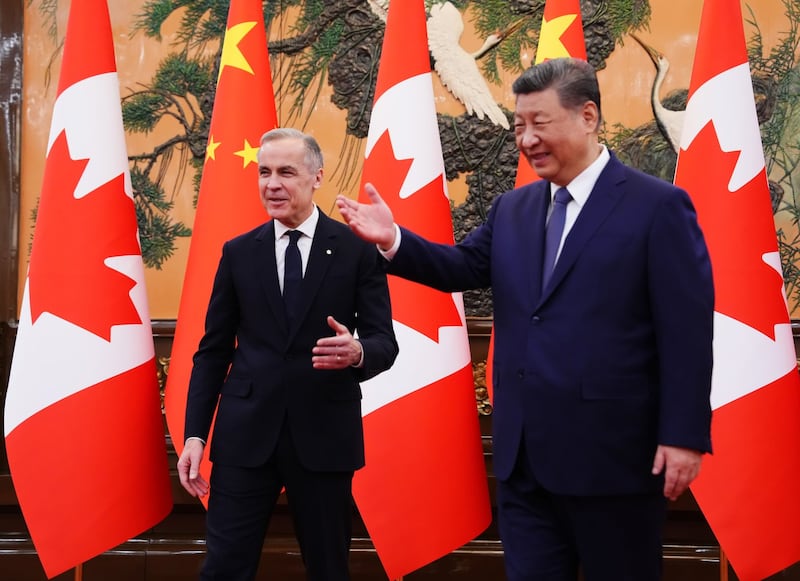 Prime Minister Mark Carney meets with President of China Xi Jinping at the Great Hall of the People in Beijing, China on Friday, Jan. 16, 2026. THE CANADIAN PRESS/Sean Kilpatrick Prime Minister Mark Carney meets with President of China Xi Jinping at the Great Hall of the People in Beijing, China on Friday, Jan. 16, 2026. THE CANADIAN PRESS/Sean Kilpatrick
Kovrig has warned against lifting the tariffs on Chinese EVs in the past, calling it a “mistake,” and telling Kapelos last September that it could give China too much leverage in future negotiations and domestic policymaking.
Kovrig, who’s now a senior advisor with the International Crisis Group, said the deal sets a precedent in dealing with China that will have “huge implications for Canada’s industrial policy.”
“You need to free the hostages, and so there needed to be some way of releasing some of that pain. And that matters,” Kovrig said of the pressure from Canadian Prairie provinces for relief from China’s agriculture-sector tariffs. “Those tariffs were painful and politically targeted, but the relief is time-limited and reversible. Beijing kept the leverage.”
“What did Canada give up? Canada broke ranks with the U.S. on Chinese electric vehicles,” he added. “Even with quotas, the signal’s big: market access is negotiable under pressure. That teaches the Chinese Communist Party that pressure works, and it’s likely to test that again.”
While U.S. Trade Representative Jamieson Greer told CNBC on Friday that he thinks dropping the tariffs is “problematic for Canada,” U.S. President Donald Trump said “if (Canada) can get a deal with China, (it) should do that.”
You can watch former Canadian diplomat Michael Kovrig’s full interview on CTV Question Period Sunday at 11 a.m. ET.
With files from CTV News’ Annie Bergeron-Oliver and Stephanie Ha