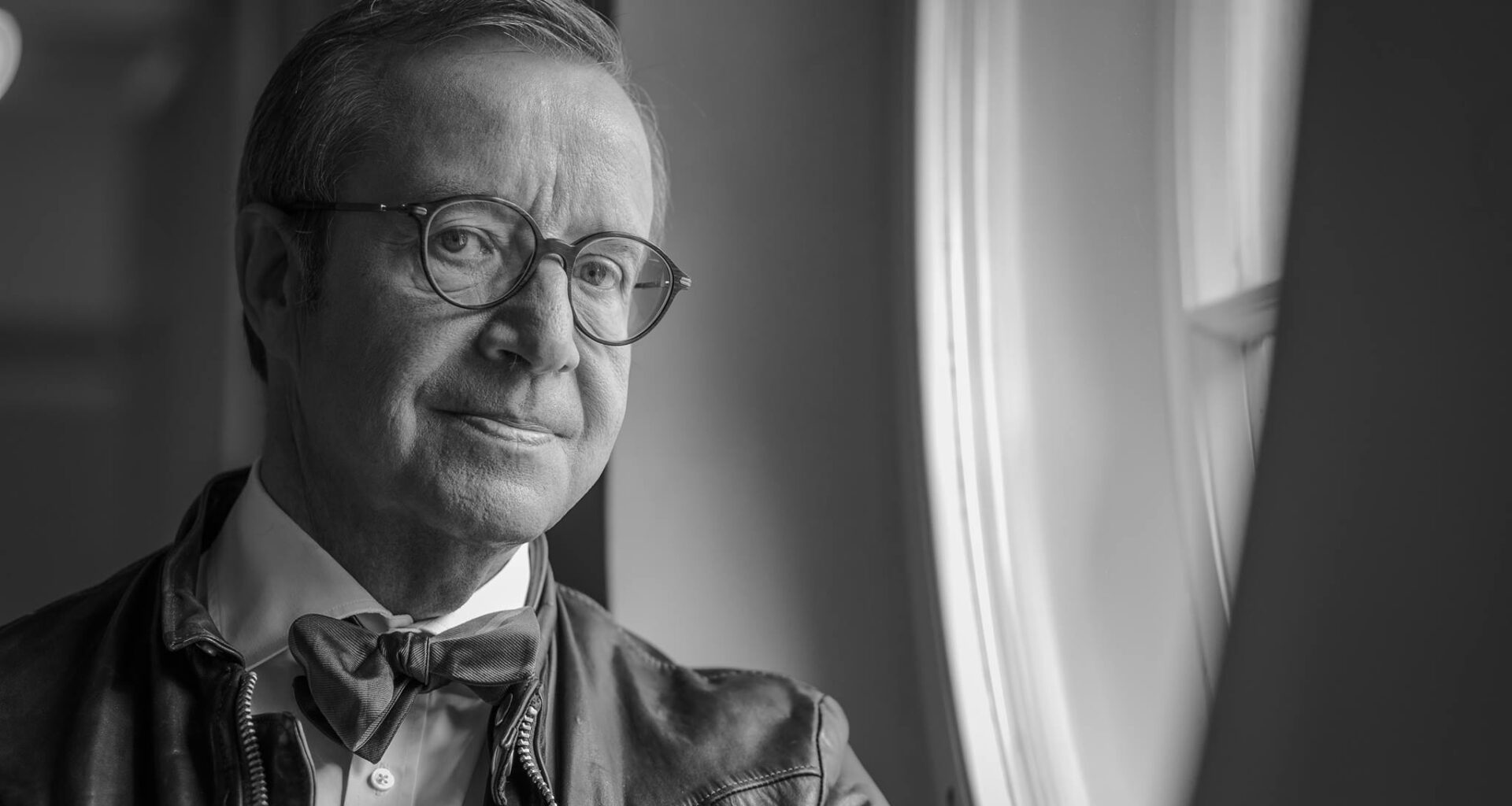
Europe’s leaders are still in denial about the scale of the breakdown in relations with the United States, warns former Estonian president Toomas Hendrik Ilves – and that complacency could leave the continent dangerously exposed at a critical moment.
Ilves has delivered a stark assessment of Europe’s security predicament, arguing that the continent has failed to recognise a fundamental shift in its relationship with the United States and remains unprepared for a future in which American protection can no longer be taken for granted.
Illusion of a “peace dividend”
Speaking to Estonian public broadcaster ERR, Ilves said European leaders have yet to internalise how profoundly Washington’s attitude towards Europe has changed. Recent tensions surrounding Greenland, he suggested, are not an isolated episode but a symptom of a deeper rupture. “This is a major shift on the American side,” Ilves said. “Europe did not initiate it.”
According to Ilves, Europe’s vulnerability is largely self-inflicted. For more than three decades, he argued, the continent has neglected its own defence, lulled into complacency by the illusion of a post-Cold War “peace dividend” while relying on the United States to guarantee security. “Europe’s problem for the last 35 years has been that we have not focused on our own defence,” he said, noting that Western European defence spending during the Cold War was proportionally higher than it is today.
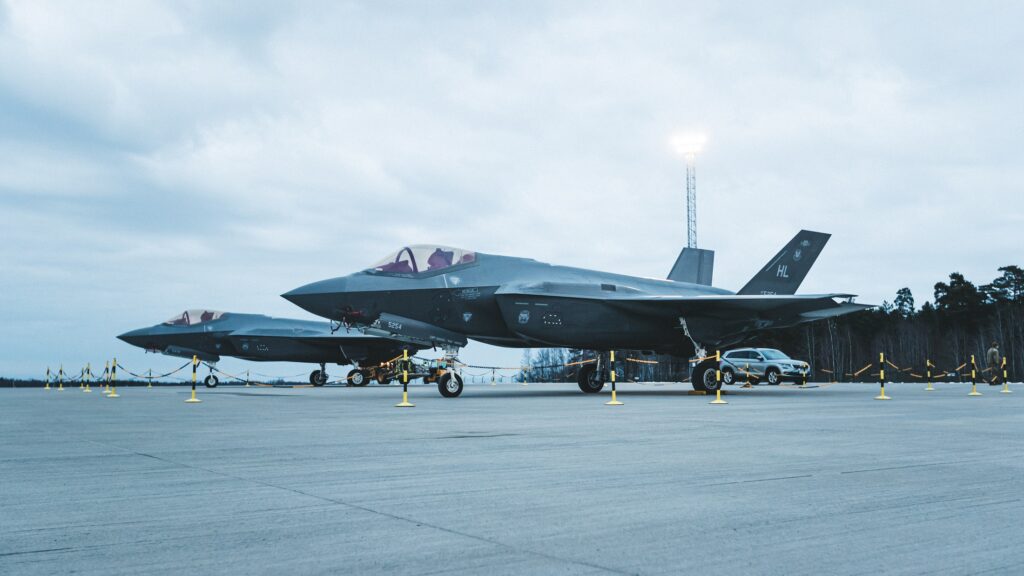 Two US F-35 stealth fighters at Ämari Air Base on 24 February 2022. Photo by the Estonian Defence Forces.
Ilves rejected the idea that cautious diplomacy or strategic silence could preserve the old transatlantic order. He stressed that the change in Washington is structural rather than personal. “This is not about Donald Trump alone – it is a longer-term process,” he said, warning that hoping uncomfortable realities will simply pass is not a sustainable policy.
Ostrich policy
He was particularly critical of the tone adopted by NATO’s leadership. Ilves accused NATO Secretary General Mark Rutte of pursuing what he explicitly described as an “ostrich policy”, publicly insisting that “everything is fine” despite clear signs that it is not. In Ilves’s assessment, this attitude reflects a broader reluctance among Western European leaders to confront the seriousness of the shift in transatlantic relations, instead relying on evasive diplomacy and the hope that difficult issues will simply fade away.
To respond effectively, Ilves argued, Europe must rethink not only its defence posture but the structure of the European Union itself. Building military capability alone would not be sufficient without deep institutional reform. Among his proposals were the creation of a permanent EU-level security council, the completion of a unified European capital market to drive investment, and a greater willingness to embrace joint borrowing. “We are not just dependent on American military power,” Ilves said. “We are completely dependent on American technology.”
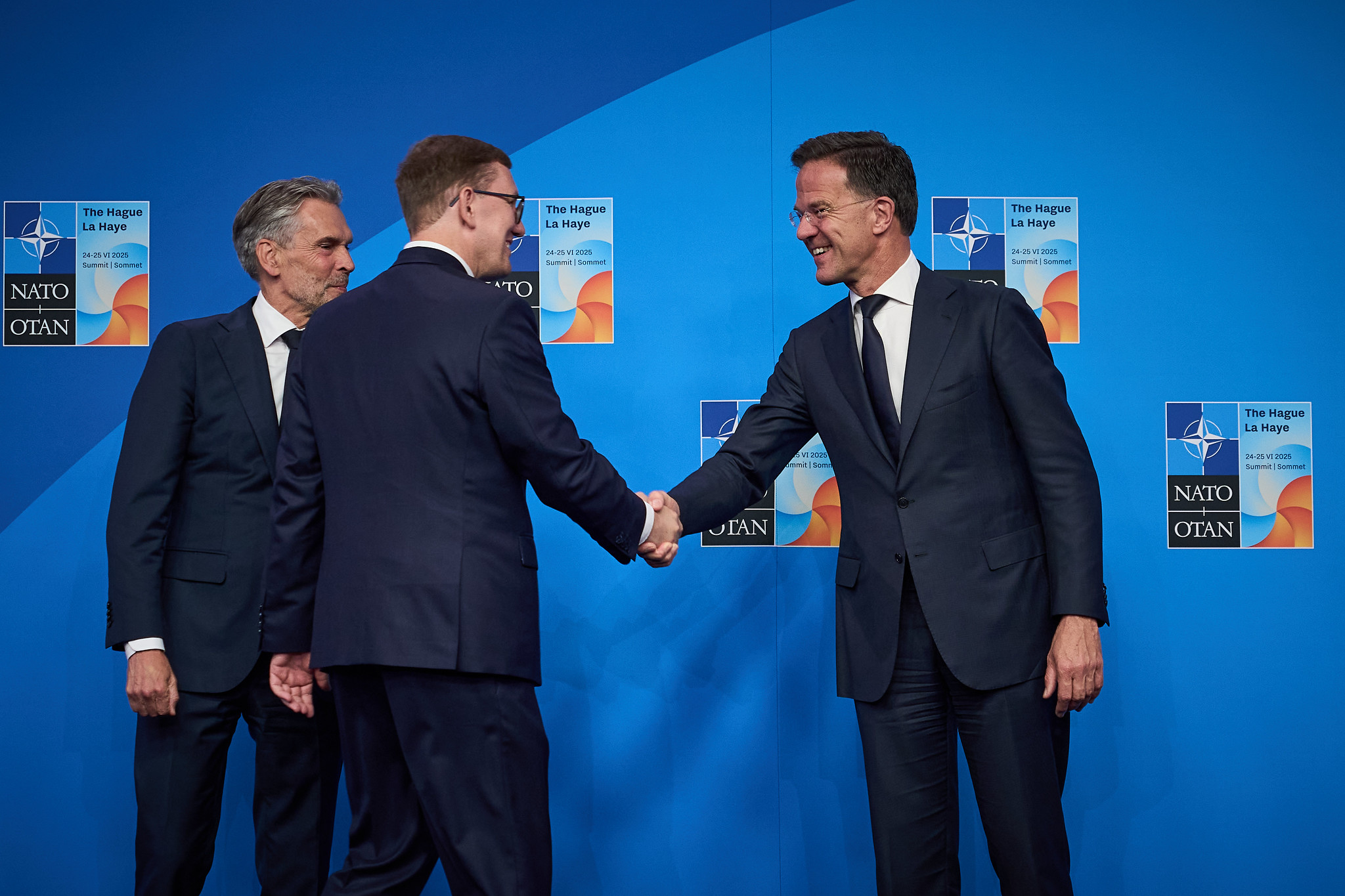 The Estonian prime minister, Kristen Michal (middle), meeting with the NATO secretary-general, Mark Rutte, in June 2025. Photo by the Estonian government.
The risks, he warned, are particularly acute for smaller countries bordering Russia. With nationalist movements gaining ground and some member states drifting towards authoritarianism, European unity cannot be taken for granted.
Ilves said he would personally support the use of Article 7 proceedings against countries such as Hungary – the European Union’s strongest legal mechanism for responding to serious breaches of its core values, including democracy and the rule of law, and which in extreme cases allows a member state’s voting rights to be suspended. He also argued that unanimity rules, which allow single states to block collective action, should be replaced with qualified majority voting in key areas. “Complaining is pointless,” he said. “We are in a difficult situation – and we have to deal with it.”
A new strategic era
Ilves criticised what he sees as a broader lack of candour at the top of the EU, suggesting that Europe’s leadership has often been unwilling to speak plainly. He contrasted this with the approach of the EU’s High Representative for Foreign Affairs, Kaja Kallas, whom he praised for her directness and intellectual clarity. “She is the first High Representative with both the intellectual capacity and the courage to say things as they are,” he said.
 Kaja Kallas, High Representative of the European Union for Foreign Affairs and Security Policy and Vice President of the European Commission, addresses the UN Security Council meeting on threats to international peace and security on 22 September 2025. Photo by UN.
By contrast, Ilves noted that earlier holders of the role had been chosen precisely because they were unwilling to challenge major powers within the Union. He warned that recent suggestions to appoint parallel envoys to engage with Russia would weaken the institution and undermine the EU’s credibility.
Ultimately, Ilves argued, Europe must accept that it has entered a new strategic era – and act accordingly. “The sooner Europe’s leaders understand that we are in a new situation and must do things differently,” he said, “the better it will be for Europe itself.”