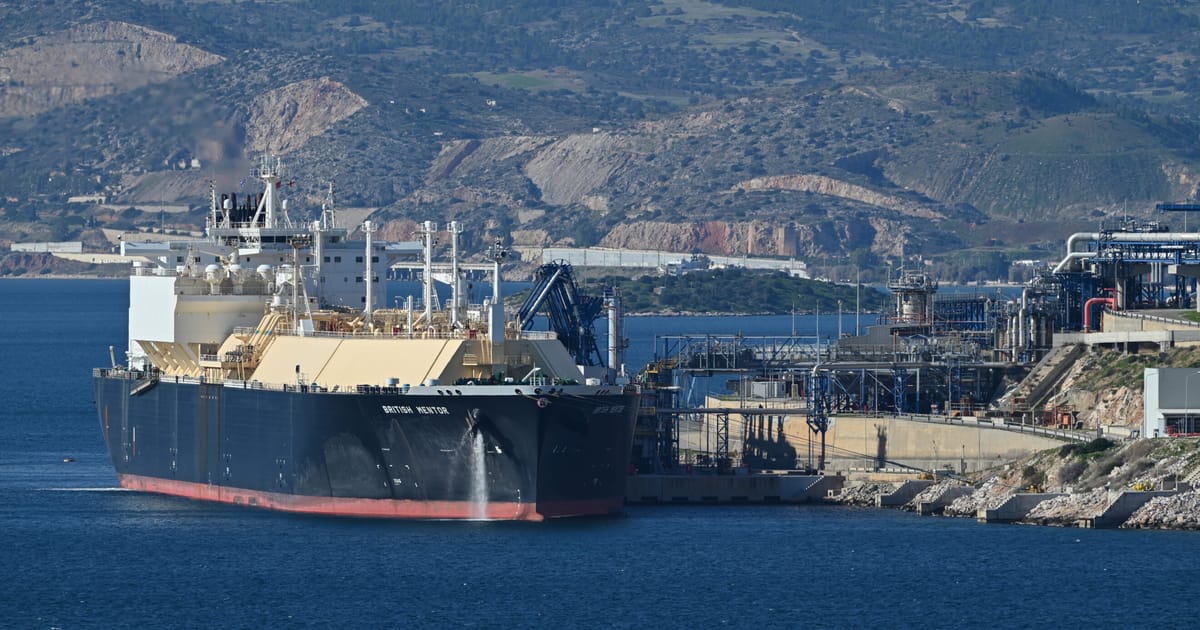
The EU’s growing reliance on imports of U.S. liquefied natural gas “has created a potentially high-risk new geopolitical dependency,” said Ana Maria Jaller-Makarewicz, lead energy analyst at the the Institute for Energy Economics and Financial Analysis, the think tank that produced the research.
“An over-reliance on U.S. gas contradicts the [EU policy] of enhancing EU energy security through diversification, demand reduction and boosting renewables supply,” she said.
Alarm over this strategic weak spot is also growing among member countries, with some EU diplomats fretting that the Trump administration could exploit the new dependency to achieve its foreign policy goals.
While “there are other sources of gas in the world” beyond the U.S., the risk of Trump cutting off supplies to Europe in the wake of an incursion in Greenland “should be taken into account,” one senior EU diplomat told POLITICO, who like others in this article spoke on condition of anonymity. But “hopefully we’ll not get there,” the official added.
After Russia invaded Ukraine in 2022, the EU went to drastic lengths to wean itself off Russian natural gas, which in 2021 made up 50 percent of its total imports but now accounts for only 12 percent, according to data from Bruegel, a Brussels-based economic think tank.
It accomplished this largely by switching imports of pipeline gas from Russia with liquefied natural gas shipped from the U.S., which at the time was a firm ally. The U.S. is already the biggest exporter of LNG, and its product now accounts for around 27 percent of EU gas imports, up from 5 percent in 2021. France, Spain, Italy, the Netherlands and Belgium are the largest importers; non-EU member the U.K. is also a major importer of U.S. LNG.