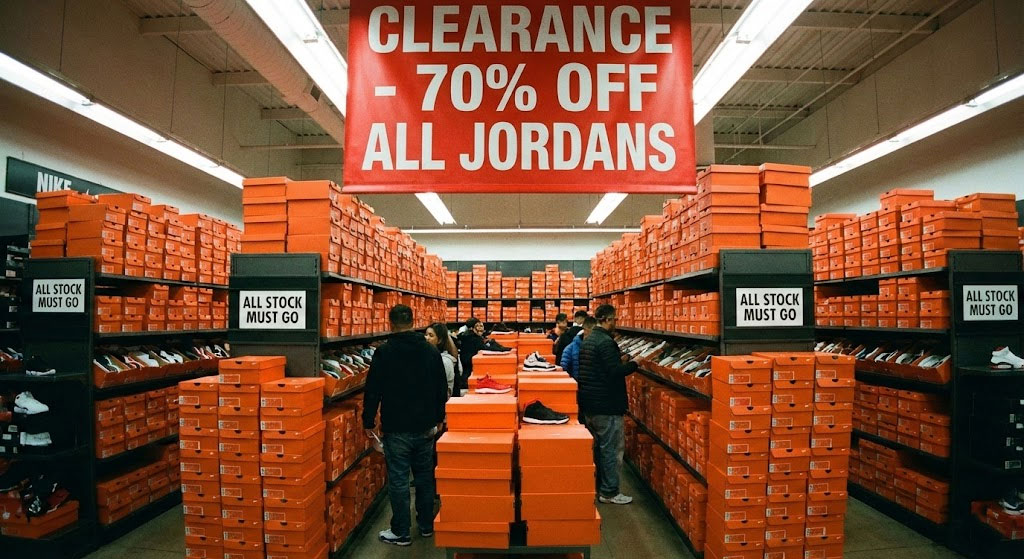
If you are still holding onto a stack of Jordan 1 boxes in your closet hoping to fund your retirement, we have bad news: The bubble didn’t just burst; it evaporated.
For a decade, the “Sneaker Game” was the easiest side hustle in America. You bought a pair of Off-Whites or Travis Scotts for $180, flipped them for $1,200, and repeated the cycle. It felt like printing money.
But in early 2026, the music has stopped. StockX charts are bleeding red, Nike’s stock is down ~25% year-to-date, and the “Resale Bros” are panic-selling their inventory.
This isn’t just a lull. It is a structural collapse of the “Flip Economy.” Here is the data-driven autopsy of what happened, based on the latest Q2 2026 financial reports.
1. The “Bag Holder” Reality: The Math No Longer Works
Let’s look at the scoreboard. In 2020, 58% of all sneaker releases traded above retail. Today? That number has plummeted to 47%.
That means statistically, if you buy two pairs of shoes to flip, one of them is guaranteed to lose you money.
The margins have been squeezed by a deadly combination of platform fees and consumer apathy:
The Math: A standard Jordan Retro costs $215 after tax. StockX/Goat fees take ~13%. Shipping takes $15. To break even, you need to sell that shoe for $265.
The Reality: Most “General Release” (GR) Jordans are now sitting on resale apps for $180-$220. The average reseller is paying $40 for the privilege of selling a shoe.
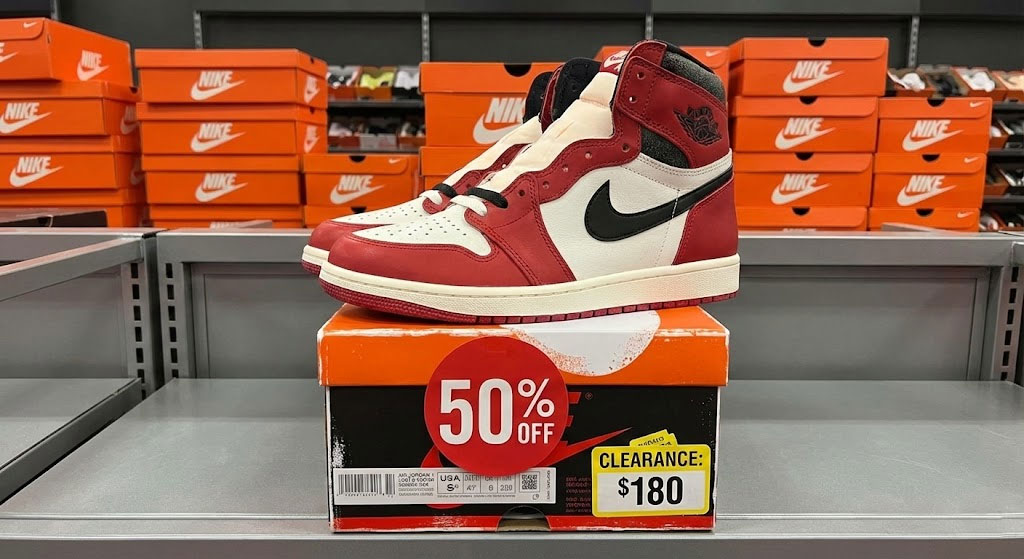 The “Lost & Found” 1s: In 2023, these were $500. Today, resellers are struggling to break even.
2. The Nike Crisis: When the King Bleeds
For years, Nike was the market. If Nike sneezed, the resale market caught a cold. In 2026, Nike is fighting pneumonia. According to their Q2 2026 earnings report, revenue in China—their biggest growth engine—collapsed by 17%. Without that foreign money pumping up demand, the “hype” machine has stalled.
This didn’t happen by accident. It was caused by two massive strategic failures. First, Greed. Nike flooded the market, restocking “rare” pairs like the Panda Dunks and Reimagined 3s until they became mall kiosk staples. When everyone has the “exclusive” shoe, nobody wants it.
Second, the humiliating “Slipper Pivot.” In a twist nobody saw coming, the fastest-growing footwear category for Nike on StockX wasn’t a Jordan or a Dunk—it was the ReactX Rejuven8 recovery slide (up 5,811%). Nike is no longer the “Hype” brand; they are becoming the “my feet hurt” brand.
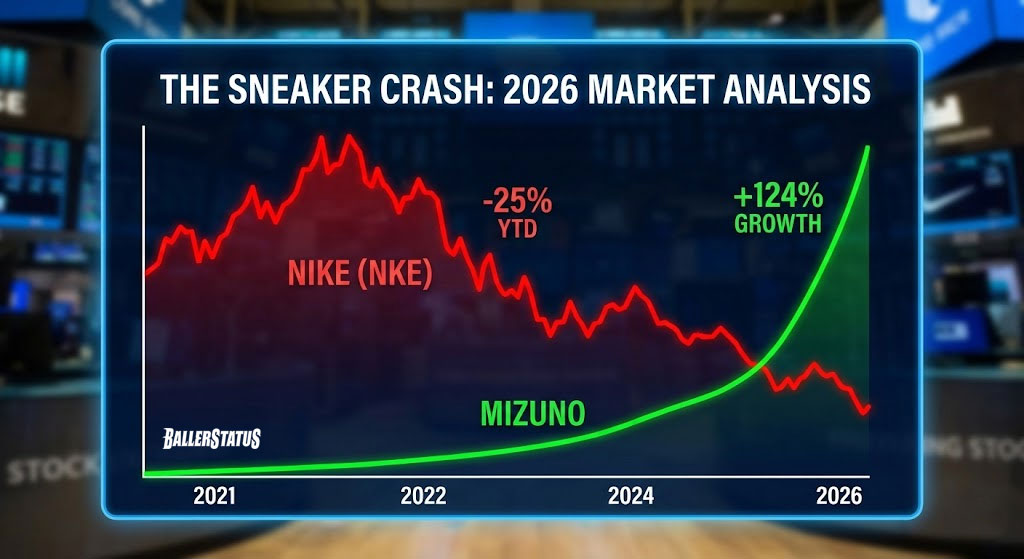 The “Great Decoupling”: While Nike (Red) struggles with inventory gluts, niche brands like Mizuno (Green) are seeing triple-digit growth.
3. The New Kings: “Dad Shoes” and Loafers
The money didn’t leave the sneaker market; it just moved to brands that 2018 hypebeasts wouldn’t be caught dead in.
The 2026 StockX “Big Facts” report paints a wild picture of the new hierarchy:
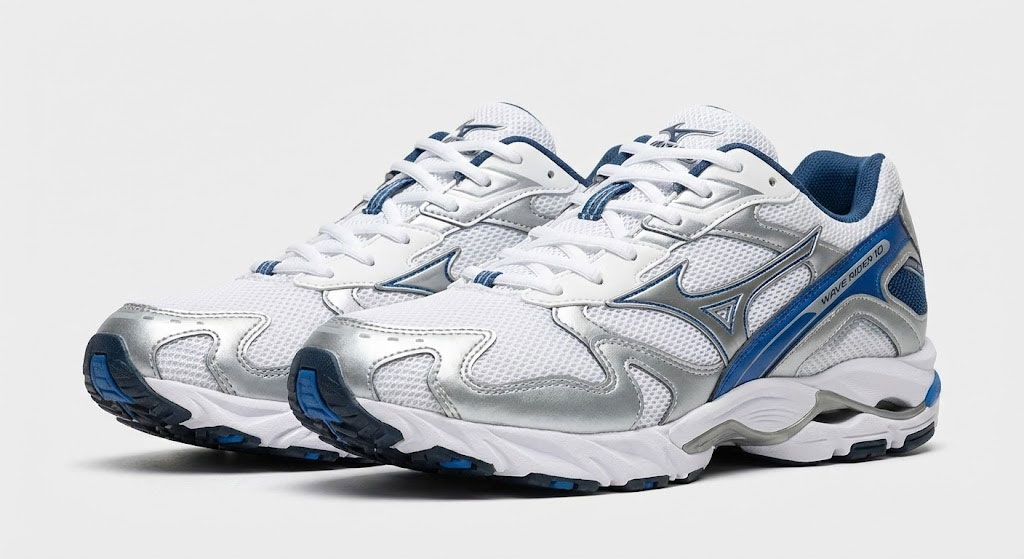 Triple-digit growth: Why “Dad Shoes” like Mizuno are replacing Jordans in the rotation.
The Growth Winner: Mizuno. Yes, the brand your volleyball coach wore. They saw 124% sales growth on resale platforms this year, driven by the shift to “tech-runner” aesthetics.
The “Ugly” Winner: UGG is now the #1 best-selling non-sneaker brand on the secondary market.
The “Hybrid” Weirdness: The most traded “loafer” in 2025 wasn’t a Gucci or Prada. It was the New Balance 1906L—a sneaker/loafer hybrid that looks like a preppy boat shoe on steroids.
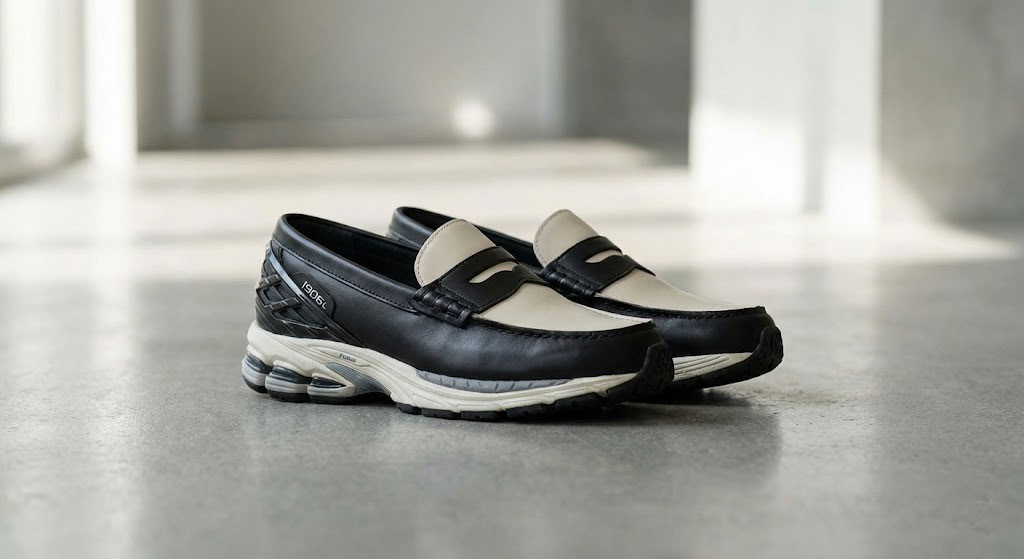 The new “Hype”: The New Balance 1906L (Loafer) is outselling traditional high-tops in the “post-sneaker” economy.
The Takeaway? The “Flex” is no longer about who has the most expensive Jordans. It’s about who looks the most comfortable (or the most ironic).
4. The “Hoka” Warning
Even the new darlings aren’t safe. Hoka, which had been exploding for three years, is finally hitting a wall.
Their growth slowed to 11% in the latest quarter (down from 25% previously). Why? Because every brand from Adidas to Zara copied their “Max Cushion” chunky sole look. When a trend becomes ubiquitous, it dies. The “Hoka” wave has crested, and smart money is already moving to leaner, tech-focused silhouettes like Salomon and On Running.
5. The Verdict: The 2026 Playbook
So, is the game over? If you are a “Flipper” trying to pay rent? Yes. If you are a “Collector”? This is the Golden Age.
The “Buy” List (Undervalued): Nike SB Dunks (Golden Era). While modern Dunks are bricks, older SB models (2002-2010) are holding value as “Art” pieces. Limited runs from brands like Mizuno & ASICS are also the new “low risk, high reward” plays because production numbers are still low.
The “Sell” List (Overvalued): Any “General Release” Jordan. If you can walk into Foot Locker and buy it, it’s a liability. Also, beware of Travis Scott Fatigue. Even the “Cactus Jack” collaborations are seeing diminishing returns. The latest Jumpman Jack models are trading for a fraction of what his Jordan 1s did.
The Bottom Line: The “Stimulus Check Era” of sneaker collecting is dead. In 2026, sneakers are finally going back to being what they were always supposed to be: Shoes. If you love them, wear them. If you’re investing, buy gold (or a Chevy Blazer SS).