
Monday January 19, 2026
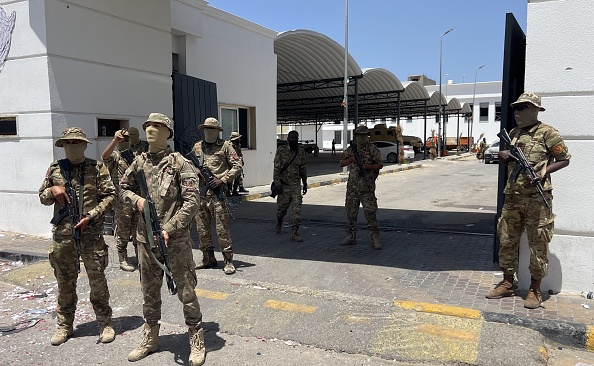
Tripoli (HOL) — Libyan security forces have rescued more than 200 migrants from a clandestine underground detention facility in the southeastern town of Kufra, where they were held in brutal and degrading conditions.
Security officials said the migrants were found in an improvised prison nearly three meters below ground, allegedly run by a Libyan trafficker. The facility contained multiple underground cells, and some detainees had been held there for as long as two years, according to the officials, who spoke on condition of anonymity because they were not authorized to brief the media.
“Some of the migrants had been detained in these underground cells for up to two years,” one security official said.
Another official described the discovery as “one of the most serious crimes against humanity uncovered in the region,” adding that the raid exposed “inhumane detention conditions that reflect extreme cruelty.”
The migrants including women and children are from sub-Saharan Africa, primarily Somalia and Eritrea, officials said.
Kufra lies in eastern Libya, about 1,700 kilometers (1,055 miles) southeast of the capital, Tripoli, and has long been a key transit point for migrants attempting to reach Libya’s Mediterranean coast and, eventually, Europe.
Authorities said the suspected trafficker who operated the facility has not yet been arrested. Investigations are ongoing.
The rescue comes amid mounting evidence of widespread abuse of migrants in eastern Libya. Just last week, security officials said at least 21 migrant bodies were discovered in a mass grave in the region. Two officials told Reuters that up to 10 survivors freed from captivity showed clear signs of torture.
In February last year, Libyan authorities recovered 39 migrant bodies from about 55 mass graves in and around Kufra, underscoring the town’s grim role in trafficking routes across the Sahara.
Kufra has also become home to tens of thousands of Sudanese refugees who fled fighting that erupted in Sudan in 2023, adding further strain to local resources and complicating security conditions in the remote desert area.
International human rights organizations have repeatedly documented arbitrary detention, torture and forced labor of migrants in Libya, calling for greater accountability and protection for those caught along one of the world’s deadliest migration routes.
Libyan authorities said the rescued migrants were transferred to care facilities for medical treatment and assistance, though details of their long-term protection or possible repatriation were not immediately disclosed.