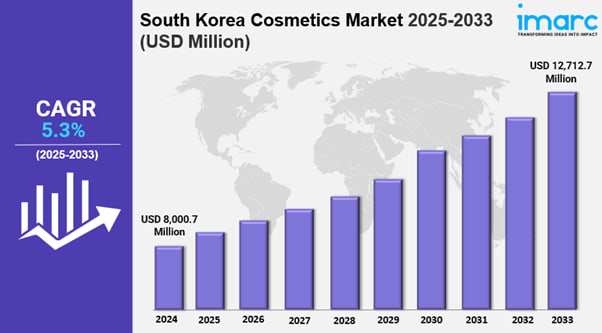
South Korea cosmetics market size reached USD 8,000.7 Million in 2025. Looking forward, IMARC Group expects the market to reach USD 12,712.7 Million by 2034, exhibiting a growth rate (CAGR) of 5.3% during 2026-2034. The growing influence of social media platforms, along with the widespread adoption of extensive skincare routine by individuals, is primarily driving the market growth across the country.
Upcoming Demands and Trends
1. Clean Beauty Products
Consumers are increasingly prioritizing clean, natural, and organic beauty products. The demand for transparency in ingredient sourcing and product formulation is reshaping the market, with brands focusing on eco-friendly and sustainable practices.
2. Personalization
The rise of personalized beauty solutions is a significant trend. Consumers are seeking products tailored to their specific skin types and concerns, leading to an increase in brands offering customized skincare and makeup options.
3. Digital Engagement
With the growth of e-commerce and social media, brands are leveraging digital platforms for marketing and sales. Influencer collaborations and targeted online campaigns are becoming essential for reaching younger consumers.
4. Technological Innovations
Advancements in technology, such as augmented reality (AR) for virtual try-ons and artificial intelligence (AI) for personalized recommendations, are transforming the shopping experience and enhancing consumer engagement.
Growth Factors
• Rising Disposable Income: Increasing disposable income among South Koreans is driving spending on premium beauty products.
• Youthful Demographics: A large proportion of the population is young and beauty-conscious, influencing trends and driving demand for innovative products.
• Cultural Influence: K-beauty continues to be a global trendsetter, with South Korean brands gaining popularity worldwide, further boosting domestic sales.
Market Outlook
The South Korea cosmetics market is expected to continue its upward trajectory, with strong growth anticipated in both domestic and international markets. The increasing focus on skincare, driven by the Korean beauty philosophy, will likely remain a dominant trend. Additionally, as consumers become more educated about beauty products, the demand for high-quality, effective solutions will persist.
Opportunities
• Expansion into Emerging Markets: South Korean cosmetics brands have the potential to expand their reach into emerging markets, capitalizing on the global demand for K-beauty products.
• Sustainability Initiatives: Brands that adopt sustainable practices and eco-friendly packaging can attract environmentally conscious consumers.
• Digital Transformation: Investing in digital marketing and e-commerce platforms can enhance brand visibility and customer engagement.
Challenges
• Intense Competition: The cosmetics market in South Korea is highly competitive, with numerous local and international brands vying for market share.
• Regulatory Compliance: Navigating the regulatory landscape for cosmetics, including ingredient restrictions and safety testing, can be challenging for brands.
• Changing Consumer Preferences: Keeping pace with rapidly changing consumer preferences and trends requires constant innovation and adaptability.
Recent News & Developments
• March 2025: A leading South Korean cosmetics company launched a new line of eco-friendly skincare products made from biodegradable ingredients. This initiative aims to cater to the growing demand for sustainable beauty solutions and enhance brand loyalty among environmentally conscious consumers.
• June 2025: An online beauty retailer reported a 40% increase in sales after implementing an AI-driven personalized shopping experience that recommends products based on individual skin types and preferences. This success highlights the importance of technology in enhancing customer satisfaction and driving sales in the cosmetics market.