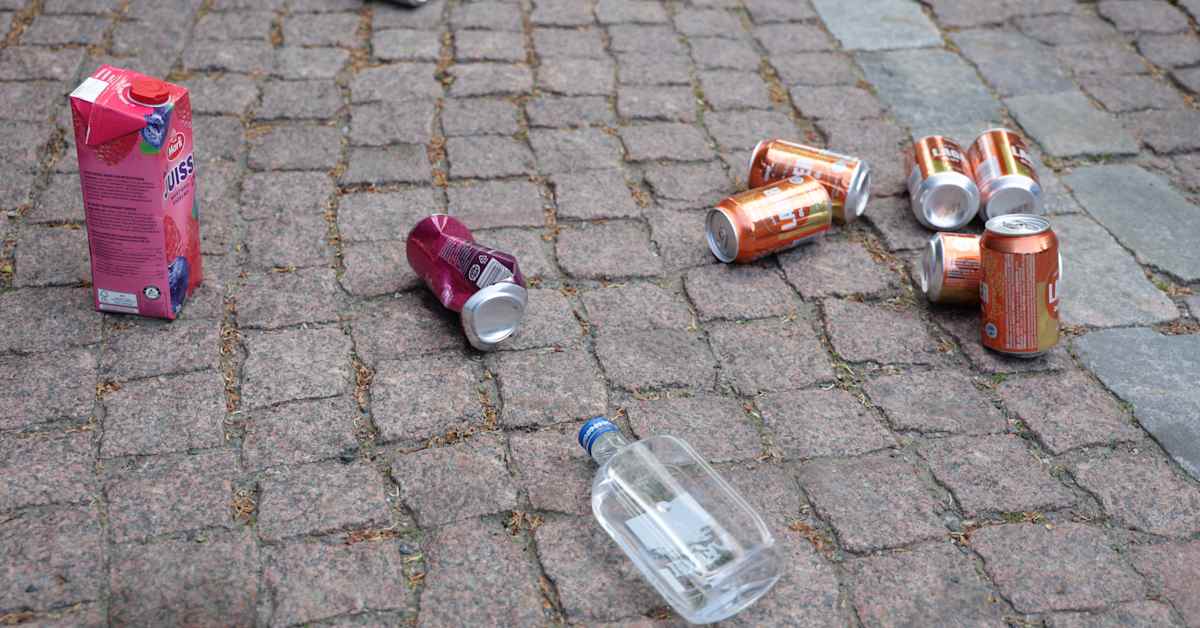
Picking up discarded bottles and cans is a simple way to clean up the environment, and Finns are especially good at doing it.
At 97 percent, the return rate of beverage packages in Finland are among the highest in the world. The reason is likely because some of the bottles have deposits worth up to 40 cents apiece.
In 2024, people in Finland returned a record 2.3 billion bottles and cans for recycling, according to Suomen Palautuspakkaus (Palpa), the company that manages the country’s beverage container recycling process.
The trash-picking habit can also provide a modest financial reward. Containers left in the wild amount to free money for whoever retrieves them.
Or so many think.
Under Finnish law, however, such earnings are not beyond the reach of the taxman. Income generated from collecting bottles and cans must be reported to the tax authorities.
Refundable deposits are classified as earned income, with progressive income tax rates applying.
But there is a caveat, according to Petri Manninen, a senior advisor at the Finnish Tax Administration.
“Deposit refunds from bottles and cans that a person has bought themselves are not taxable,” he told Yle News.
That’s because the deposit was already paid at the point of purchase. Tax is due only on refunds from containers that the collector did not originally buy.
No good deed unpunished
Faced with the obligation of reporting income, some might decide to ignore a discarded bottle on the ground to avoid reporting duties.
Does that align with Finland’s environmental aspirations?
The Tax Administration’s Manninen acknowledged that this was food for thought, but noted that “we just implement tax legislation, all income is taxed, unless specifically exempted.”
All income is taxed.
Petri Manninen, senior advisor, Finnish Tax Administration
One category that is exempt from tax is wild berries. The Tax Administration outlines that income “earned from berries, mushrooms and other natural products you pick or collect yourself is exempt.”
At the same time, there appears to be a near absence of enforcement of the bottle redemption rule. From the perspective of taxation, the sums involved are usually trivial.
“Our main focus is not on the people returning bottles,” Manninen admitted.
For that reason, Finland’s tax authority has seen little justification for devoting resources to policing such earnings.
That’s a position the Finnish Taxpayers Association (TAF) said they can get behind.
“We surely would not oppose removing the taxation on deposit bottles,” Janne Kalluinen, an economist at TAF said, noting that implementing tax policy always creates administrative costs for taxpayers.
“The income people get from deposits is very, very small,” he added.
To earn 100 euros, for example, one would have to collect a whopping five hundred 20-cent bottles.
It’s more a matter of principle.
Janne Kalluinen, economist, The Finnish Taxpayers Association
Ultimately, though, he said the taxation of bottle deposits is part of a bigger picture.
“It’s more a matter of principle, being that all income needs to be reported, no matter how small,” he explained.
Even though annual incomes of around 10,000 euros fall below the tax threshold, bottle hunters are still required to declare such earnings on their pre-completed tax returns.
Finland has used bottle return systems since 1950, when returned recycled glass bottles were washed and refilled. A system for the return of aluminium cans has been in place since 1996.
On average, each resident returns about 420 beverage containers, yielding roughly 64 euros per person in deposit refunds, a sum likely too small to trouble either taxpayers or the taxman.