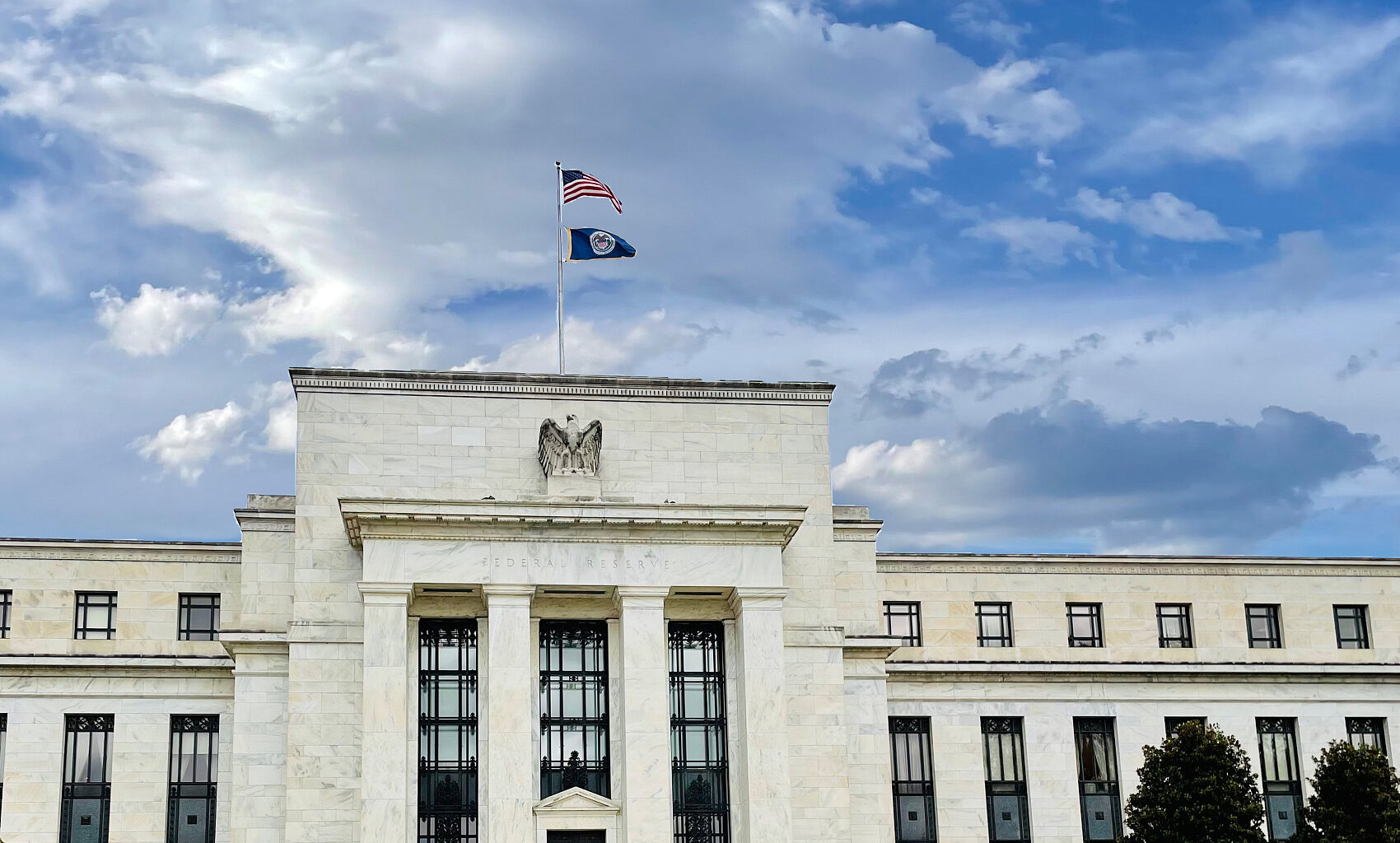
This week, the Federal Reserve will face the most severe test of its independence in its hundred-year history. This is not merely about whether an official stays or leaves but will also determine whether the Fed could become the ‘backyard’ of the U.S. President.
The most significant test of independence in the more than a century since the Federal Reserve’s establishment will come before the U.S. Supreme Court this week. The focus is on whether the justices will protect the world’s most important central bank from political influence as Congress intended, or allow President Trump to ‘clean house’ at his discretion.
The case revolves around Trump’s attempt to fire Federal Reserve Governor Cook, citing alleged mortgage fraud. In its most extreme form, this case could erode the Fed’s cherished independence; even if it doesn’t go that far, it might provide the first ‘operational guide’ for how a president can remove someone from the tightly guarded management of this central bank.
 Even though Cook is more likely to retain her position, the currently conservative-leaning court may clarify the shortcomings of Trump’s dismissal attempt and thereby indicate what conditions are necessary to establish the ‘just cause’ required to remove a monetary policymaker.
This requirement, set by the Federal Reserve Act, aims to protect Fed governors, including the powerful chair, from being removed due to disputes over interest rates. Both Cook and, more recently, Fed Chair Powell argue that this is the real motive behind Trump’s attempt to fire Cook and his threat to bring criminal charges against Powell.
Analysts say this has never been tested in court before. If stringent enough, the codification of this clause could affirm the central bank’s independence but might also offer a target for a cunning government to attack.
“The door has been opened,” said former Cleveland Fed President Mester, now an adjunct professor at the Wharton School of the University of Pennsylvania. “The question is, how will this be resolved to prevent anyone in the presidency from simply thinking, ‘I don’t want that person,’ and making accusations that are enough to drive them out.”
Cook argues that this is precisely what Trump did. In August last year, based on allegations that she misrepresented information in a housing mortgage application, Trump declared his intention to fire her, despite her term on the Fed extending until 2038—well beyond Trump’s presidential tenure. No financial institution has accused her of fraud, nor has any administrative proceeding been initiated.
She filed a lawsuit, and a lower court ruled to maintain her position pending a hearing—a result distinct from Trump’s reorganization of other nominally independent agencies. The Trump administration has appealed.
Trump’s team essentially argues that ‘just cause’ is whatever the president says it is, a standard that seems to leave Fed governors just one step away from being dismissed ‘at will.’
Jon Faust, former senior advisor to both Powell and ex-Fed Chair Yellen and now a professor of economics at Johns Hopkins University, expressed concern that given the Supreme Court’s support for the Trump administration on many other issues, even if Cook retains her job, the outcome could still weaken the Fed’s shield against political pressure.
“I think the likelihood of setting a strict and insurmountable threshold is minimal,” Faust said. “There is substantial material supporting a narrow ruling in favor of (Cook)… The battle will continue, Trump will keep attacking, and if he chooses to use all available tools… independence is highly likely to collapse. I think we all know where this train is heading.”
However, others remain hopeful.
“It appears they do intend to craft some sort of exception clause that would allow the Federal Reserve to maintain its independence,” said Kathryn Judge, a professor at Columbia Law School, during a conference on Fed independence held last Friday at Florida Atlantic University.
“But for that independence… to take effect, ‘just cause’ must have real significance and impose some meaningful restriction on the president’s ability to dismiss governors based solely on allegations.”
The credibility of the Federal Reserve is at stake.
Dismissing a Federal Reserve governor was supposed to be a difficult task, a principle reflected in the requirement of ‘just cause’ and the 14-year term, although few serve the full duration.
Monetary policy decisions sometimes bring painful short-term economic impacts, which are often unfavorable to officials bound by two- or four-year election cycles.
Former Federal Reserve Chairman Volcker used painful double-digit interest rates to curb high inflation in the 1980s. What were the consequences? A double-dip recession, with unemployment exceeding 10% and remaining above 7% for about four years. President Jimmy Carter, who appointed Volcker, lost his 1980 reelection campaign amid the economic downturn.
But the short-term pain brought long-term rewards. By demonstrating resolve in controlling inflation, the Federal Reserve’s credibility was enhanced, helping to anchor public psychology, known as ‘inflation expectations.’ This approach is still believed to help contain inflation today.
The recent price surges during the pandemic era never caused inflation expectations to deviate significantly from the Federal Reserve’s 2% target. Researchers credit this outcome to the central bank’s retained credibility, which, when it stated it would bring inflation back to this level, helped reduce inflation without triggering the recession many economists had anticipated.
If monetary policy begins to cater to political demands, such credibility and its associated benefits would be at risk, and if the president could arbitrarily dismiss Federal Reserve officials, this outcome would likely become inevitable.
Out of sync with politicians
Presidents may accept that high interest rates and slower growth are necessary when inflation poses a threat. In such an environment, Fed policymakers might disregard career risks and make decisions based on evidence rather than political winds. However, the historical record is not encouraging.
When three former Fed chairs, including the long-serving Greenspan, signed a statement last week supporting Powell amid an investigation by the U.S. Department of Justice, it included a pointed critique: the administration’s actions recalled how “monetary policy is made in emerging markets with weak institutions,” rather than by an entity overseeing inflation control for the world’s reserve currency.
Just as overly tight policy can unnecessarily slow growth and increase unemployment, excessively loose policy can push the economy beyond its productive capacity, driving unemployment to unsustainable levels and pushing up wages and prices.
Since the Federal Reserve’s decisions take time to affect the economy, central bankers’ thinking tends to be out of sync with what politicians deem appropriate at the moment.
“If you’re not an independent central bank, inflation will be higher, and much higher… This has been fairly well established,” said William English, a professor at Yale School of Management and former head of the Fed’s Division of Monetary Affairs. “The benefits come first, and the costs follow later, so there might be a temptation to ease policy and talk about the ‘Trump boom,’ leaving inflation as someone else’s problem.”
 Looking to pick stocks or analyze them? Want to know the opportunities and risks in your portfolio? For all your investment-related questions,just ask Futubull AI!

Editor/Rocky