Slovakia and the United States have signed an intergovernmental agreement to expand cooperation on civil nuclear energy, including plans to deploy a new 1,200 MWe nuclear power unit.
The agreement marks a major step in Slovakia’s long-term energy strategy and deepens U.S. involvement in Europe’s nuclear sector.
Slovakia’s Prime Minister Robert Fico and U.S. Energy Secretary Chris Wright signed the agreement in Washington on Friday.
Officials framed the deal as both an energy security measure and a strategic industrial partnership.
The intergovernmental agreement covers a wide range of nuclear activities. These include reactor technology, supply chains, safety standards, workforce training, and long-term project planning.
The framework aims to support Slovakia’s existing nuclear fleet while enabling new large-scale construction.
Fico described the agreement as a turning point for bilateral relations.
“I see this moment as a significant milestone in our bilateral relations, but also as a clear signal that Slovakia and the United States are united by a common strategic thinking about the future of energy – about its safety, sustainability, and technological maturity,” he said.
Slovakia currently generates about half of its electricity from nuclear power.
The country operates five reactors, with another under construction. Officials view nuclear energy as a stable, low-carbon source that supports price predictability and grid reliability.
1,200 MWe unit planned
The U.S. Department of Energy confirmed that the agreement includes plans for a new state-owned American 1,200 MWe nuclear unit at the Bohunice Nuclear Power Plant.
The proposed reactor would represent one of the largest infrastructure investments in Slovakia’s history.
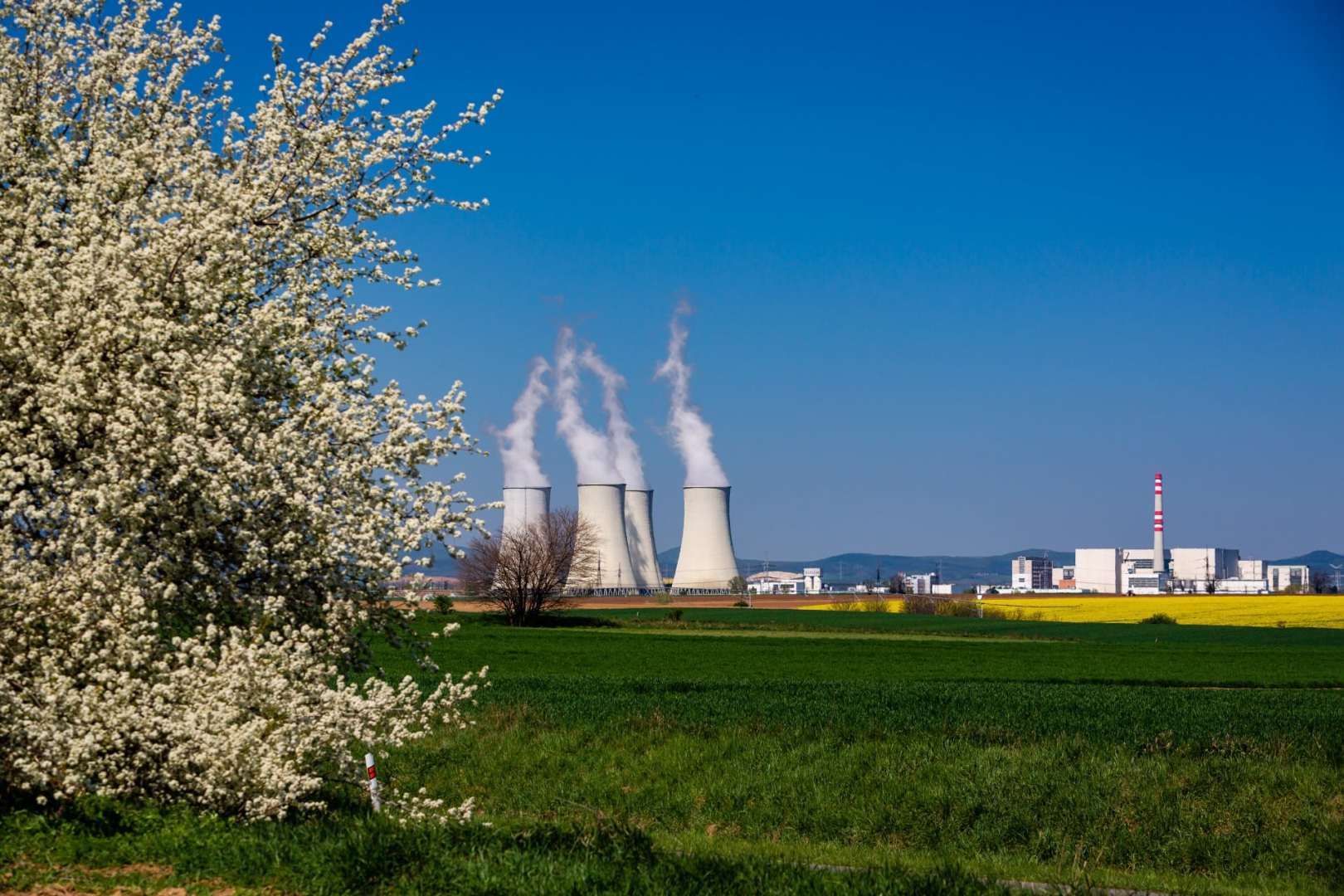 Bohunice nuclear power plant. Credit – Slovenské elektrárne
Fico indicated earlier that the project could involve Westinghouse reactor technology.
The Slovak government expects the new unit to enter operation in 2040 or 2041. Authorities approved plans for a new large reactor unit in May 2024.
Fico said nuclear energy supports long-term stability.
“Our ambition is for this project to meet the highest standards of safety, economic efficiency and technological maturity,” he said, adding that Slovakia aims to maximise domestic industry and workforce involvement.
Jobs and energy security
U.S. officials emphasized the industrial and strategic impact of the project. Wright said the agreement strengthens Europe’s energy position while supporting American manufacturing.
“Today’s civil nuclear agreement reflects our shared commitment to strengthening European energy security and sovereignty for decades to come,” he said.
“By deploying America’s leading nuclear technology, we are creating thousands of good-paying American jobs.”
The Department of Energy said the project would support jobs across engineering, advanced manufacturing, construction, nuclear fuel services, and project management. It also highlighted benefits for U.S. supply chains and global exports of American nuclear technology.
The agreement also supports Slovakia’s shift away from reliance on Russian-designed reactors. Officials described the move as part of a broader effort to build a diversified and resilient nuclear fleet.
Alongside the main agreement, Slovakia’s Eximbanka and the U.S. Export-Import Bank signed a separate deal to cooperate on nuclear project financing.
The signing followed the release of a feasibility study under the U.S. Project Phoenix program, which found that small modular reactors could also suit Slovakia, potentially from 2035.
Fico later met U.S. President Donald Trump in Florida, where discussions covered energy challenges and broader geopolitical issues.