Under the responsibility of the European Federation for Transport and Environment (T&E), which advocates for zero-emission and accessible transport, the study was released by the Portuguese association Zero, which is part of T&E.
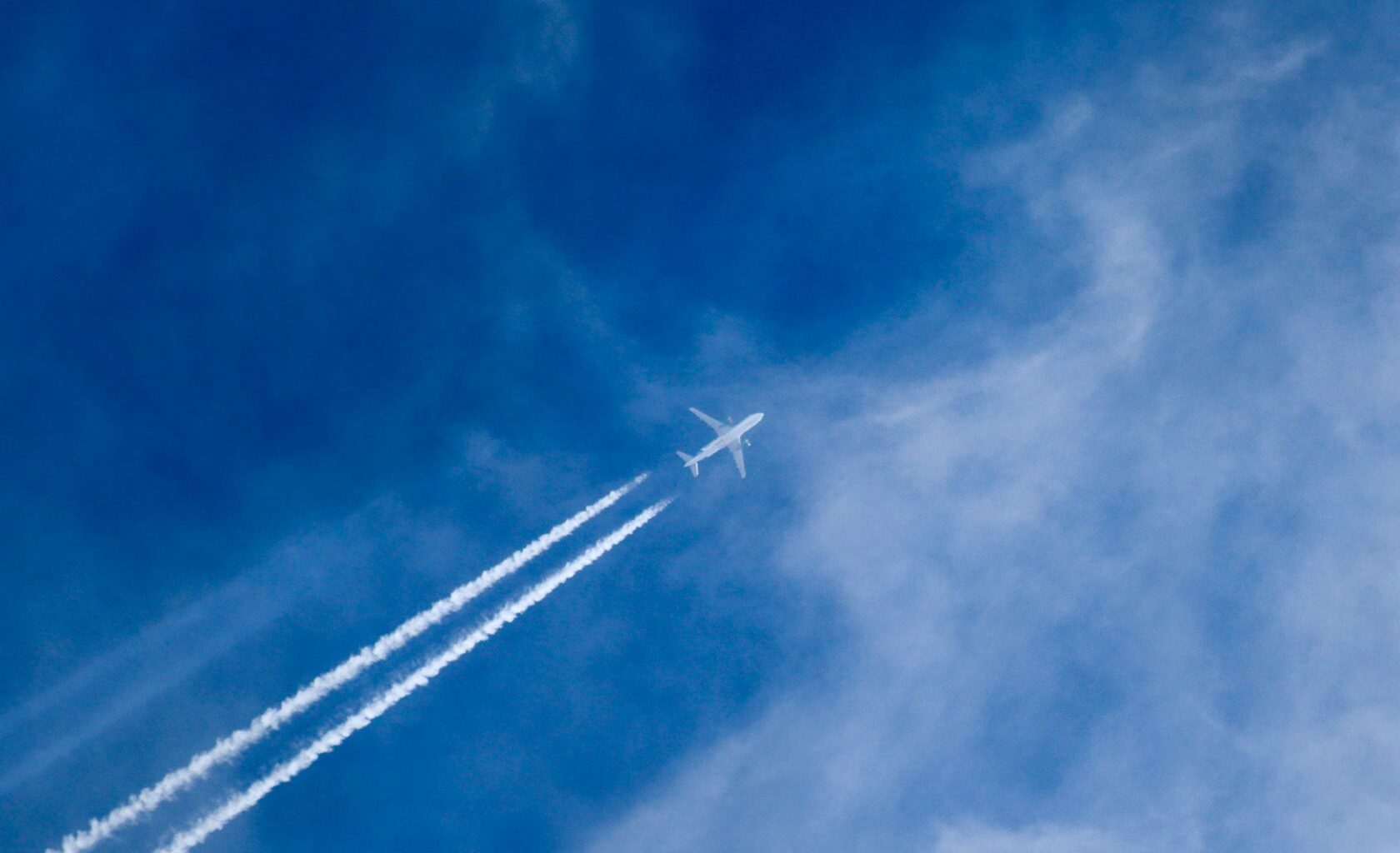
Warning that contrails also contribute to global warming, the study indicates that they can be avoided and that this is essential to reducing the climate impact of aviation.
According to the document, the warming caused by contrails in Europe is seasonal and occurs in discrete periods.
In 2019, 75% of the warming caused by contrails occurred on flights between January and March and October and December, and 40% on flights in the late afternoon and evening.
Night flights
The Zero association says in a statement that night flights in the autumn and winter were responsible for 25% of the warming caused by contrails.
But these flights account for only 10% of air traffic, so it is possible to adjust the routes of some flights at specific times, with minimal impact on air traffic but large climate benefits.
According to the study, the North Atlantic has “high potential for contrail prevention” because flights are essentially long-haul, traffic density is low, and “contrail prevention should start first in regions responsible for high warming but low traffic.”
This prevention could have solved about 70% of the warming caused by contrails in Europe in 2019. Planes could be redirected, taking into account climate forecasts, Zero exemplifies.
And it adds: the Flight Information Regions (FIRs) of Northern and Eastern Europe, as well as the North Atlantic, which include Shanwick (United Kingdom and Ireland), Gander (Canada), New York (USA) and Santa Maria (Portugal), “stand out for the high formation of contrails with a strong climate warming effect”.
Portugal contribution
Therefore, the association explains, Portugal can play “a key role” in preventing contrails and their effects on global warming, as it is responsible for the Santa Maria Flight Information Region, which includes an area with high contrail formation.
T&E appeals to the European Union, which Zero joins, to adopt measures to prevent contrails, ranging from legislation to incentives for airlines and air traffic control centres.
Contrails form when aeroplanes fly through regions of very cold, humid air, and in most cases they dissipate within minutes; under certain conditions, however, they can remain in the atmosphere for hours or days and contribute 1-2% of global warming.
Data from 2019 indicate that just 3% of global flights originated 80% of the warming caused by contrails.