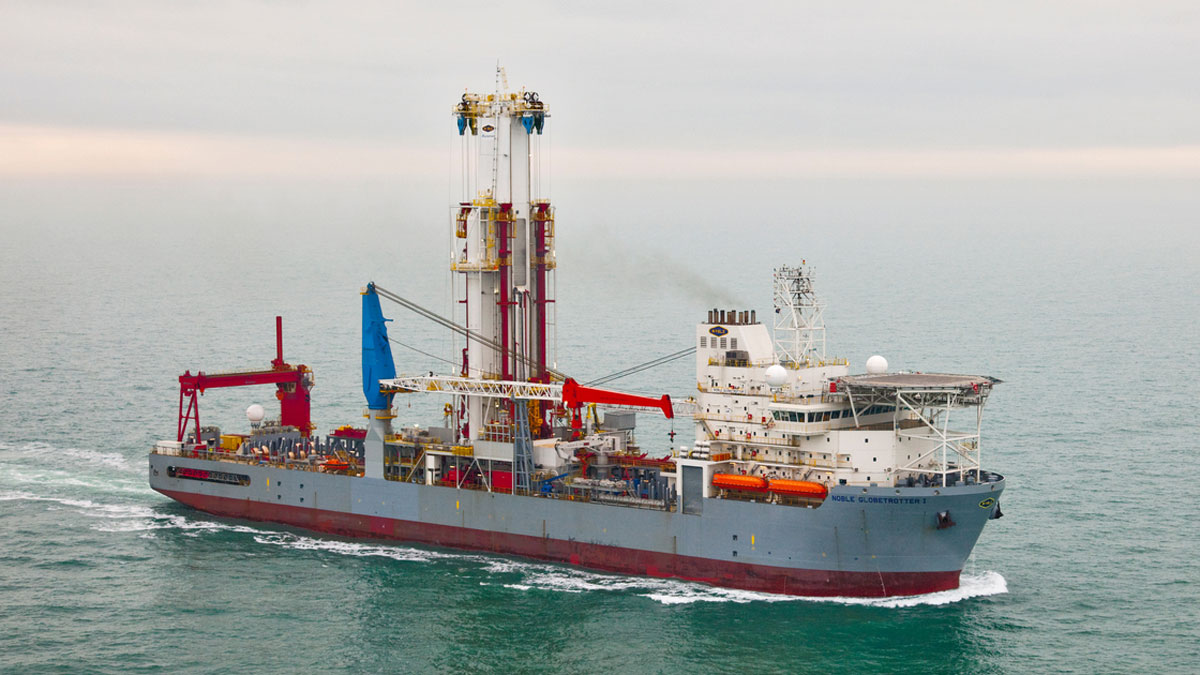
Bulgaria is taking a major strategic step toward strengthening its energy security by announcing the state’s direct involvement in gas and oil exploration activities in the Black Sea.
Energy Minister Zhecho Stankov, who is nearing the end of his term, has confirmed that Sofia is joining forces with leading international energy companies such as OMV Petrom and NewMed Energy in a partnership that marks a paradigm shift in Bulgarian energy policy.
Bulgaria no longer wants the role of concession provider
For the first time in recent history, Bulgaria will not limit itself to the classic role of a concession provider state, recipient of fees and royalties, but will hold a direct 10% stake in offshore exploration projects. This decision allows the state to be an active party in the decision-making process and to benefit not only fiscally, but also strategically from any resource discoveries. According to the agreement, Bulgaria will not bear the costs of the three deep-water wells already drilled in the Black Sea but will invest with its partners in two new drilling operations, the first of which is already underway.
Minister Zhecho Stankov underlined that this partnership is an essential step for the security of Bulgaria’s gas supply in a regional and European context marked by geopolitical volatility and accelerated efforts to reduce dependence on imports from outside the EU. In order to ensure effective governance of these projects, a specialized directorate will be set up within Bulgarian Energy Holding, dedicated exclusively to the management of exploration and prospecting activities in the Black Sea.
Han Asparuh project is progressing at a steady pace
On the operational side, the Han Asparuh project, one of the most promising offshore fields in the western Black Sea, is advancing at a steady pace.
OMV Petrom representatives announced significant progress in exploration activities as early as last December, with the company’s CEO Christina Verchere saying that the start of drilling in Bulgaria strengthens the group’s presence in the Black Sea.
The simultaneous operation of two drilling rigs – one offshore Bulgaria and one offshore Romania – is a remarkable achievement and a proof of commitment to regional energy security.
The Globetrotter I drillship, owned by Noble Corporation, has already arrived in Bulgaria, and the first well, Vinekh-1, is located about 200 kilometres east of Varna in an area with water depths of about 2,000 meters. The drilling campaign, which includes two wells, has a total estimated budget of around EUR 170 million and is scheduled to last about five months.
Halliburton will provide integrated drilling services and SLB will test the wells to the highest safety and technology standards.
Cristian Hubati, member of the OMV Petrom Executive Board responsible for Exploration and Production, pointed out that the Black Sea has significant potential for the entire region and the investments made together with NewMed Energy reflect the company’s long-term commitment.
For his part, Yossi Abu, CEO of NewMed Energy, emphasized that the Han Asparuh block opens up new opportunities for Bulgaria and represents an important step in the expansion of the company’s operations in South-East Europe.
The Han Asparuh Block is located in the western Black Sea, south of Romania’s Neptun Deep Block, with an area of 13,712 square kilometres and water depths of about 2,000 meters. Exploration activities started as early as 2012 and included geological and geophysical surveys, the drilling of three exploration wells and an extensive 3D seismic campaign, completed in May 2020, aimed at identifying new drilling targets.
Outlook for Romania
From Romania’s perspective, developments in Bulgaria are highly relevant. The direct involvement of the Bulgarian state in offshore projects sets a regional precedent that may fuel the debate on the role of the Romanian state in the exploitation of resources in the Black Sea.
While Romania has so far relied on partnerships with private operators and a revised legislative framework to stimulate investment, the Bulgarian model adds an extra dimension: direct state participation as a shareholder with the potential for strategic influence.
At the same time, the simultaneous development of offshore projects in Romania and Bulgaria strengthens the Black Sea’s position as the future energy hub of South-East Europe. For Romania, this context can generate significant indirect benefits, ranging from enhanced regional energy security and increased interconnections to greater geopolitical relevance in relation to the European Union. At the same time, the competition for investment, infrastructure and markets will become more intense, which calls for a coherent and predictable strategy from the Romanian authorities.
All in all, Bulgaria’s decision to enter directly into the offshore exploration game in the Black Sea is a strategic move with regional impact. For Romania, this is both a sign of opportunity and a warning: the energy future of the Black Sea is being built now, and the positioning of each state will play a decisive role in Europe’s energy architecture in the coming decades.