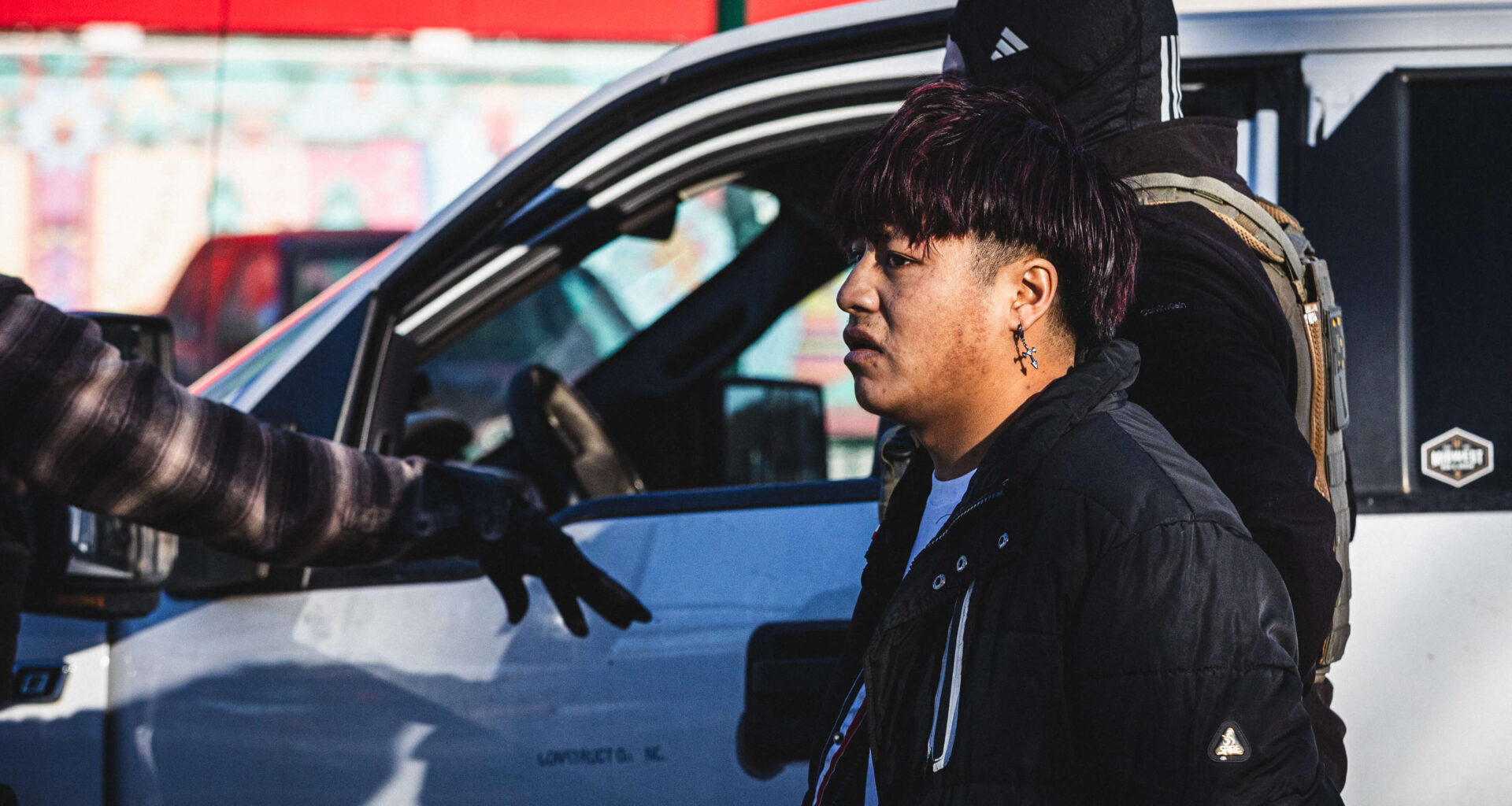
Faith-based refugee resettlement organizations are raising alarms that Immigrations and Customs Enforcement is detaining lawfully resettled refugees in Minnesota, in an operation one resettlement official called “shameful and unpatriotic.”
“This is a five-alarm fire,” Myal Greene, president and CEO of World Relief, said in a press release. “These are not the ‘worst of the worst;’ these are innocent children and families who fled the worst wars and persecution imaginable, who were invited by the American people to become Americans under the terms of American law.
“This shameful and unpatriotic operation preys on our basest fears and manipulates the truth,” Greene continued. “Enough. ICE must be held accountable, and this operation must cease.”
Global Refuge, formerly known as Lutheran Immigration and Refugee Service, likewise condemned the detentions in a press release, stating ICE’s actions go against decades of U.S. policy and inflict “needless harm on families who were invited to rebuild their lives in safety.”
READ: ‘Abolish ICE’ Is the Cry of the Prophets
Hebrew Immigrant Aid Society, the global Jewish humanitarian organization supporting refugees, stated that “immigrants, refugees, and their allies are no longer safe.” And Rick Santos, CEO of Church World Service, said in a press release that the Department of Homeland Security’s recent refugee reexamination operation “will force them to relive the circumstances of their flight from persecution.”
World Relief condemned ICE’s aggressive tactics and called for the release of all noncriminal refugees.
“In some cases, entire families have been detained,” World Relief spokesperson Matthew Soerens told Sojourners. “In other cases, just the dad was picked up going to work,” leaving remaining family members scrambling to pay for things like rent and groceries.
The Trump administration launched the operation on Jan. 9 to rescreen refugees who had already been resettled to the U.S. A Department of Homeland Security press release states Operation PARRIS—or “Post-Admission Refugee Reverification and Integrity Strengthening”—is meant to curb fraud, even though immigrants are less likely than U.S. citizens to commit welfare fraud, according to David Bier of the libertarian think tank Cato Institute.
ICE has reportedly detained dozens during the operation, spurring protests calling for ICE’s departure and grassroots efforts to monitor and warn of ICE agents’ movements. Protests multiplied after ICE agent Jonathan Ross shot and killed a woman, Renee Nicole Macklin Good, on Jan. 7. ICE agents also reportedly threw tear gas into a family’s vehicle last week, which caused the family’s 6-month-old infant to stop breathing and pass out.
Soerens said Friday that ICE detained at least one member from four World Relief client families during Operation PARRIS. “We had one family where the adult child had memorized his legal counselor’s phone number and was able to borrow a phone when they were in detention in Texas,” Soerens said. Other families World Relief has resettled may have also been detained, but with no way to reach out, he added. “There are probably cases where people just disappeared.”
“We’ve had many, many more who’ve had ICE at their door,” but followed guidance not to open the door, Soerens said.
World Relief officials have been “disturbed” by the shape immigration enforcement has taken over the last several months, but had been telling refugees they had no reason to worry, because refugees have legal status indefinitely.
Now, World Relief is warning resettled refugees “not to leave their homes for any reason,” Soerens told Sojourners.
Now, World Relief is warning resettled refugees ‘not to leave their homes for any reason.’
The Urban Village, a nonprofit in Saint Paul that assists refugees from Myanmar, gave similar advice, cautioning anyone without U.S. citizenship or permanent residency to stay home, avoid driving, and keep their doors shut to anyone they do not recognize.
“People aren’t going to work, kids aren’t going to school, people aren’t going to church on Sunday,” Soerens said, adding that Operation PARRIS has fostered an environment resembling a “house arrest situation.”
One student from Myanmar who is seeking asylum reportedly tried to take his own life after ICE threatened to detain him.
DHS states it is focusing its operation on 5,600 refugees in Minnesota who have not yet been granted permanent residency. Refugees arriving in Minnesota in the last three years fled Somalia, Myanmar, the Democratic Republic of Congo, Ethiopia, and 40 other countries, according to data from the Minnesota Department of Human Services Resettlement Programs Office. Refugees are generally referred to the U.S. by the United Nations High Commissioner for Refugees, then go through “several rounds of background checks, screenings and interviews” across two to three years before being admitted to the U.S., according to a fact sheet from the National Immigration Forum. Then they must live in the U.S. for at least a year before applying for permanent residency.
World Relief and its partner in Minnesota are connecting affected families with lawyers, among other resources, and raising money to help families with expenses like food and housing. But Soerens said World Relief is also preparing for ICE to take its tactics to other states.
“The fear is this is part of this broader push by the [Trump] administration … to reassess the refugee determinations of all refugees resettled during the Biden administration,” Soerens said. That means “literally hundreds of thousands of people” are at risk, he explained, including an estimated 4,400 families World Relief has resettled.
“They’re saying it’s going to start in Minnesota,” Soerens noted. “But that implies that they don’t intend to stop there.”
World Relief’s partner in Minnesota, Arrive Ministries, called on Christians to speak out against refugee detentions and to pray. Churchgoers in Minneapolis have also explored ways to become “a public witness” to detentions, NPR’s “All Things Considered” reported.
“We’ve seen moments in American history where the church kind of looked the other way in unjust situations,” Soerens acknowledged. Churches fell short during World War II when the U.S. turned away Jews fleeing the Nazi regime and confined Japanese residents to internment camps, he noted, and white churches failed to stand up with African Americans during the Civil Rights era.
But “you can point to beautiful examples where the church has stepped up,” Soerens added, like when churches led the way in welcoming refugees during the late 1970s and early 1980s. “I think we should be proud of that legacy. I also think we are at a point where we should answer the question of where we stand.
“This should not be acceptable to followers of Jesus.”