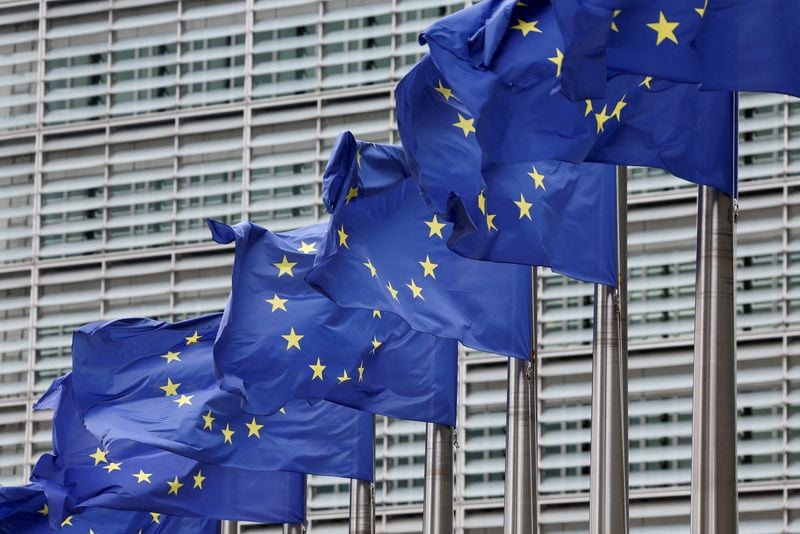
Germany and Italy’s Call for EU Reforms
BERLIN, Jan 21 (Reuters) – Germany and Italy have warned that the European Union risks falling behind the U.S. and China unless leaders agree on reforms to revive the bloc’s competitiveness, according to a policy paper prepared ahead of an informal summit next month.
Concerns Over Global Competitiveness
The paper, which positions Germany and Italy as Europe’s leading industrial powers, calls for sweeping changes to cut red tape, accelerate permit approvals and enhance Europe’s single market.
The document, reviewed by Reuters, warns that Europe’s living standards and sovereignty are at stake, with many new competitors increasing their global influence.
“Continuing on the current path is not an option. Europe must act now,” the joint statement said.
The policy paper was drawn up for the Leaders’ Retreat in Alden Biesen in Belgium on February 12, where German Chancellor Friedrich Merz and Italian Prime Minister Giorgia Meloni will press for a coordinated EU strategy to support businesses and attract investment.
Proposed Measures for Improvement
The paper urges leaders to use the meeting and the European Council gathering in March to agree upon concrete commitments.
BARRIERS AND BUREAUCRACY UNDER FIRE
The paper cites International Monetary Fund figures showing EU internal barriers amount to internal tariffs of as much as 44% for trade in goods and more than 110% for services trade. It calls for an “ambitious ease of regulatory burden.”
It proposes fast-track approval procedures, routine repeals of outdated laws and stricter scrutiny of new rules, with regular reports to EU leaders on progress.
Trade and Market Integration
Germany and Italy also advocate deeper integration in services, energy, capital markets and digital industries, a pan-European stock exchange and revised merger rules to help companies compete globally.
The paper urges the EU to speed up free trade talks with partners including India, Australia, the UAE and ASEAN, while warning Europe is ready to use defensive trade tools if necessary.
(Reporting by Andreas Rinke; Writing by Linda Pasquini; Editing by Thomas Derpinghaus)