The ability of the Federal Reserve System (the Fed) to set interest rates independently, free from political interference — a cornerstone of U.S. economic policy — is now at risk due to a pivotal Supreme Court case concerning presidential authority this week.
Oral arguments in the case involving Federal Reserve Governor Lisa Cook are scheduled for 10 a.m. Eastern Time. Cook is challenging President Donald Trump’s attempt to remove her from the powerful Federal Reserve Board based on unproven allegations of mortgage fraud.
Trump argued that Cook’s declaration of two properties as primary residences — a practice that could secure more favorable loan terms — was sufficient grounds for her dismissal. Cook, appointed by former U.S. President Joe Biden and the first African-American woman to serve on the Federal Reserve Board, denies any misconduct. The Department of Justice is investigating these allegations, initially raised by Trump allies, but no charges have been filed against Cook.
 However, under the 1935 Federal Reserve Act, the president cannot arbitrarily remove members of the Federal Reserve Board unless there is ’cause’ — a term generally interpreted as negligence or malfeasance in the performance of duties.
Should the Supreme Court rule in favor of Trump, it could toll the death knell for the Fed’s independence, raising concerns about increased political interference in monetary policy and unsettling global financial markets. Such a ruling would significantly lower the threshold for future presidents to remove Fed officials who disagree with them on monetary policy.
“The greatest immediate threat to the Federal Reserve right now comes from the Supreme Court. That’s it,” said Patrick Harker, former president of the Federal Reserve Bank of Philadelphia, during a central banking forum last week. “In my view, if the Supreme Court rules against Cook, the Fed’s independence will be gone because every future president will exploit this precedent to remove dissenting officials.”
A ruling supporting Trump would also free up a seat on the Federal Reserve Board, allowing him to nominate another individual to fill the vacancy this year.
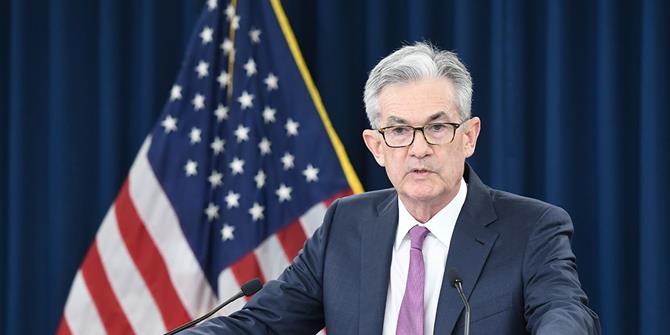
Federal Reserve Chair Jerome Powell, named as a co-defendant in the Cook case, has decided to attend the oral arguments alongside the Fed’s general counsel — an unusual move seen as a gesture of support, according to experts. U.S. Treasury Secretary Scott Bessent described Powell’s attendance as “a real mistake” on Tuesday.
The Fed Under Pressure
The Cook case epitomizes the frustration within the Trump administration over its inability to control interest rates, a potent economic tool managed by the central bank.
During Trump’s second term, he and his allies have continuously pressured the Federal Reserve to accelerate its pace of interest rate cuts. Previously, the Fed had raised interest rates multiple times to address inflation during the pandemic, but Trump repeatedly criticized Chairman Powell for failing to cut rates to boost the economy, calling him ‘low IQ’ and ‘foolish.’
Last week, Powell revealed that he received a subpoena from the U.S. Department of Justice regarding his testimony to Congress last year about the $2.5 billion self-funded renovation project at the Federal Reserve’s Washington headquarters. Powell released an unusual video refuting the allegations, stating that the DOJ’s actions were entirely pretextual.
“The Federal Reserve sets interest rates based on its judgment of what is in the best interest of the public, not according to the president’s preferences, and the consequence has been the threat of criminal charges,” Powell said in a statement on Sunday evening.
The Precarious Independence
The structural design of the Federal Reserve is central to maintaining the independence of its monetary policy.
The powerful rate-setting committee of the Federal Reserve consists of 12 officials, seven of whom are appointed by the president to serve on the Federal Reserve Board for staggered 14-year terms. This long tenure helps shield the Fed from short-term political pressures.
If the Supreme Court approves the removal of Cook, it would set a precedent allowing Trump and any future president to restructure the Federal Reserve Board, forcing the Fed to cut interest rates even when economic fundamentals do not support such measures.
Kevin Gordon, Head of Macro Research and Strategy at Charles Schwab, wrote in an analysis last week that the Supreme Court’s ruling on the Cook case “will have critical implications for the extent to which presidents can shape the structure of the Federal Reserve.”
Economists widely agree that the Fed’s model of making difficult interest rate decisions autonomously based on economic data has brought tangible benefits to the American public, contrasting sharply with historical counterexamples. In the 1970s to early 1980s, former Fed Chairman Arthur Burns maintained close ties with then-President Richard Nixon. Despite clear signs of inflation emerging as the national election approached, Burns refrained from raising rates, a decision that tarnished his reputation.
The mistakes made by the Federal Reserve during that period further exacerbated the challenging situation of high unemployment coupled with high inflation.
The central bank is about to undergo another far-reaching personnel change: Trump plans to announce his nominee for the position of Federal Reserve Chair within the next two weeks.
Powell’s term as Federal Reserve Chair will expire on May 15, while his term as a member of the Federal Reserve Board will continue until 2028. It remains unclear whether Powell will completely step down from the Fed after his chairmanship ends. Also uncertain is another personnel decision by Trump—whether he intends to reappoint Fed Governor Stephen Millan, whose temporary term is set to expire later this month.
The leading candidates for the position of Federal Reserve Chair include Kevin Hassett, Director of the National Economic Council; Kevin Warsh, former Federal Reserve Governor; Christopher Waller, current Federal Reserve Governor; and Rick Rieder, Chief Investment Officer of Global Fixed Income at Blackrock.