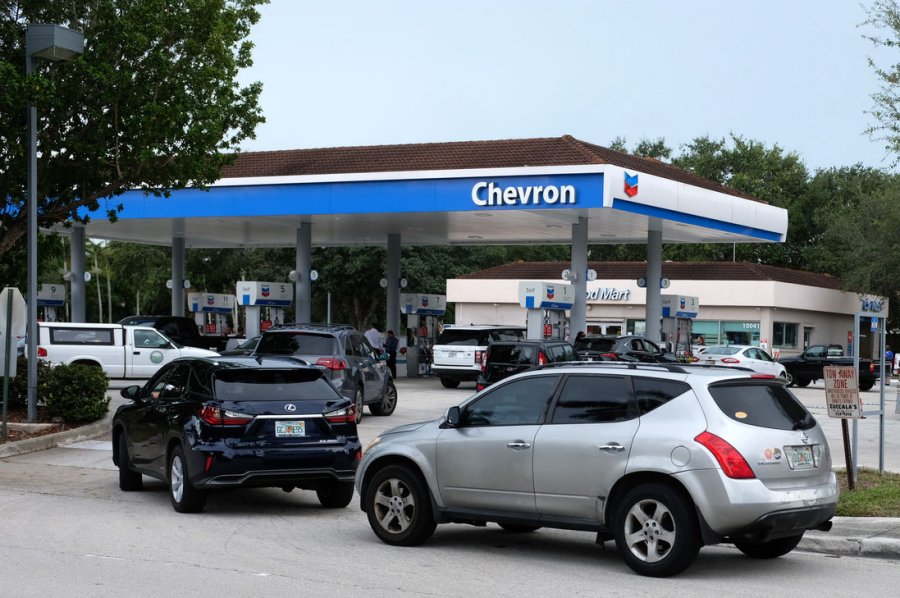

U.S.-based Chevron is the only foreign company operating in Venezuela’s oil industry under contracts and operating structures that go beyond the traditional framework of the hydrocarbons law. File Photo by Gary I Rothstein/UPI
Jan. 21 (UPI) — Venezuela received $300 million Tuesday as part of revenues from oil sales to the United States, interim President Delcy Rodriguez said on social media.
The funds represent the first tranche of a $500 million oil deal announced by President Donald Trump after the United States captured President Nicolas Maduro on Jan. 3.
Rodriguez said the resources will be channeled through the national banking system and the Central Bank of Venezuela to “protect workers’ purchasing power” and stabilize the foreign exchange market amid inflationary pressures.
The move comes as authorities seek to inject liquidity into Venezuela’s economy.
The oil agreement followed negotiations between Caracas and Washington that included U.S. management of up to 50 million barrels of Venezuelan crude. Under the arrangement, commercialization and control of revenues remain under the Trump administration.
Venezuela’s National Assembly president, Jorge Rodriguez, said Tuesday that one of the main goals of the newly installed legislature is to pass laws adapted to the country’s new economic reality, including the Organic Law of Hydrocarbons.
According to digital outlet Efecto Cocuyo, Rodriguez chaired the first meeting of parliamentary committees that will review a package of bills during the 2026 legislative session.
“We have to find a way, using a successful model, the Chevron model, which is already being approved and has been key to increasing oil production in Venezuela even under severe sanctions. That model is what we are going to discuss to turn it into a reform of the hydrocarbons law,” Rodriguez said, without providing further details.
U.S.-based Chevron is the only foreign company operating in Venezuela’s oil industry under contracts and operating structures that go beyond the traditional framework of the hydrocarbons law.
Under that model, Chevron operates joint ventures with state oil company PDVSA in which PDVSA retains a majority stake, while Chevron participates in production, management and some commercial decisions, giving it limited control over oil sales.
Venezuelan law reserves control of the oil sector to the state. The Chevron arrangement has been enabled by special licenses granted by the U.S. government and by production participation contracts developed under Venezuela’s Anti-Blockade Law.
The framework has served as an exceptional mechanism to attract foreign investment under international sanctions, prompting debate because it does not fully fit within traditional oil law and has created legal gaps.