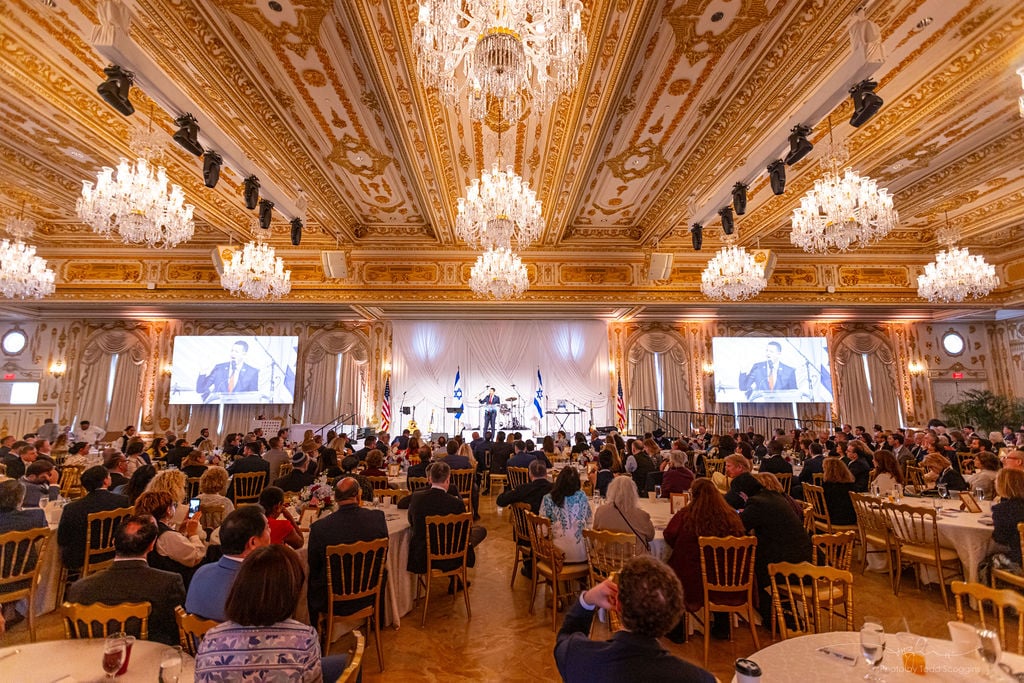
In an era when formal diplomacy is increasingly constrained, informal convenings are playing a growing role in shaping how alliances form, narratives travel, and legitimacy is signaled. As official negotiations stall and polarization deepens, the spaces that sit outside formal channels are often where relationships are tested, reframed, and quietly reinforced.
One such gathering is the Jerusalem Prayer Breakfast.
Often described primarily through its faith-based origins, the event has, over time, evolved into something more complex: a recurring convening where political leaders, institutional figures, civil society voices, and faith leaders intersect without the pressure of formal outcomes. No formal statements are issued. No policy is negotiated. And yet, the presence of certain actors in the same room—and the absence of others—carries meaning.
This is not unusual. History is full of moments where informal spaces helped shape the conditions under which later decisions became possible. What makes gatherings like this notable today is not what they decide, but what they allow: conversation across boundaries that are otherwise rigid.
A Platform, Not a Policy Forum
The Jerusalem Prayer Breakfast is not a lobbying effort, a summit, or a negotiating table. Participants do not attend as signatories, and no one leaves with a mandate. Instead, the event functions as a platform—one that allows individuals from different sectors and countries to encounter one another outside official scripts.
Elected officials sit alongside medical and humanitarian leaders. Civil society advocates share tables with former policymakers. Faith leaders from multiple continents engage in the same space as regional authorities. The format emphasizes presence rather than performance.
In a world increasingly shaped by carefully curated messaging, there is something disarming about such an arrangement.
Global in Scope, Relational by Design
The Jerusalem Prayer Breakfast draws participants from across North America, Europe, the Middle East, and beyond. Its design prioritizes repeated interaction over time, allowing relationships to develop across multiple gatherings rather than within a single event.
This continuity matters. Many of today’s global challenges—security, humanitarian crises, social cohesion—do not respect borders. The relationships that influence how these challenges are understood and addressed are often built long before any formal process begins.
Informal convenings provide the connective tissue.
The Human Dimension
What stood out most was the consistent emphasis on lived experience. Medical leaders spoke about treating civilians under fire. Public officials reflected on leadership under sustained pressure. Civil society voices described the personal cost of conflict, persecution, and displacement.
These accounts did not offer solutions, nor were they framed as arguments. Instead, they grounded abstract debates in human reality. In doing so, they shaped how participants understood the stakes—often more effectively than statistics or policy briefs.
Why This Matters
As international systems grow more fragmented, informal spaces are becoming more—not less—important. They offer room for moral reflection, relational repair, and narrative alignment at a time when formal diplomacy is often burdened by domestic politics and institutional inertia.
The Jerusalem Prayer Breakfast does not replace official processes, nor does it claim to. Its value lies elsewhere: in creating a space where individuals who influence public life can encounter one another without preconditions, and where relationships can persist even when governments disagree.
Whether such spaces ultimately shape policy is difficult to measure. But as formal channels narrow, the quiet work of relationship-building and shared understanding may prove more consequential than it appears.
Closing Reflection
The significance of gatherings like the Jerusalem Prayer Breakfast is not found in declarations or outcomes, but in presence. In who shows up. In who sits together. And in the relationships that continue after the room empties.
In a fractured global landscape, that may be influence enough.
Official event photos provided by Clayborn Studios | Todd Scoggins
—
Author’s Note:
The following reflects my personal observations and analysis of the Jerusalem Prayer Breakfast convening. It is written in my capacity as an independent observer and does not represent the views of the event’s organizers, participants, or any institution referenced.
Laura Hatton is the founder of Heartland to Holyland, an initiative developing the Indiana⇄Israel Corridor to strengthen strategic, faith-based, and business partnerships. She writes on leadership exchange, innovation diplomacy, and the growing role of America’s Heartland in Israel’s global network.