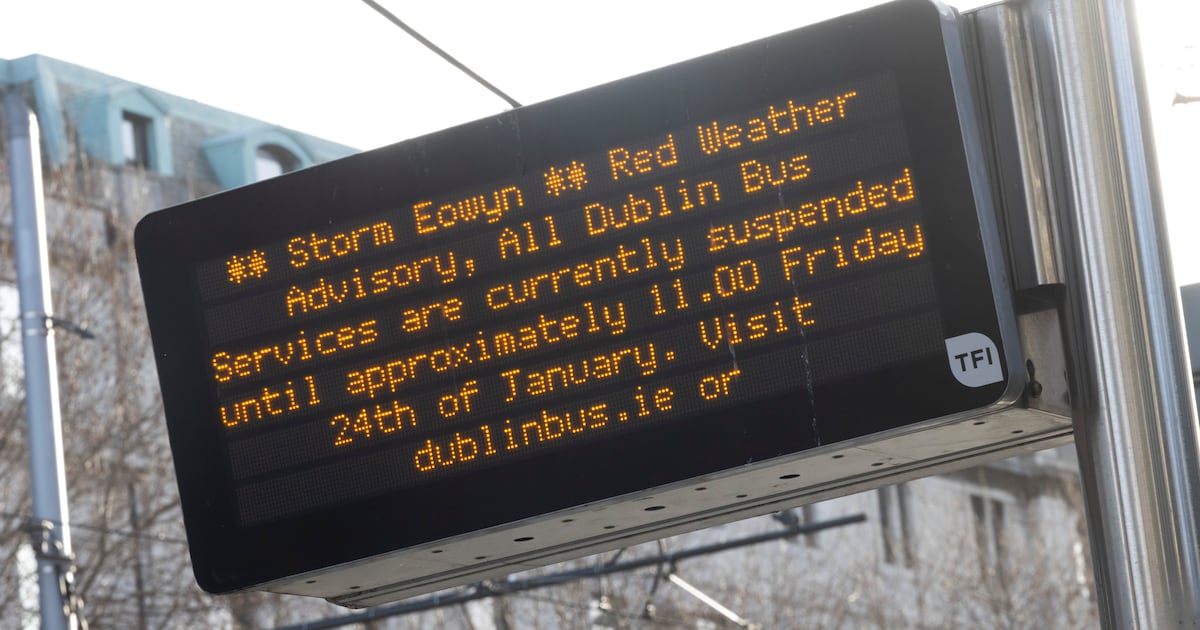
In 2025, Ireland was hit by several big storms, leaving homes without power for days and weeks, causing logistical delays and affecting the country’s infrastructure.
Storm Éowyn, the heaviest storm recorded in decades, caused possibly more than €500 million in damage, with recovery efforts continuing months after the storm passed.
Only recently, Storm Bram led to more than 100 cancelled flights, disrupted public transport, and resulted in 54,000 homes and businesses losing power.
With Met Éireann noting that storms and heavy rainfall are becoming more intense due to environmental changes, the impact of climate change is hitting closer to home than ever before.
Ireland’s agricultural sector is hit particularly hard by this, with fields across the country flooding frequently, heavier rainfall complicating fodder production, and storms undoing years of forestry work in mere hours.
Ireland’s electricity grid, transport network, drainage systems and housing stock were built for a different climate, and are proving to be the first areas affected with each big storm.
Drone footage has captured extensive damage to forested areas in Newbridge, Co Galway in the wake of Storm Éowyn. Video: Brian Conway
Storm Éowyn, for example, led to 790,000 farms and businesses losing electricity, while Storm Bram saw flooding across coastal areas.
Ireland’s energy operators, including ESB and EirGrid, have acknowledged the growing need to build resilience into networks as demand patterns shift and renewable generation expands.
Too often, however, the response to storms remains reactive: repairing power lines, resurfacing roads, and restoring services after damage has been done, rather than strengthening systems to withstand what is coming next.
The National Adaptation Framework (Naf), introduced by the Government in 2024, recognises this adaptation deficit and calls for co-ordinated action across sectors, reducing Ireland’s vulnerability to extreme weather events.
For Ireland to shift its strategy from reactive to proactive, it is imperative that this strategy be aligned with local delivery, supporting communities throughout the country to become more storm-ready.
The primary focus of this delivery should be rural and coastal communities, which are often disproportionately affected by extreme weather but lack the necessary resources to combat it.
While the Naf highlights the need for local and sectoral plans, supporting local authorities, community groups and farmers with training, funding and clear guidance would go a long way towards reducing long-term damage and disruption.
Initiatives such as the European Climate Pact are a prime example of the synergy between large-scale governmental organisations and local, community-led action and should serve as the blueprint for making Ireland more resilient.
Launched by the European Commission as part of the European Green Deal, the climate pact is a movement of people and policymakers working to make sustainability an everyday reality throughout Europe, and tackles the climate crisis at a grassroots level, engaging citizens and organisations across sectors.
Additionally, it is vital that future housing, drainage, and transport projects are assessed against projected 2050 climate scenarios, as published by Met Éireann.
This means setting revised standards for insulation and heating in homes, designing drainage for the downpours the country will face, and climate-proofing roads and rail so they withstand heat, storms and rising seas.
Planning for yesterday’s climate is no longer feasible – the focus must now be on resilience and future-proofing Ireland from the ground up.
Ireland’s climate has already changed. The question now is whether our infrastructure will change with it. By combining clear national direction with meaningful local delivery, Ireland can move from reacting to each new storm towards building lasting resilience.
Doing so will not only reduce disruption and cost, but help protect livelihoods, communities and future generations.
Liam J Coyle is a strategy consultant at KPMG Ireland and was appointed an EU climate pact ambassador by the European Commission in 2025. He was recently recognised for his climate activism by former president Michael D Higgins