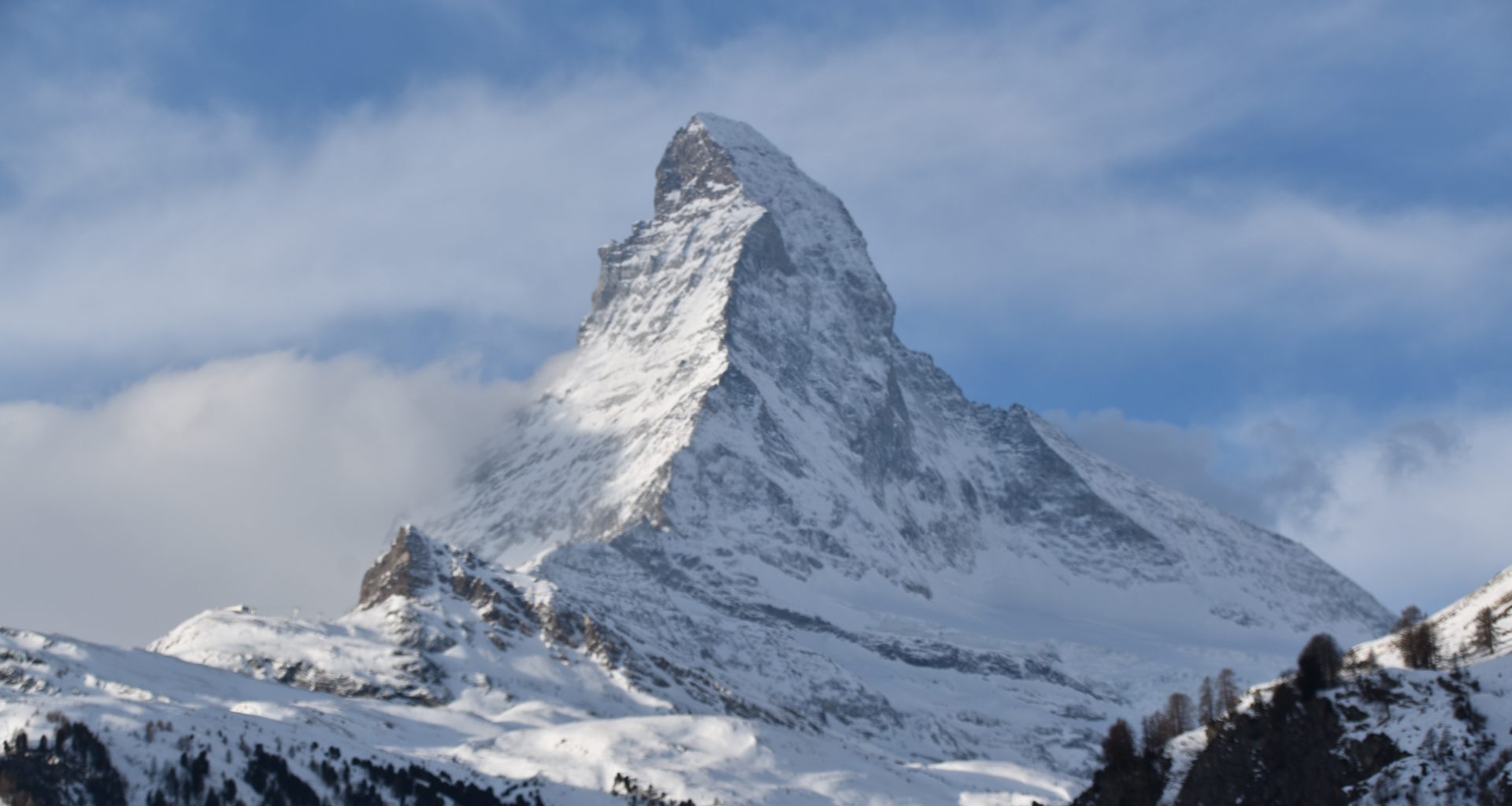
 The Matterhorn as viewed from the Gornergrat. | Image: Brett Ploss
Report from January 20
There are ski days that feel productive. Then there are ski days that feel like you’ve unlocked a cheat code to the Alps. January 20 at Matterhorn Paradise, which spreads between Zermatt, Switzerland, and Breuil-Cervinia, Italy, was firmly the latter.
We began the morning first thing, stepping out of our hotel into crisp alpine air and directly onto a train platform. Within minutes, we were boarding the Gornergrat Bahn, the iconic red cogwheel railway that climbs 5.8 miles from the village to the Gornergrat Observatory at 10,135 feet in just 33 minutes. No car, no parking lot, no shuttle bus. Just seamless rail-to-ski access that remains unmatched anywhere outside of the Alps. We met people who had left their apartments in Zurich or Geneva in ski boots that morning, rode public trains across Switzerland, and were there just like any other day.
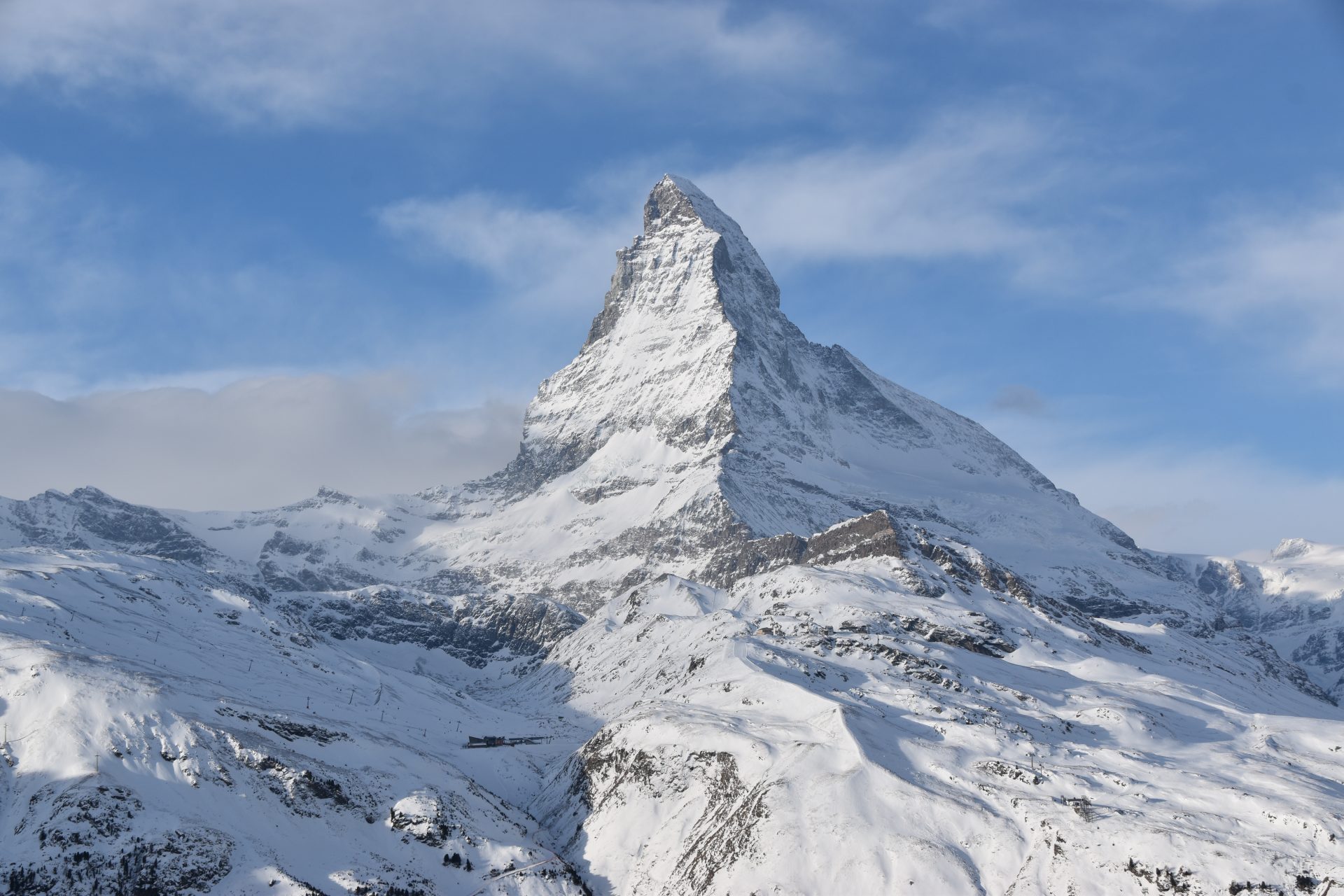
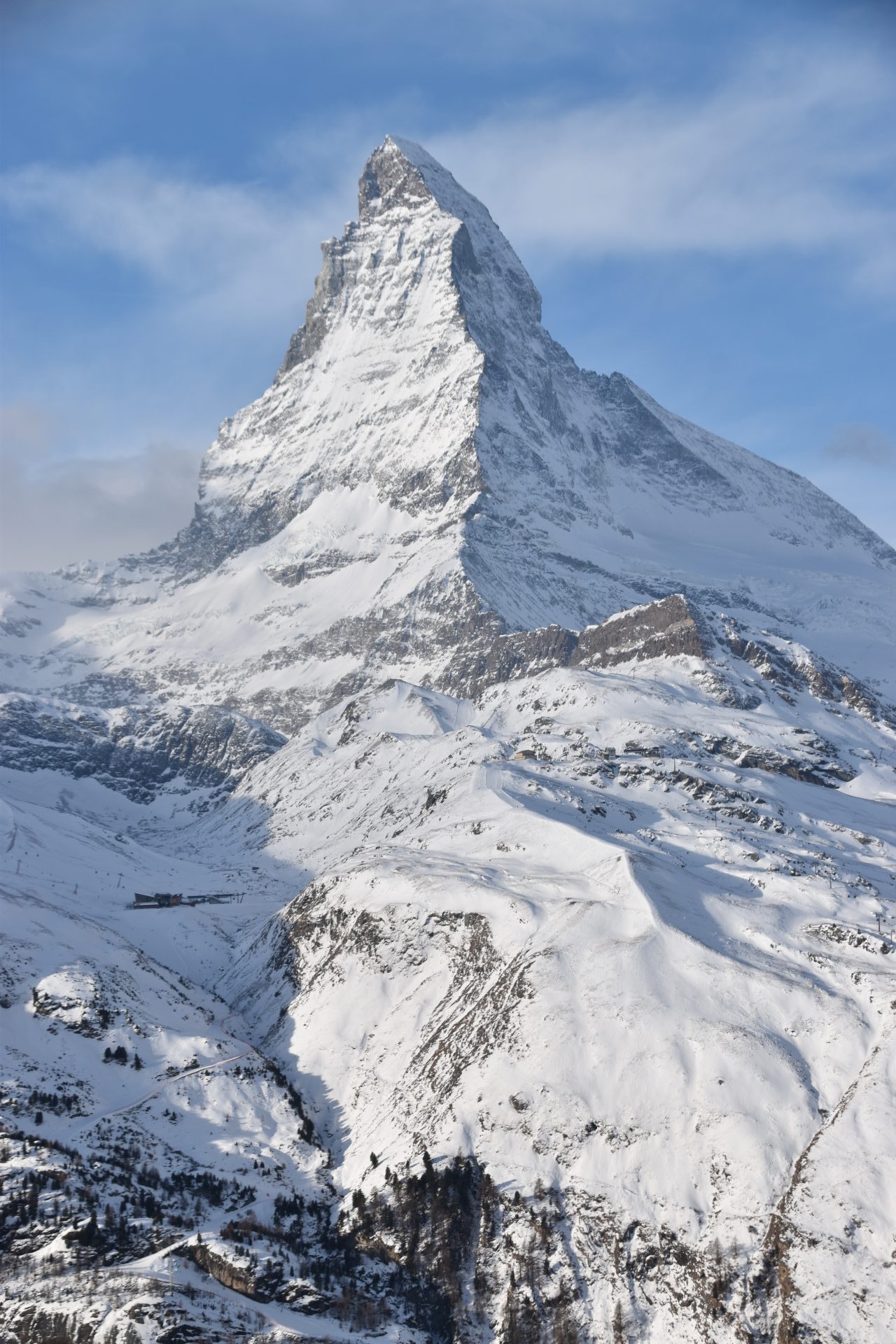 The Matterhorn during early day sunlight as viewed from the Gornergrat. | Image: Brett Ploss
At the summit, the Matterhorn dominated the skyline under clear bluebird skies. From the Gornergrat, we dropped into the first runs of the morning, carving firm, clean groomers down through the Gornergrat sector. Trails like Gornergrat (36), Rotenboden (38), and Riffelalp (39) offered wide-open early-morning corduroy with almost no one in sight. Crowds were nearly nonexistent across the entire area. We never waited in a lift line once all day.
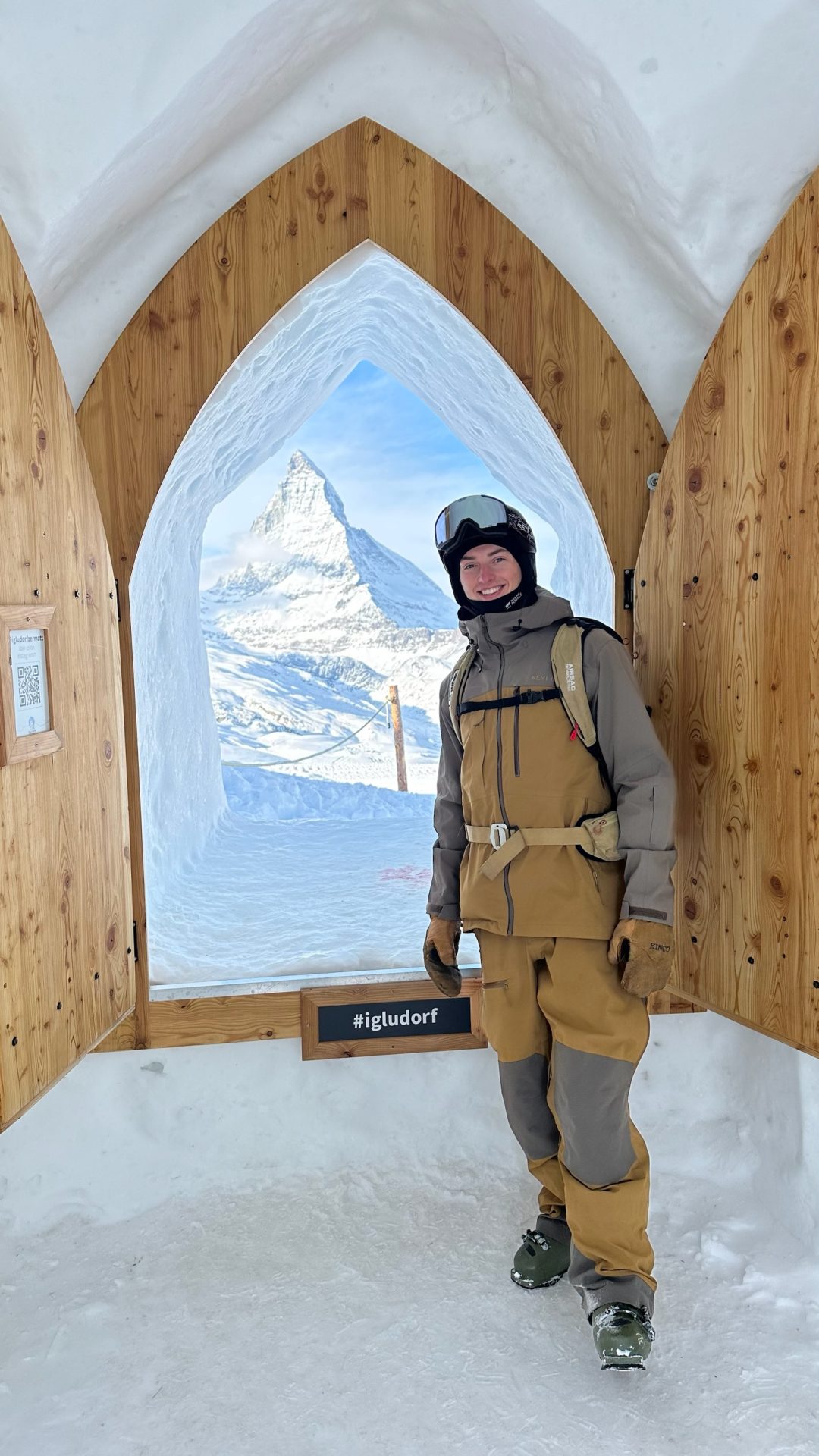 Author Brett Ploss at the Iglu-Dorf. | Image: Brylie Libey
Partway down, we paused at one of the most scenic viewpoints in the Alps: the Iglu-Dorf near Riffelberg. Perched beside run 45 (Iglupiste), this ice-hotel sits directly in front of the Matterhorn’s north face. It’s the kind of place that forces you to stop, not for rest, but simply to take in the scale of the landscape.
From Riffelberg, we continued descending toward Furi, linking long rolling pistes through open slopes. Zermatt’s snow here was firmly groomed, consistent, chalky, and fast. No fresh snow on this side, but perfectly maintained surfaces that rewarded sharp edges.
Into the High Alpine: Matterhorn Glacier Paradise
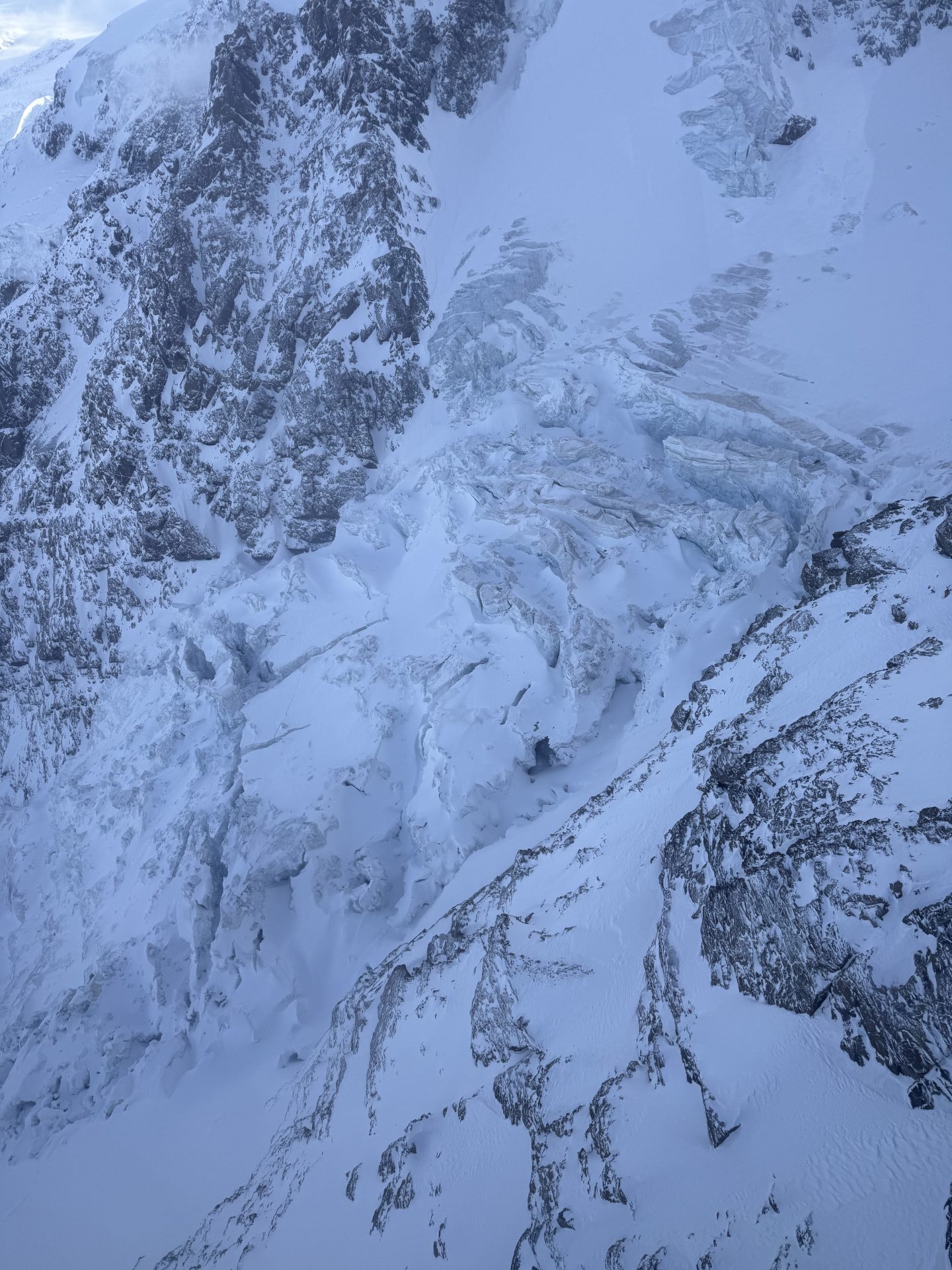 A view of glaciers as seen from the Matterhorn Glacier Paradise Gondola. | Image: Brett Ploss
At Furi, the terrain changed character. We boarded the gondola toward Trockener Steg, beginning the ascent into Zermatt’s glacial high-alpine world. This is a long, steady climb that builds anticipation with every tower passed. At Trockener Steg, we transferred onto the Matterhorn Glacier Ride, a three-cable gondola system that floats silently above crevassed glaciers and snowfields. Comparable in engineering to Whistler’s Peak 2 Peak, but here the views stretch over ice in every direction. Even non-skiers ride this lift simply for the spectacle.
The gondola delivered us to Matterhorn Glacier Paradise at 12,740 feet, the highest lift-served point in Europe. Up here, the wind picked up slightly, reminding us of the altitude, but visibility remained excellent. Zermatt operates year-round glacier skiing from this zone, and even in mid-winter, the sensation of standing on permanent ice surrounded by 13,000-foot peaks feels surreal.
Crossing the Border: Switzerland to Italy
From the summit, we dropped into runs 85 (Matterhorn Glacier Paradise) and 83 (Plateau Rosa), gliding directly toward our first international border crossing of the day. Without fanfare, we skied from Switzerland into Italy.
Temperatures hovered in the mid-20s°F across the mountain. The sun felt warm, but as soon as clouds passed or we ducked into shade, the air reminded us we were in high-alpine winter.
 One of the only pictures we took in Valtournenche due to the conditions, as you can see. | Image: Brett Ploss
At Plateau Rosa, the scene changed instantly. While Zermatt basked in blue skies, the Italian side sat under a light cloud layer perfectly draped over the ridge. A few inches of overnight snowfall had refreshed Cervinia’s slopes, and light flakes still drifted through the air. Snow conditions transitioned from firm groomers in Zermatt to soft, newly groomed snow in Cervinia. And because most European resort skiers stay on-piste, the off-piste terrain beside the trails was entirely untracked, a rare sight in such a large resort.
From Plateau Rosa, we continued toward Cime Bianche, linking into the Italian sector’s expansive pistes. Runs like 6 (Plateau Rosa–Bontadini) and 7 (Ventina Ghiacciaio) stretched endlessly below us. By the time we passed the Cime Bianche ridgeline, we had descended nearly 7,000 vertical feet from the Matterhorn Glacier Paradise. Even from the Cime Bianche top station around 9,500 feet, there remained another 4,500 uninterrupted vertical feet of skiing down toward Cervinia’s base.
Cervinia’s mountain layout is unique, the ski area splits into two primary base zones connected by the Plan Maison gondola. Rather than ride up immediately, we skied to the lower gondola base and enjoyed a relaxed ten-minute walk through town to the more active chairlift hub. Despite being midday, the resort remained quiet. No lift lines, no rush.
Italian Lunch at Ristorante Bar Bricole
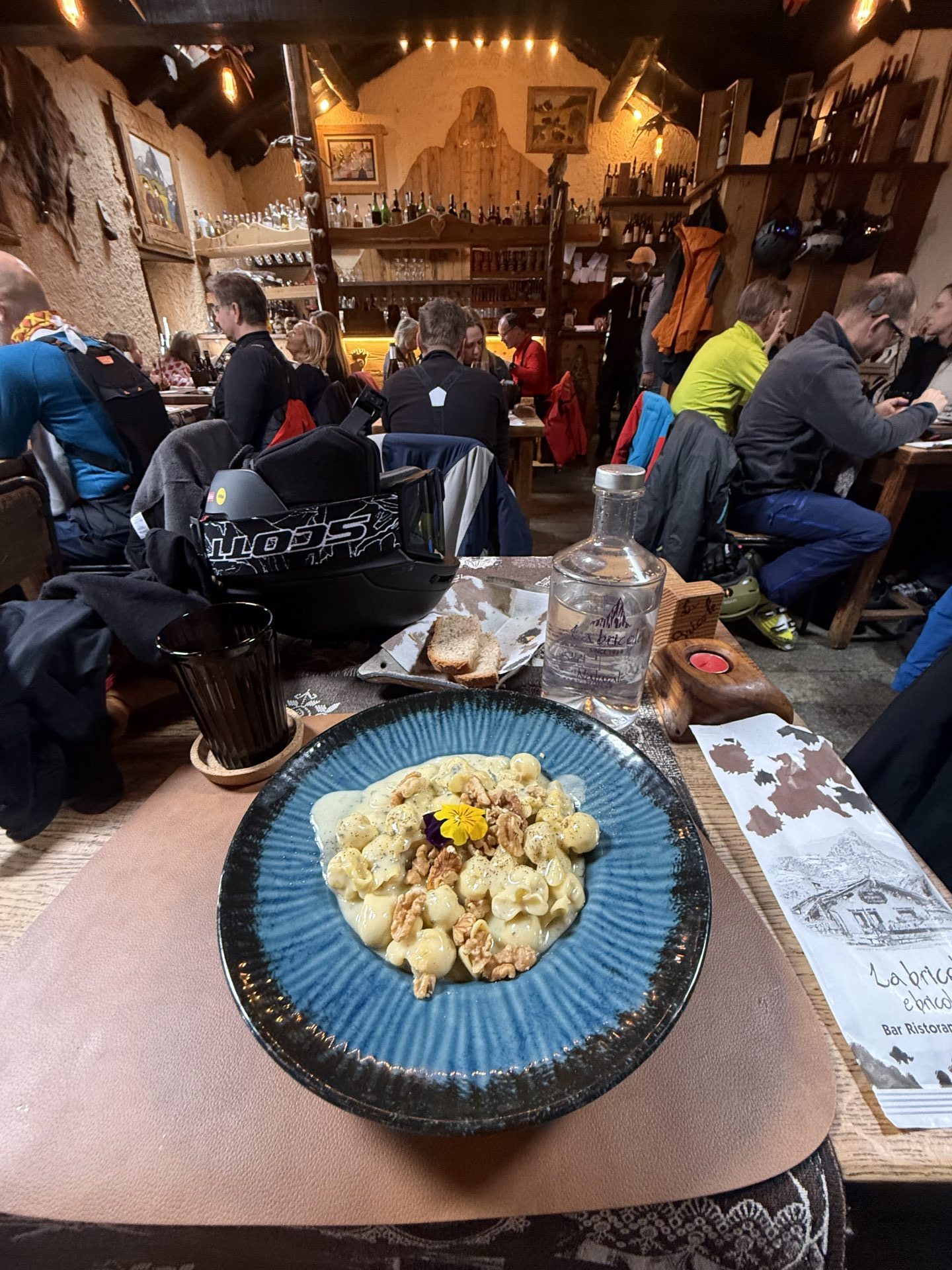 The meal we had at Ristorante Bar Bricole: fagottini pasta with gorgonzola sauce, walnuts, and wine-poached pears. | Image: Brett Ploss
We rode the beginner fixed-grip chair from Plan Maison, setting our sights on one of the most memorable meals in the Alps: Ristorante Bar Bricole. Perched mid-mountain, this rustic Italian rifugio is a favorite for good reason.
Lunch was the highlight of the day: fagottini pasta served with gorgonzola sauce, walnuts, and wine-poached pears. Fresh, perfectly al dente, rich but balanced, and remarkably affordable compared to Swiss on-mountain pricing. It’s the kind of dish that stays in your memory long after the ski day ends.
Sunnegga, Rothorn, and the Way Back
After lunch, we began the journey back toward Switzerland. Cervinia’s return route involves a sequence of lifts climbing back through Plan Maison and Cime Bianche toward the Theodulpass. In total, we were required to take five consecutive chairlifts.
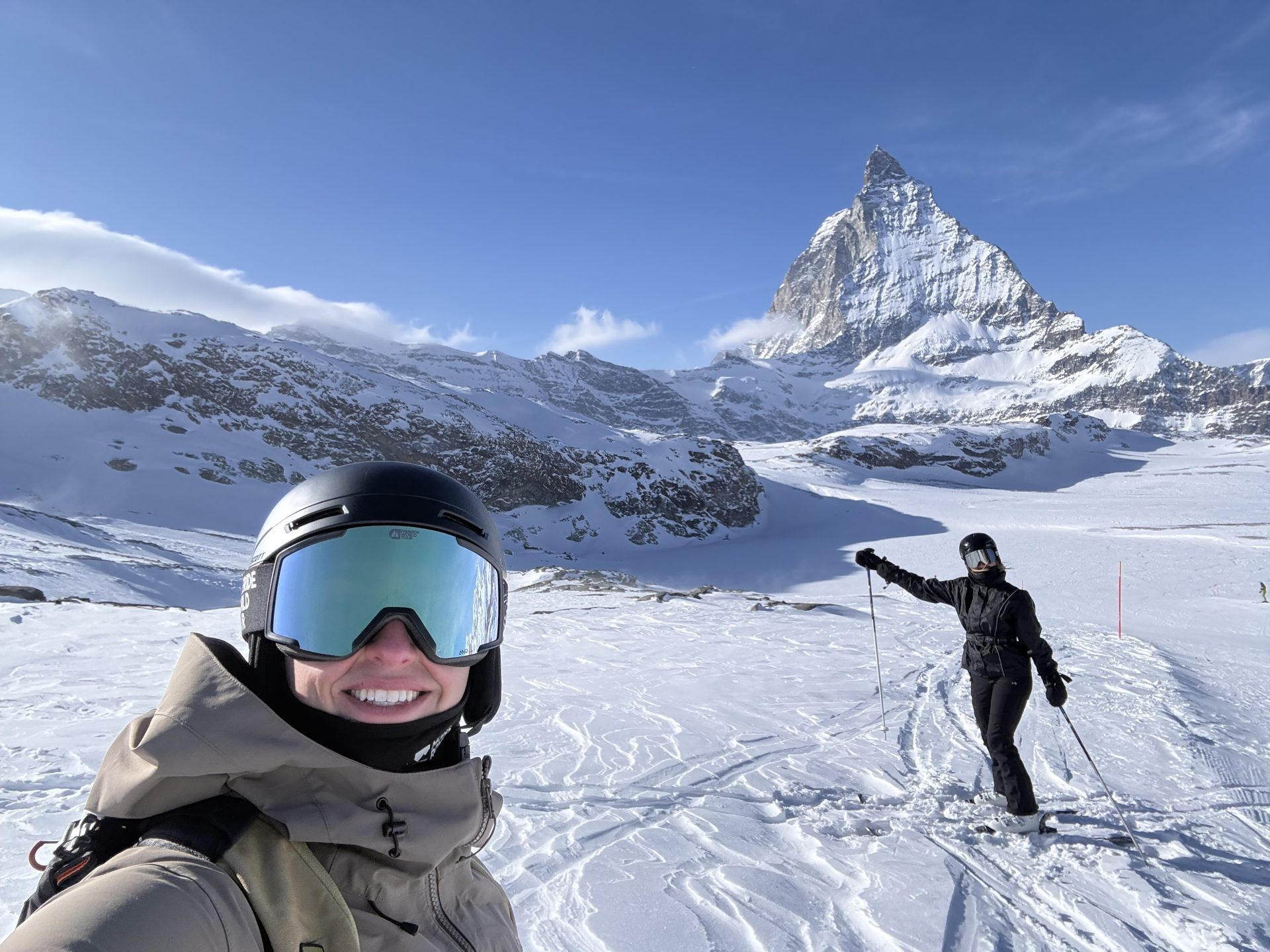 Author Brett Ploss and skier Brylie Libey make our way back from Cervinia to Zermatt. | Image: Brett Ploss
The Theodulpass crossing itself is subtle. There’s no border sign, no marker, just a ridge. Unless you watch your GPS or know the map well, you might never realize you’ve re-entered Switzerland. Technically passports are recommended. We had photos on our phones just in case. No one checked, and we simply continued skiing.
From the pass, we descended back into Zermatt’s terrain via long rolling pistes toward Furi, completing a full international ski loop, Switzerland to Italy and back, without repeating a single lift.
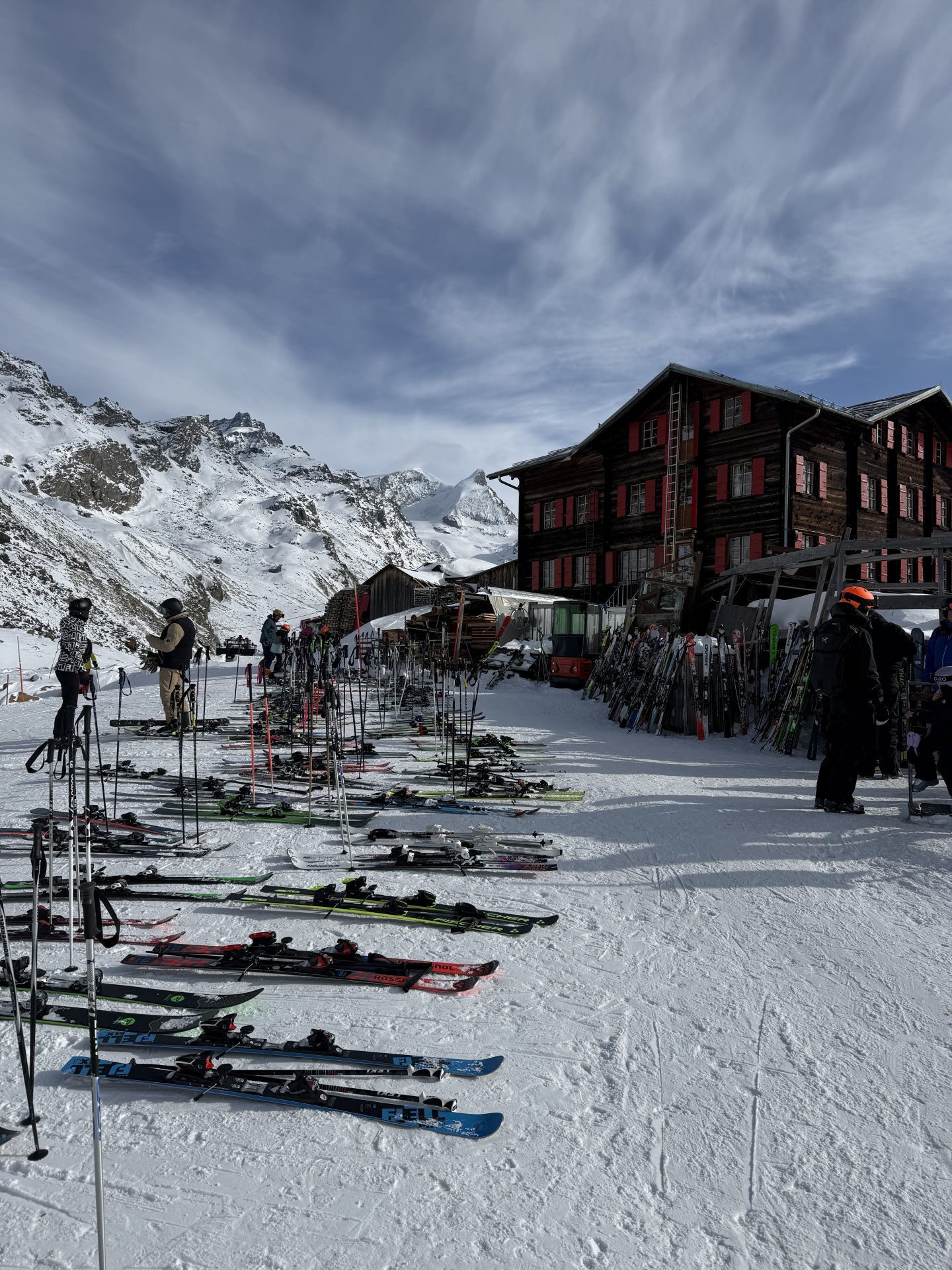 A view of Fluhalp which is our kind of parking lot. | Image: Brett Ploss
From Furi, we made our way over to the Sunnegga sector, known as the sunniest area of Zermatt. Here, we rode lifts climbing toward Rothorn at 10,180 feet. The views opened once more, and we dropped into sweeping pistes toward Fluhalp (run 19). If we had another day, Fluhalp’s remote mountaintop lodge would have been our next stop, the only building in sight besides lift infrastructure, perched high above the valley.
Après in Zermatt Sunnegga
Instead, we continued downward toward Adler Hitta for a brief afternoon break. Then came the final mission: catching one of the last chairs from Findeln to set up the long Ried route home. The Ried run (2) is a narrow but scenic descent that passes the famous Champagne Bar before opening into wide valley views of Zermatt and the Matterhorn looming above town.
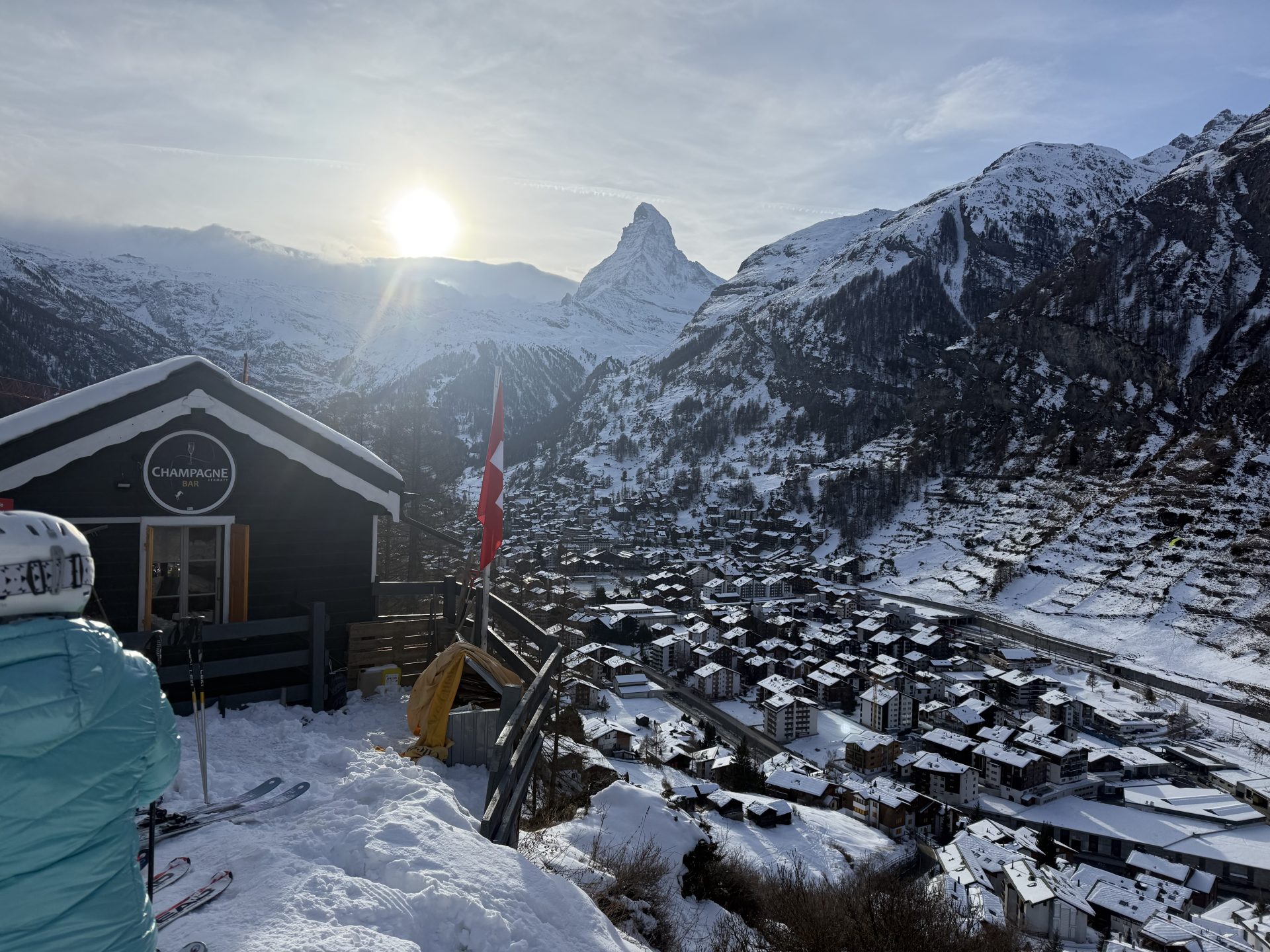 The Champagne Bar in Zermatt on our way down to the base. | Image: Brett Ploss
By this point, legs were tired, but spirits were high. We had linked an entire mega-domain across two countries, glaciers, valleys, and villages, and still hadn’t ridden the same lift twice.
We finished the day the perfect Zermatt way: hot chocolate at Cervo, where a singer provided relaxed live music and sit-down après vibes. Zermatt’s village was, as always, bustling, electric taxis humming through car-free streets, skiers wandering between bars, shops, and hotels. From Cervo, an elevator and underground tunnel delivered us back toward the village center. Electric taxis were available for €13, but nearly everything in town sits within a 15-minute walk.
One Day, Two Countries, Endless Terrain
By day’s end, we had:
Ridden a cogwheel train to a summit
Skied glaciers at 12,740 feet
Crossed into Italy by ski
Descended nearly 7,000 continuous vertical feet
Eaten unforgettable Italian mountain pasta
Crossed back into Switzerland
Finished with live-music après under the Matterhorn
Zermatt–Cervinia is not just one of the largest ski areas in the world. It is one of the most imaginative, efficient, and awe-inspiring. A place where international borders feel irrelevant, where public trains deliver you directly to summit ridges, and where a single day can feel like a week’s worth of adventure.
And somehow, we still left feeling like we’d only scratched the surface.
We’ll be back.
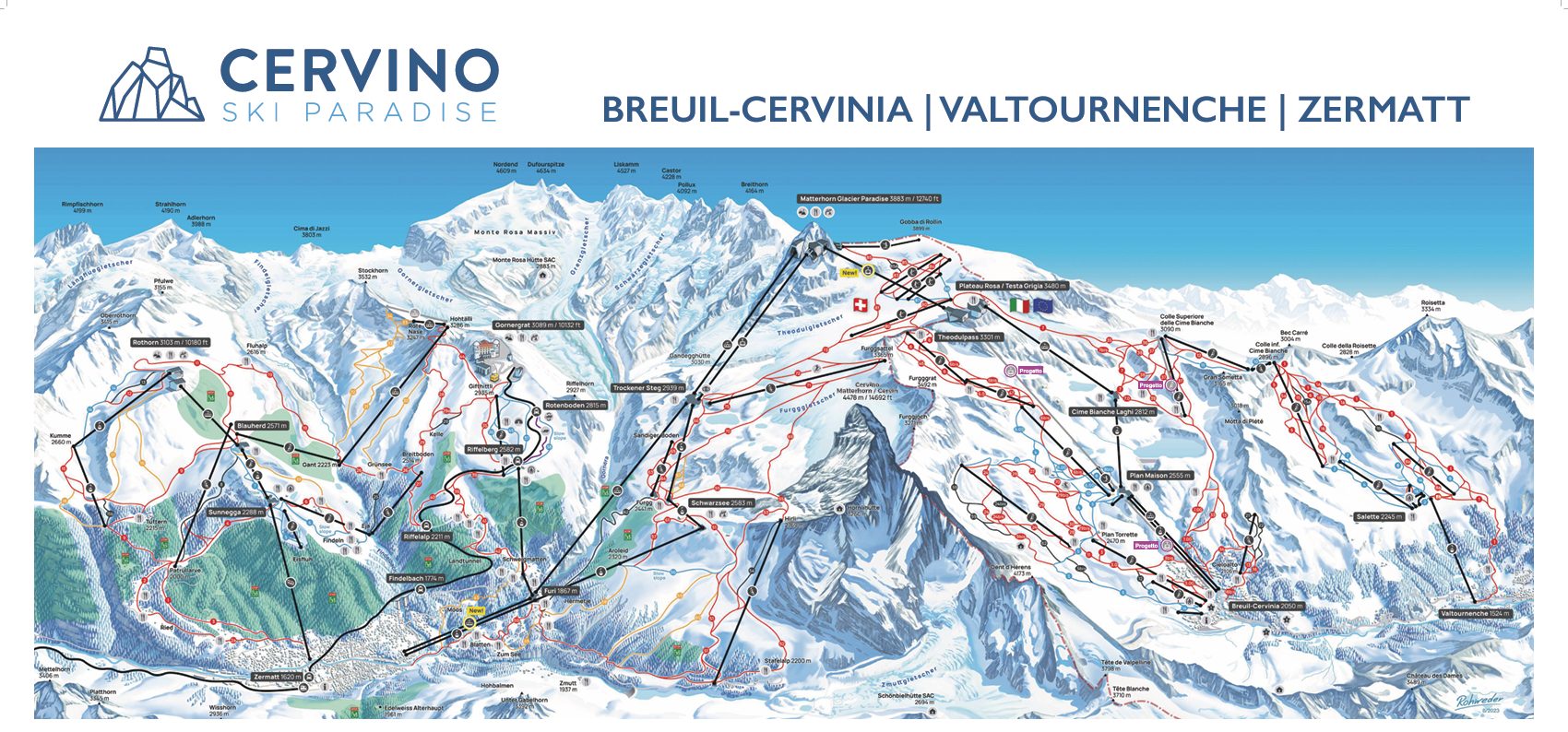 Zermatt-Cervino Trail Map. | Image: Matterhorn Paradise website
SNOW CONDITIONS
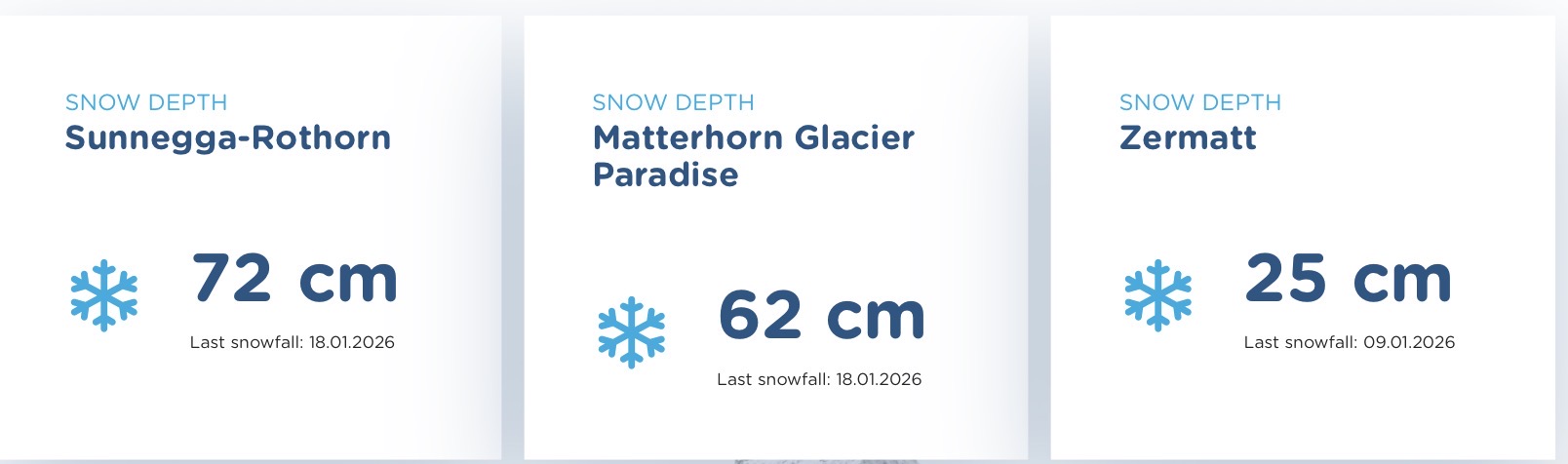 Snow depth across the Matterhorn Paradise regions. | Image: Matterhorn Paradise
WEATHER FORECAST
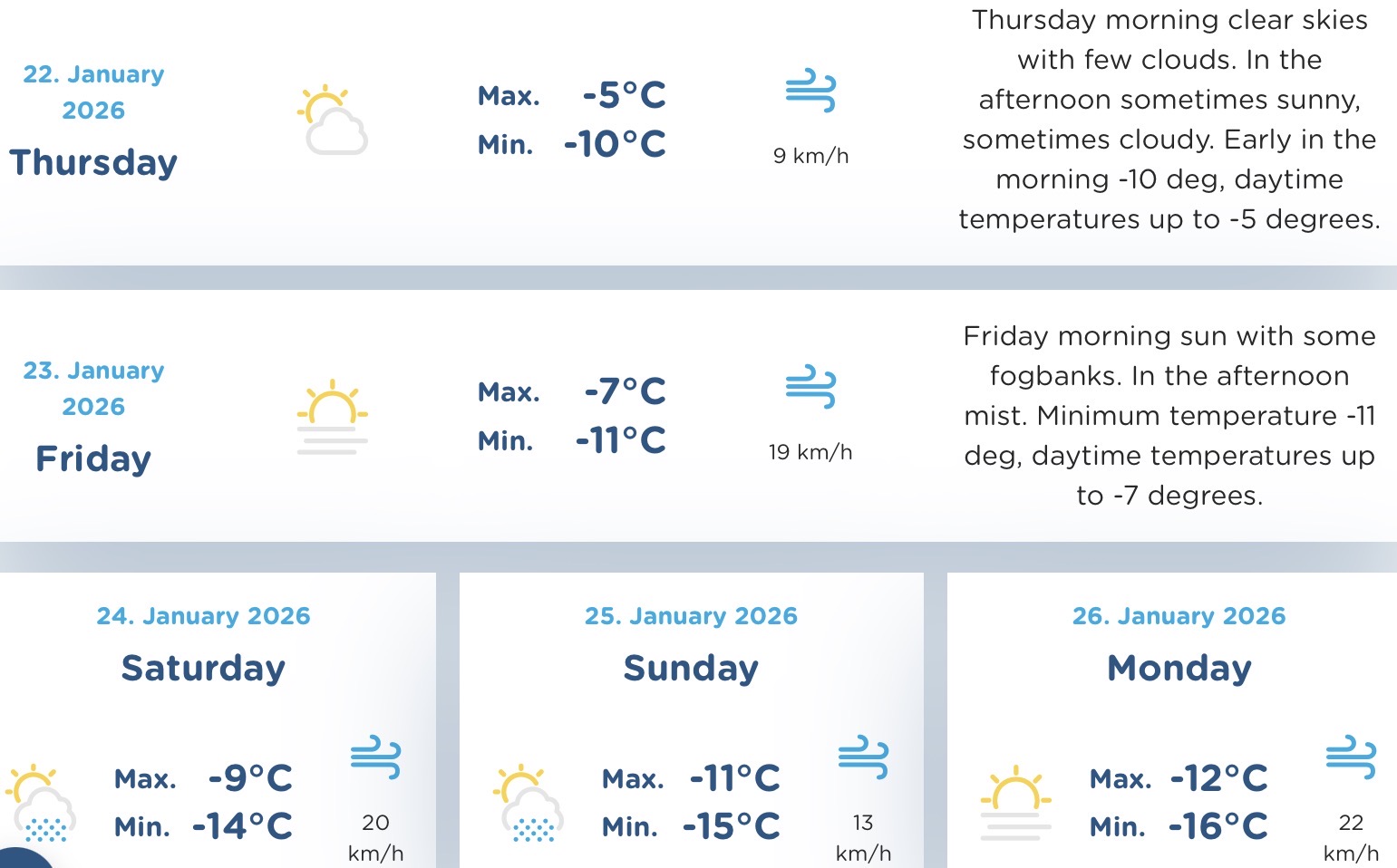 Weather forecast for the Matterhorn Paradise area for the next few days. | Image: Matterhorn Paradise