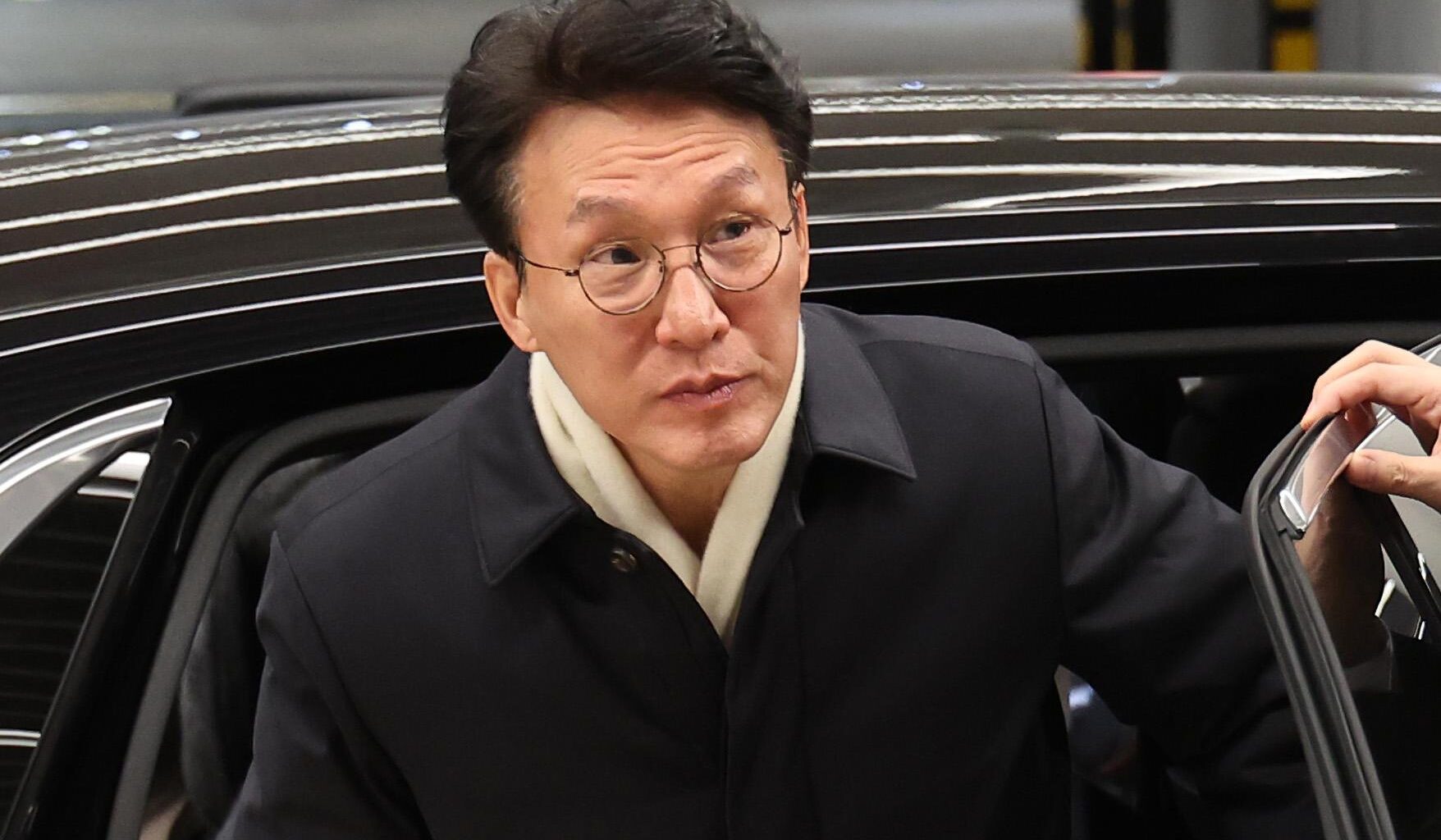
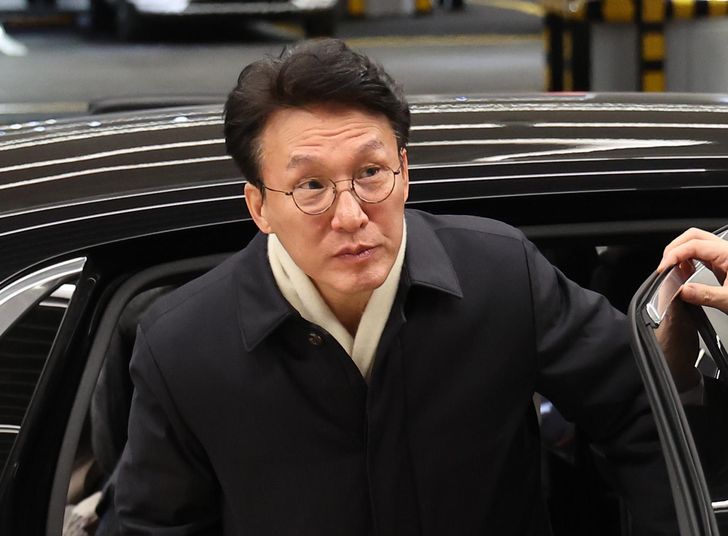
Prime Minister Kim Min-seok arrives at Incheon International Airport Terminal 2 in Incheon, Thursday, on his way to the United States to discuss pending issues between South Korea and the United States. Yonhap
Prime Minister Kim Min-seok departed for the United States, Thursday, for a rare solo visit that includes efforts to arrange a meeting with U.S. Vice President JD Vance, underscoring Seoul’s push to revive high-level communication channels with Washington.
Kim’s trip is seen as part of efforts to establish an additional high-level communication channel between Seoul and Washington, as bilateral networks have grown increasingly important under the Trump administration. At the same time, some political observers suggest the visit may also serve to bolster Kim’s profile ahead of a possible bid for party leadership later this year.
According to the Prime Minister’s Office, Kim will visit Washington, D.C., and New York from Jan. 22 to 26. He left Incheon International Airport around 10 a.m., without holding the customary press briefing and accompanied by only a small group of aides.
A meeting with Vance is being arranged, an official at the Prime Minister’s Office told The Korea Times, Thursday, adding that the date and time had yet to be finalized. During his visit, Kim is also expected to meet with members of the U.S. House of Representatives and hold a gathering with Korean expatriates.
If the meeting with the U.S. vice president takes place, the two are expected to exchange views on follow-up measures for recent Korea-U.S. tariff negotiations, along with broader trade issues and youth exchange programs. Kim has shown particular interest in youth diplomacy as part of a “post-APEC” agenda involving trilateral and multilateral exchanges among major countries including Korea, the United States and Japan. Vance is largely viewed as a leading next-generation figure within the Republican Party.
Kim will travel on to New York after his Washington meetings and is scheduled to return to Seoul on Jan. 26.
The Prime Minister’s Office said the trip “will contribute positively to the stable continuation and strengthening of the Korea-U.S. relationship.”
This is the first time since 1985 that a Korean prime minister has visited the United States alone.
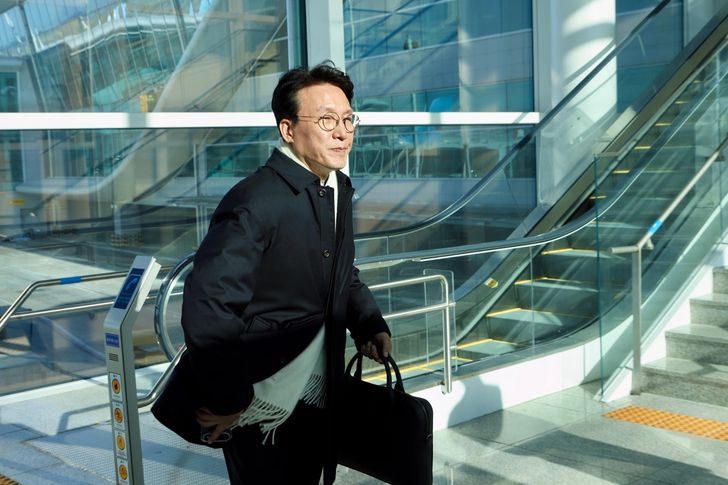
Prime Minister Kim Min-seok departs through Incheon International Airport in Incheon, Thursday, for a five-day trip to Washington, D.C. and New York. Courtesy of the Office of the Prime Minister
While the trip is officially intended to revive key bilateral networks — particularly through direct engagement with Vance — some political observers see Kim’s high-profile visit as laying the groundwork for a possible bid for leadership at the party convention in August, showcasing his diplomatic credentials to broaden his appeal.
Kim, 61, has been expanding his political footprint recently. Since taking office as prime minister last July, he has maintained an unusually active schedule. He has made repeated visits to South Jeolla Province, a core stronghold of the progressive camp, including inspections of flood damage in Gwangju and visiting the National Cemetery for the May 18 Democratic Uprising, moves seen as efforts to consolidate regional support. More recently, he has toured cities such as Seoul, Chuncheon, Suwon, Sacheon and Jeonju as part of a series of “K-governance briefings,” signaling an increasingly nationwide political presence.
Although Kim has long been seen as having an “anti-American” image because of his role as a student activist in the 1985 occupation of the U.S. Cultural Center in his early 20s, his career reflects deep familiarity with the United States. He earned a master’s degree in public administration from Harvard University’s Kennedy School in 1995 before attending Rutgers University Law School starting in 2005 and receiving his New Jersey bar license in 2011.
One political commentator said he would rather look beyond power politics and focus on the value of cultivating a broader pool of capable leaders in Korea.
“Rather than viewing Prime Minister Kim’s U.S. trip through the lens of intraparty power dynamics, I believe it is better for the country to have more capable national leaders,” Lee Jun-han, a professor of politics from Incheon National University, told The Korea Times.
“Because power tends to be concentrated in the presidency, it is difficult to nurture both competitors and successors in our political culture. Korea would benefit from identifying many capable future leaders, allowing them to build careers and gain experience so they can compete, check one another and work in balance,” he explained.