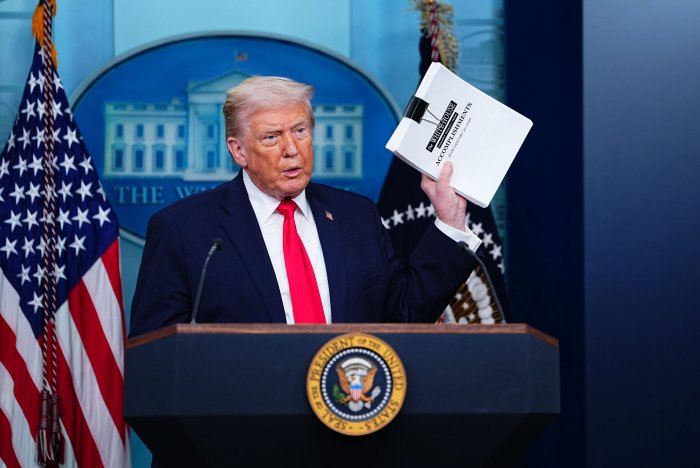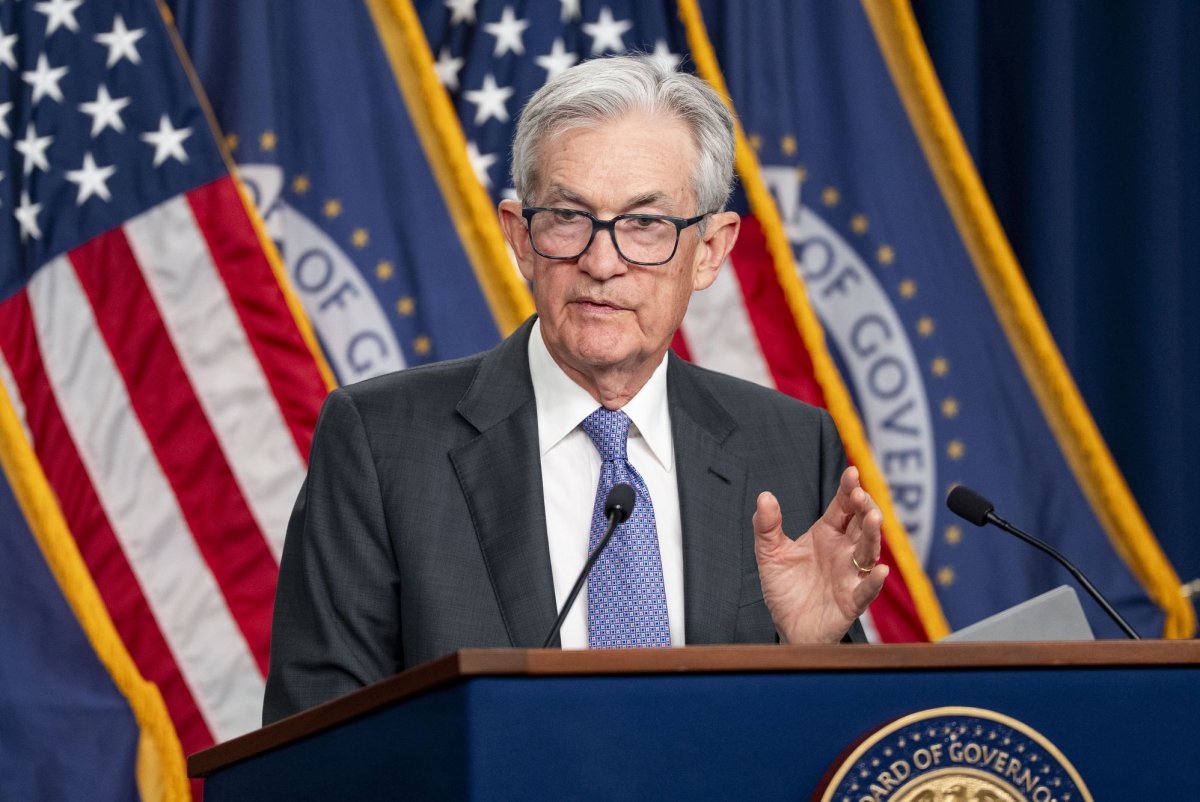
Jan. 22 (UPI) — The conflict between President Donald Trump and Federal Reserve Chairman Jerome Powell is raising urgent questions about the independence of the regulatory system.
The dispute rests on the president’s power to remove officials from independent agencies and the hard line between removing for cause and removing for political reasons.
Peter Shane, constitutional law scholar in residence at NYU Law School, told UPI there are two legal questions at issue. One is whether the president can remove the chairman of the Federal Reserve. The second is whether the president can remove Powell from the Fed’s Board of Governors completely.
“There is no statutory protection spelled out for the chairman’s status as chairman so it would be the conventional understanding that it would always be within the president’s discretion to designate a different chair,” Shane said. “As far as being a member of the board of governors in the Federal Reserve system, Powell is protected by a statute that says he can only be dismissed for good cause.”
Powell believes Trump’s desire to remove him and sue him is punishment for the Federal Reserve not setting interest rates where he wants them.
Trump’s issues with Powell, the chairman he appointed in February 2018, are directed at the Fed’s decision to maintain higher interest rates in an attempt to curb inflation.
More recently, Trump has also targeted Powell over his handling of the $2.5 billion renovation of two Federal Reserve buildings: the Marriner S. Eccles Building and the Federal Reserve Board-East Building.
The Trump administration has opened an investigation into the renovation.
U.S. Congress has a role to play in a potential attempt to remove Powell from the board.
The U.S. Supreme Court set a precedent in 1935 with the landmark case Humphrey’s Executor vs. United States. The court ruled that President Franklin D. Roosevelt could not fire the commissioner of the Federal Trade Commission because he disagreed with his policy decisions. The commissioner, or the head of any independent federal agency, can only be fired for cause.
With Humphrey’s Executor being the precedent, Congress has the constitutional authority and responsibility to ensure independent agencies like the Federal Reserve remain independent of political influence. This includes the authority to block a president from removing agency leaders from their roles without cause.
The president has not yet made a move to remove Powell but he has attempted to fire Fed board Gov. Lisa Cook. The U.S. Supreme Court stopped Cook’s firing, at least temporarily, ordering that it hold hearings on the matter on Wednesday.
The Department of Justice alleges that Cook committed fraud on a mortgage application, a claim that she denies.
Whether the fraud allegations constitute good cause for firing is a central issue the Supreme Court is expected to weigh in on.
“At the end of the day it would be surprising if they said the president has the power to fire members of the board at will or for a pretextual cause,” Shane said.
Powell and Cook have not been indicted by the Justice Department for any alleged crimes.
“The question is does the alleged appearance of some smoke give them reason to say this is good cause?” Shane said.
The result of that case may make the high court’s position on presidential power clearer in respect to independent agencies.
There is no modern precedent that distinctly defines what is and is not “good cause” for the firing of a federal official by the president. The threshold for “cause” is assumed to be high and not to be met solely on suspicion of wrongdoing.
Shane warns that assumptions are difficult to make about the issues at hand.
“It’s hard to refer to anything as a generally accepted understanding because it’s never been tried before,” Shane said. “The assumption, I think, the conventional view is this is not going to happen unless there is reason to think the person has behaved corruptly or somehow lacks the capacity to discharge his or her functions. They would regard the bar as very high.”
At stake in the case of Cook and particularly Powell is more than either of their positions, Shane said. The credibility of the United States as a debtor and the credibility of its monetary policy is also at stake.
Monetary policy in the United States differs from much of the rest of the modern world. Unlike most other countries in the modern era, the United States does not have a central bank. Instead, it has 12 regional Federal Reserve Banks throughout the country and its board of governors in Washington, D.C.
The decentralized approach by the United States is a response to concern from lawmakers about too much authority over the country’s monetary policy by a single entity and fear of politicization. After a series of financial crises during America’s first century-plus, including in the early 1900s, President Woodrow Wilson signed the Federal Reserve Act in 1913.
The lawmakers who crafted the Federal Reserve Act were also leery of the government having too much direct control over the Federal Reserve. The compromise between Congress and the executive branch in 1913 was to have an independent board of appointees oversee the Federal Reserve and report regularly to Congress.
“It’s dangerous to allow the monetary policy of the country to be set by whoever is running for reelection,” Shane said. “Every president facing a tough economy would love to see monetary policy ease. That’s never unpopular with voters.”
The court has often deferred to the power of the executive branch under Trump, whether he was in office at the time or not.
In 2024, the court broadened the scope of presidential immunity, shielding Trump from prosecution from attempting to overturn the results of the 2020 presidential election. Last year it upheld the Trump administration’s decision to cut previously congressionally approved funding and close USAID.
Trump and his way of governance has prompted the Supreme Court to make precedent-shaping decisions throughout his political career. In the case of Powell, Cook and the Federal Reserve, Shane believes the president is pushing for more landmark changes.
“What Trump is counting on is the Supreme Court overturning its 1935 decision,” Shane said.