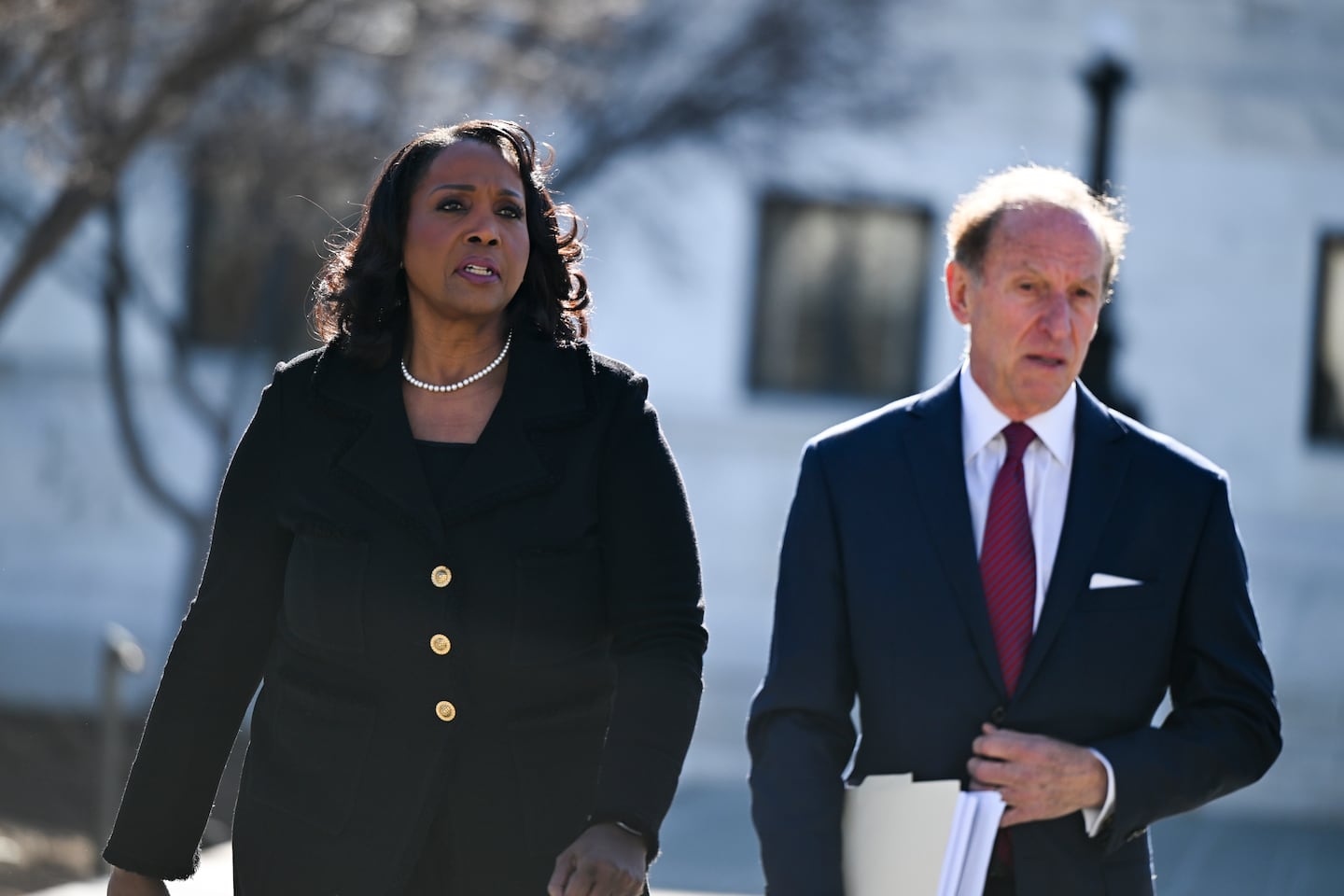
If President Trump thought the Supreme Court would rubber stamp his attempt to fire Federal Reserve Board governor Lisa Cook based on an unproven mortgage fraud allegation, the justices — including those he appointed — seemed to indicate otherwise.
Predicting how the court might rule based on oral arguments alone is a fool’s errand. But during Wednesday’s oral arguments, most of the members of the court’s conservative majority, including Trump appointees Justices Neil Gorsuch, Brett Kavanaugh, and Amy Coney Barrett, expressed some level of skepticism of Trump’s claim that he can fire leaders of the nation’s independent central banking system without notice or any formal process — and that there is nothing courts can do about it.
Kavanaugh seemed particularly dubious of Trump’s argument.
“Let’s talk about the real world,” Justice Brett Kavanaugh said to US Solicitor General D. John Sauer, who was arguing on Trump’s behalf. If the court were to allow Trump to dismiss board members without so much as a hearing, Kavanaugh said, it would mean that “what goes around comes around.”
“All the current presidential appointees would be removed for cause on January 20, 2029, if there is a Democratic president,” Kavanaugh said.
And if such firings were not reviewable by the courts, as Trump argues, there is nothing anyone would be able to do about it.
“Then we’re really at at-will removal,” Kavanaugh said. “So what are we doing here?”
It is also worth noting that, while Kavanaugh clarified that he was not referring specifically to the facts of this case because “I don’t know the facts of this case,” he gave a hypothetical about a situation where a person was targeted by the president for firing and the administration devoted “all these resources” to “find something, anything about this person” to make a for-cause claim stick.
That sounds a lot like the reporting that Bill Pulte, Trump’s handpicked director of the Federal Housing Finance Agency, probed into the financial records of Trump’s perceived foes, including Cook, in an effort to dig up dirt to turn into criminal referrals. Pulte made such a referral of Cook for “designating her out of state condo as her primary residence, just two weeks after taking a loan on her Michigan home where she also declared it as her primary residence.” That is all despite the fact that Cook described the condo as a “vacation home” on a loan estimate.
If that didn’t bode poorly enough for Trump, Sauer’s answer to Kavanaugh’s questions about whether Cook was given sufficient process before her firing should also make Trump worry.
Sauer told Kavanaugh that there was. “There was a social media post … and the response was defiance.”
I’m not sure the court will readily adopt a firing-via-Truth Social rule for for-cause removals of independent boards.
The stakes are high, which is why Federal Reserve Chairman Jerome Powell reportedly attended the arguments in person. Hearing the justices’ questioning very likely provided him with a sense of relief — if not delight — that the independence of the agency was top of mind for Kavanaugh and several of his colleagues.
The Justice Department has opened a criminal investigation of Powell for allegedly making false statements in Senate testimony about renovations to the Fed’s buildings — an inquiry Powell said was politically motivated because of his refusal to bend to Trump’s demands to lower interest rates. Trump has also repeatedly threatened to fire Powell, whom he appointed as the board’s chair during his first term.
Adopting Trump’s broad position about his ability to fire members of the Fed “would weaken, if not shatter, the independence of the Federal Reserve,” Kavanaugh said.
Indeed.
This is an excerpt from The Gavel, a newsletter about the Supreme Court from columnist Kimberly Atkins Stohr. Sign up to get The Gavel in your inbox every Wednesday evening.
Kimberly Atkins Stohr is a columnist for the Globe. She may be reached at kimberly.atkinsstohr@globe.com. Follow her @KimberlyEAtkins.