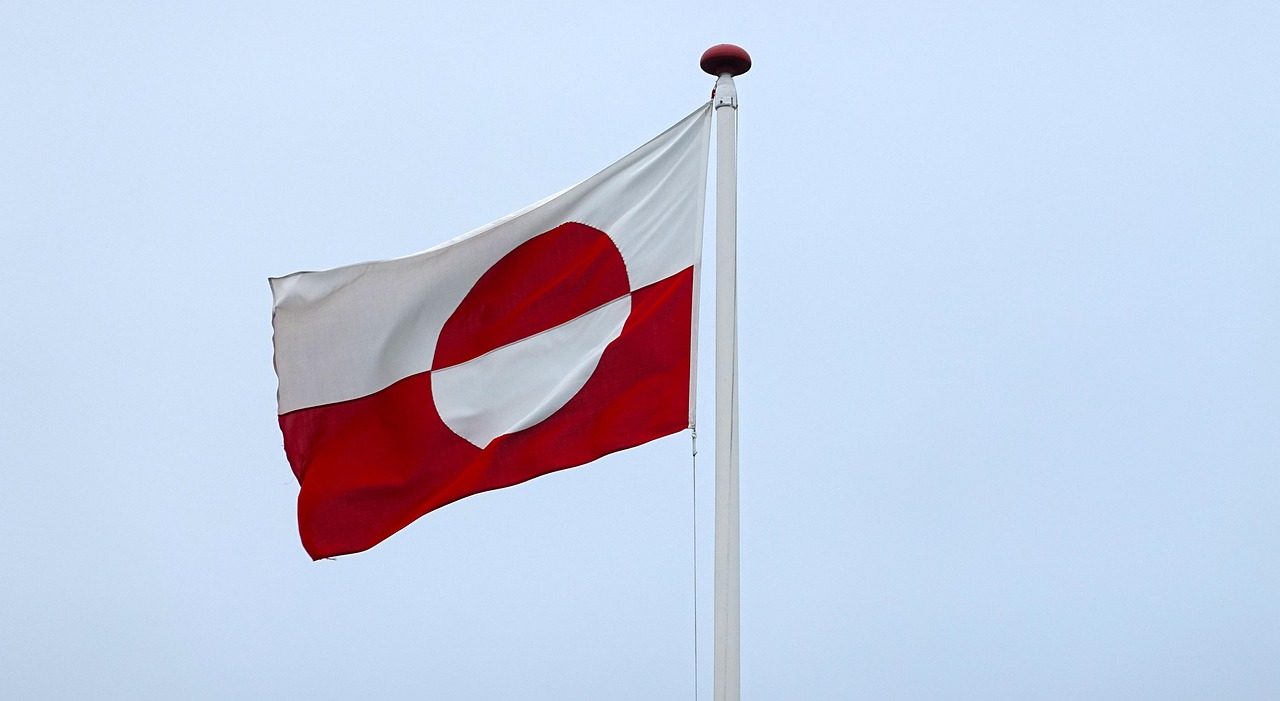
All eyes are on Greenland, a self-governing Arctic island that is a gateway to North America, Europe, and Asia. President Donald Trump is pushing for the United States to take over the island for military security purposes, stating that the U.S. will raise tariffs on Greenland’s allies if a deal is not reached.
Why Greenland? Yannis Stivachtis, a European affairs expert at Virginia Tech, explains the history of the island territory’s appeal.
Why is Greenland important geopolitically?
“Geographically speaking, Greenland, together with Iceland and Svalbard [a Norwegian cluster of islands], control navigation in the Atlantic Ocean and secure access to the Arctic region. That’s why the U.S. military occupied Greenland during World War II.”
“Also, Greenland serves as the basis for the U.S. nuclear early warning systems. Greenland will also add to the U.S. projection to the Arctic, but also to the country’s Exclusive Economic Zone [a sea area] and continental shelf. In addition, important earth metals exist on the island, but it will take significant financial resources and years to extract them. Moreover, there is a fear that China, rather than Russia, may wish to invest in Greenland and create military bases there, which would affect U.S. security.”
How is Greenland governed?
“Greenland, together with the Faroe Islands, are the two autonomous regions of Denmark. Although Greenland is part of NATO’s strategic plan, it is not part of the European Union. Denmark financially supports Greenland, although this support has declined over the years. This has created some backlash among the people in Greenland against the Danish government.”
What could a U.S. takeover of Greenland mean for Europe? What would it mean for the United States?
“A takeover of Greenland will confirm that Europe cannot anymore trust the United States. They will also be concerned about future implications for international law. For the United States, it will be valuable for strategic and economic reasons.”
About Stivachtis
Yannis Stivachtis is director of the Center for European and Transatlantic Studies at Virginia Tech. He’s also the Jean Monnet chair in European Union strategy and a professor of government and international affairs. His expertise is focused on European Union strategy, external relations, and interior policies as well as European organizations and the international world order.
Interviews
To schedule an interview with Yannis Stivachtis, contact Margaret Ashburn in the media relations office at mkashburn@vt.edu or Jenny Boone at jennykb@vt.edu.