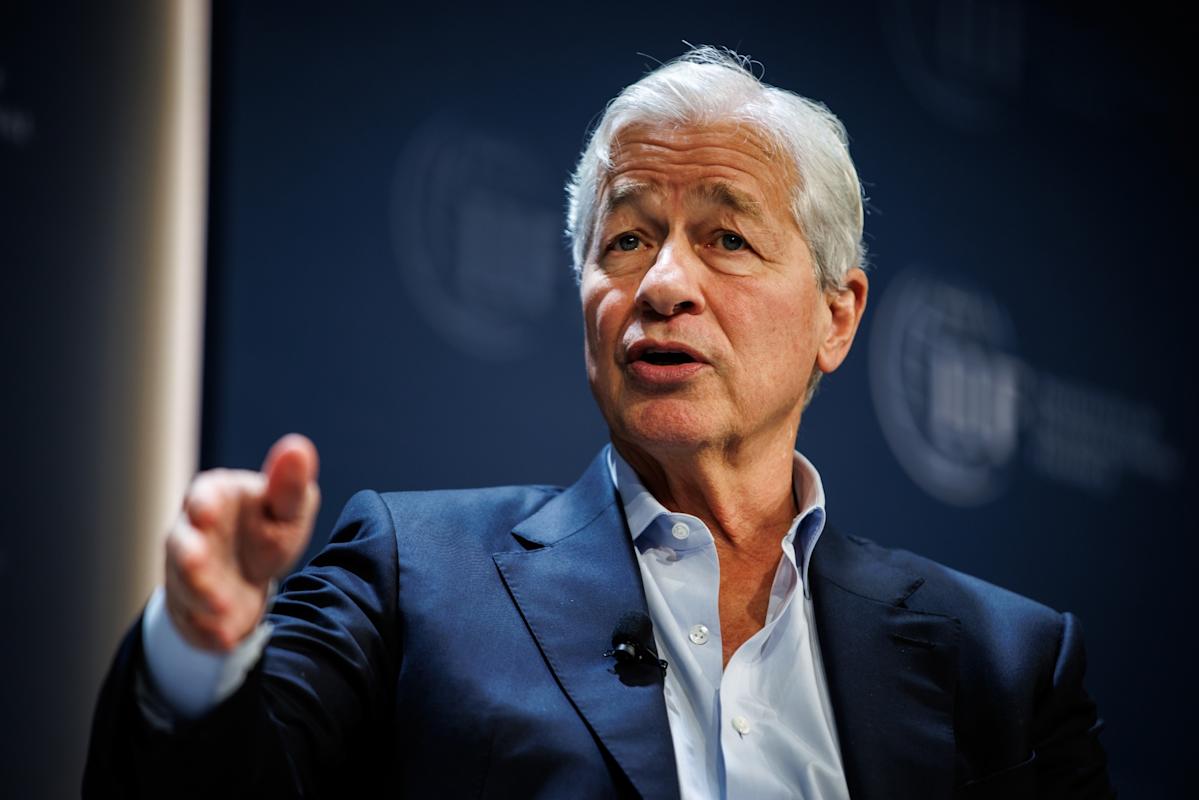

Photographer: Samuel Corum/Bloomberg
(Bloomberg) — President Donald Trump sued JPMorgan Chase & Co. and its chief executive officer, Jamie Dimon, for at least $5 billion over allegations that the lender stopped offering him and his businesses banking services for political reasons.
The complaint, filed Thursday, accuses the bank of trade libel and breach of implied covenant of good faith. It also claims Dimon violated Florida’s deceptive trade practices law. In response, the bank said it doesn’t close accounts for political or religious reasons.
Most Read from Bloomberg
Trump has singled out JPMorgan repeatedly in his push to stamp out what he sees as banks refusing to provide financial services to customers for ideological reasons. JPMorgan closed accounts for Trump and his businesses about seven weeks after the Jan. 6, 2021, assault on the US Capitol by his supporters. Trump was out of office then and his political standing was low.
The lawsuit was brought by Trump and several Trump business entities.
JPMorgan, the biggest US bank, notified plaintiffs, “without warning or provocation” that it was terminating accounts, causing significant financial and reputational harm, according to the complaint filed in Miami-Dade County state court. Bloomberg reviewed the complaint, which couldn’t immediately be found in court records.
Since taking office again last year, Trump has sought retribution against perceived political enemies. He or his administration have taken actions against law firms, universities, corporations, media outlets, Democratic officials, and others who don’t align with him ideologically.
The bank was motivated by its “woke” beliefs that it “needed to distance itself from President Trump and his conservative political views,” according to the complaint. “In essence, JPMC debanked plaintiffs’ accounts because it believed that the political tide at the moment favored doing so.”
JPMorgan said in a statement that the suit has no merit.
Regulatory Expectations
“We do close accounts because they create legal or regulatory risk for the company,” the New York-based bank said. “We regret having to do so but often rules and regulatory expectations lead us to do so. We have been asking both this administration and prior administrations to change the rules and regulations that put us in this position, and we support the administration’s efforts to prevent the weaponization of the banking sector.”
Story Continues