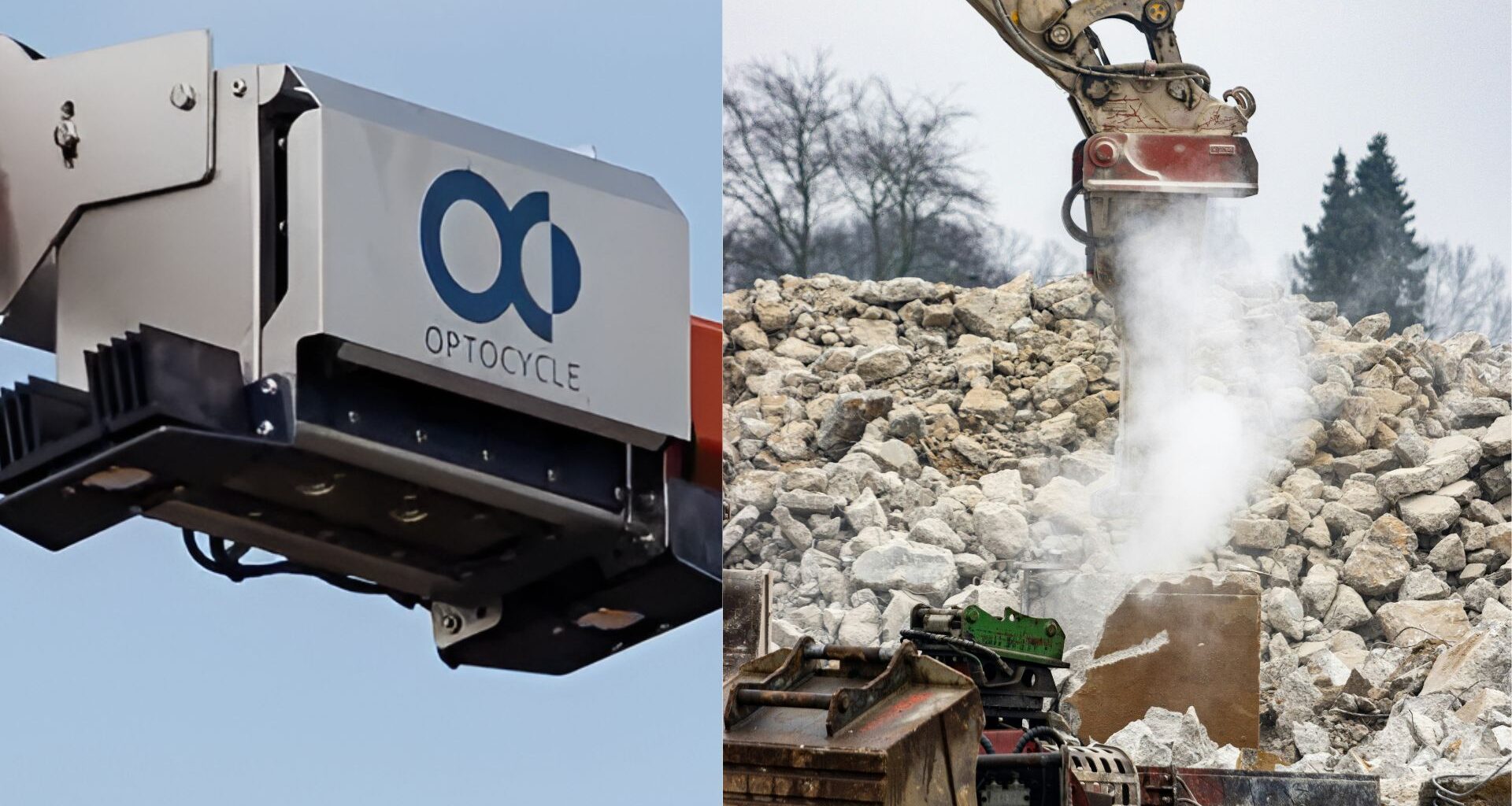
Germany’s construction sector produces tens of millions of tonnes of rubble each year. While most of it gets recycled, large volumes still fail to meet quality standards.
That shortfall sends usable material to landfills and increases demand for new concrete.
A Tübingen-based startup is now working on a technical fix. Optocycle is developing an AI-based system designed to assess construction waste in real time.
The project has received around €170,000 (just under $200,000) in funding from the Deutsche Bundesstiftung Umwelt (DBU).
The system targets a persistent issue in construction recycling: inconsistent material quality.
Recyclers currently depend on manual inspection and experience-based judgment. Laboratory testing usually happens only on random samples.
That approach leaves room for variation and uncertainty.
Optocycle’s system aims to automate classification. Optical sensors scan rubble as it moves along conveyor belts.
Artificial intelligence then identifies material types and contamination levels in real time.
Their goal is to replace periodic checks with continuous monitoring.
Optocycle co-founder Max-Frederick Gerken says the industry still relies heavily on subjective assessments.
According to him, quality variations create economic risk. They also limit how much recycled material ends up in concrete production.
The system focuses on recycled mineral aggregates. These materials form a key input for concrete and road construction.
Quality assurance determines whether they get reused or discarded.
Less material discarded
Optocycle estimates that its system could raise the share of high-quality recycled aggregates by about 20%.
It also projects a reduction in landfill-bound residual waste of around 15%.
The technology evaluates both incoming demolition material and processed output. That allows recyclers to intervene during processing rather than after the fact.
Heinrich Feeß GmbH serves as an industry partner on the project. The recycling company has worked with Optocycle during earlier development stages.
Gerken says the system improves traceability. It also creates clearer documentation for customers downstream.
That documentation matters when recycled materials compete with virgin resources.
Designed for retrofits
Optocycle designed the system for use in existing recycling plants. Operators can install it directly above conveyor belts. The setup avoids major structural changes.
That design choice lowers costs and shortens deployment time.
Gerken argues that economic viability determines whether circular construction can scale.
DBU Secretary General Alexander Bonde says construction sustainability must extend beyond new buildings. He points to demolition and material reuse as the next challenge area.
DBU project officer Volker Berding links the issue to climate impacts. Cement production accounts for roughly eight percent of global greenhouse gas emissions.
Replacing virgin materials with recycled alternatives can reduce that footprint.
However, Berding says circular systems only work when recycled materials meet consistent standards. Without that assurance, builders hesitate to use them.
The DBU-funded prototype now aims to demonstrate reliable performance at scale.
If successful, the system could influence how demolition waste re-enters construction supply chains.
For now, Optocycle’s work reflects a broader shift.
Construction waste no longer sits at the end of the value chain. Increasingly, it becomes a monitored input for the next build cycle.