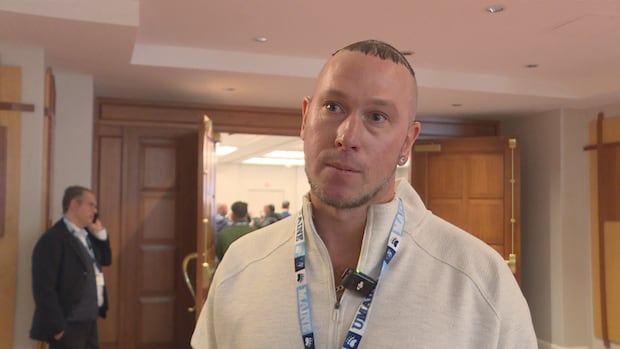
Many of the East Coast’s lobster fishermen are in Moncton this week for an annual conference called the U.S.-Canada Lobster Town Meeting.
More than 200 attendees have come from across the Atlantic Canadian provinces, as well as Maine, New Hampshire and Massachusetts for the event, which alternates location between Canada and the United Stated each year.
“It’s the one time of year we get to sit with our American colleagues, everybody at the same table, lobster buyers, exporters, importers, academics, fish harvesters,” said Luc LeBlanc, a fisheries advisor with the Maritime Fishermen’s Union.
There are several different sessions over the two-day conference, allowing attendees to discuss everything from climate change and the environment to scientific developments in lobster fishing, to global trade and tariffs.
“The topics will change every year, but one of the common threads is that it really is a place for industry to just sort of talk about what’s on our mind, what’s going on in our fisheries,” said Patrice McCarron, executive director of the Maine Lobstermen’s Association.
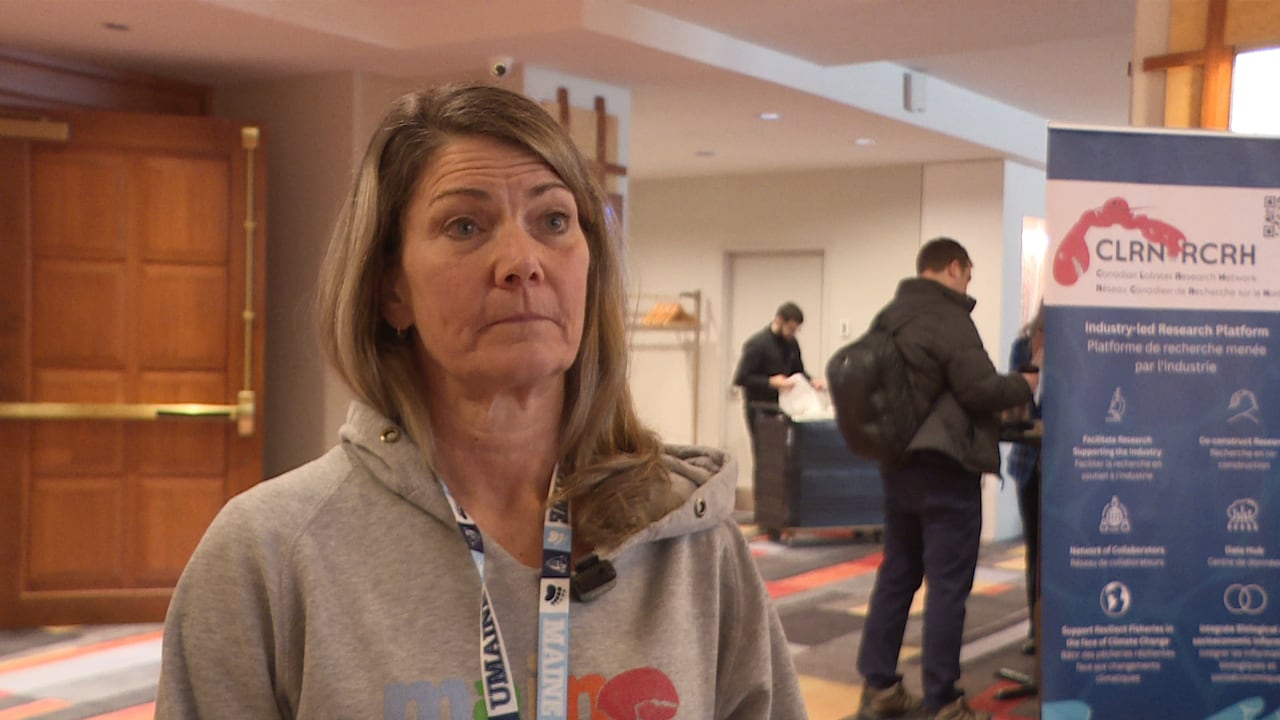
Patrice McCarron said lobster fishermen in Maine are hoping that increased Canadian trade with China will allow for more domestic trade in the U.S. (Victoria Walton/CBC)
Despite some tensions between Canada and the U.S. in other industries, McCarron said there’s no room for that here.
“Maybe if you read the headlines, you might think there are tensions,” she said.
“But I mean, from Maine Lobstermen’s perspective, we’ve been meeting with Canadian fishermen through the Fisherman and Scientists Research Society, through the Lobster Town Meeting, actually doing exchanges … So for us it’s very cordial.”
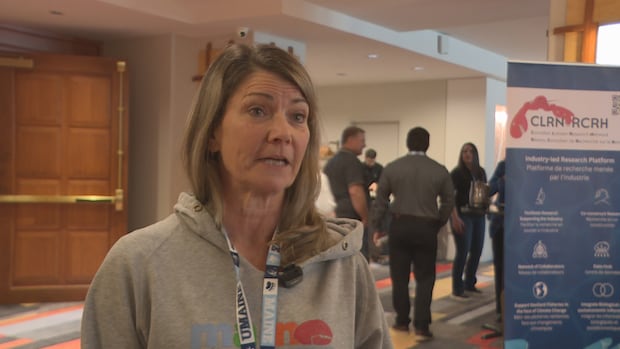
The Lobster Town Meeting brings together more than 200 fishermen, processors and buyers from across Atlantic Canada, Maine, New Hampshire and Massachusetts.
Many of the fishermen at the event have the same experiences, despite their regional differences, said LeBlanc.
“This year, obviously, is a challenging year, especially for markets and market access,” he said.
“But we also have a lot of environmental issues in common … U.S. fishermen and Canadian fishermen have the same problems by and large.”
Chinese tariffs removed for Canadians
During Prime Minister Mark Carney’s visit to China in early January, he signed a trade deal to remove 25 per cent tariffs on Canadian lobster imports in exchange for Canada lowering tariffs on Chinese electric vehicles.
“Since the China deal, the price went up for lobster, about 20 per cent. So that’s a major boost to fishing enterprises and fishing communities across the Maritimes,” said LeBlanc.
But Americans are still facing tariffs in China.
“I think U.S. fishermen are a little bit worried that we have access to the Chinese market and they don’t,” said LeBlanc.
For McCarron and fishermen in Maine, there’s also a benefit.
“I think that’s actually going to get us back a little bit more to sort of pre-2025 where Canada was doing trade in China. I think that maybe opens up some of our domestic markets,” she said.
Price problems south of border
But there are other pressing issues south of the border.
“Our price has been very volatile,” McCarron said. “I think people are a little skittish because trade policy has been a lot less predictable than usual.”
Fisherman Richard Howland, who works off of Maine’s Little Cranberry Island, said profitability is the biggest worry right now.
“It’s really basic math,” he said. “The price of lobster has been down, the price that we’re getting at the dock for lobster is down, and the price of our expenses to operate a business are up. So the margins shrink.”
LeBlanc said prices are becoming more volatile and changing more frequently in both markets.
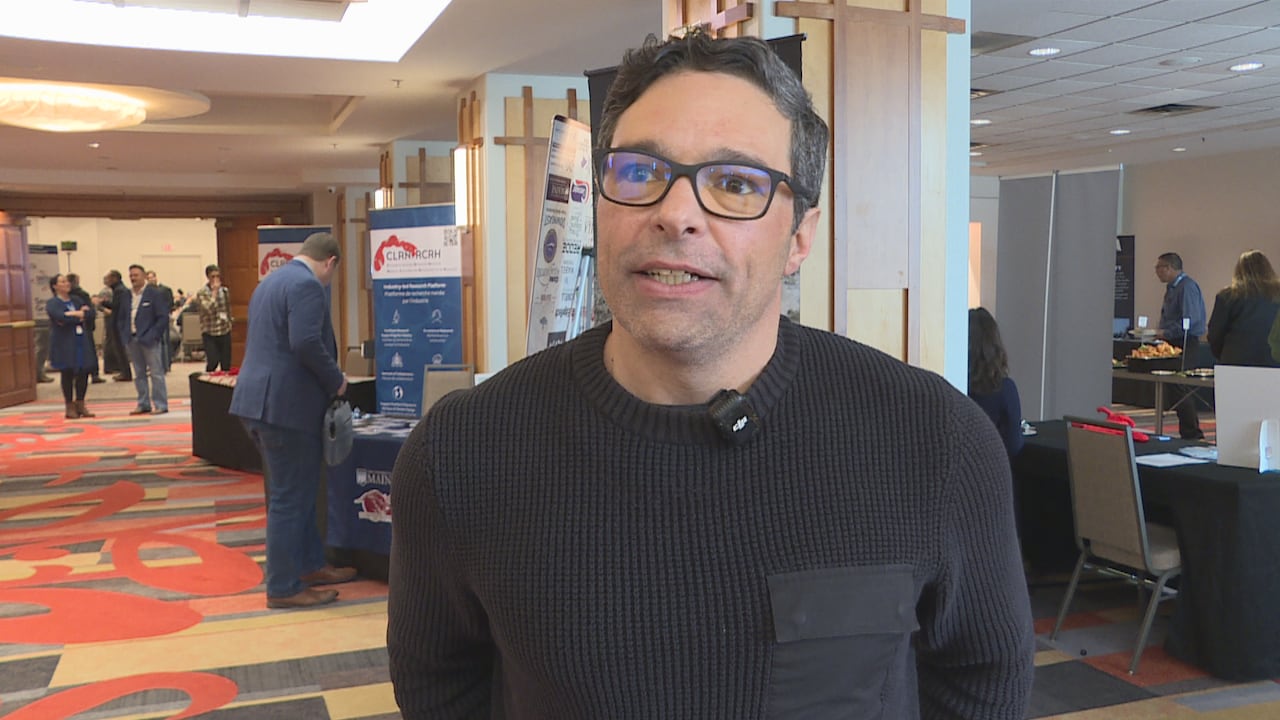
Luc LeBlanc of the Maritime Fishermen’s Union said when China removed tariffs on Canadian lobster imports, the price of lobster went up about 20 per cent. (Victoria Walton/CBC)
“You have to remember that lobster is speculative. Basically lobster importers and sellers are speculating on where they think the market is going to be” he said. “Right now they’re optimistic. In three or four weeks, we don’t know where we’ll be.”
Fishermen like Howland are paying attention to trade talks.
“I don’t, like, wake up in the morning and think about it 24/7. But it factors into every decision I make, cause I’m a businessman at the end of the day,” said the lobster fisherman of 30 years.
And while tariffs and international trade have been a concern, Howland said his main focus is still catching lobster.
“At the end of the day, you sit down and table with these guys, we’re doing the same thing,” he said. “We wanna go lobster fishing. We wanna make a living, we wanna take care of our family.”